




Ancient Persia
The Fabric of Power: Achaemenid Clothing in Ancient Persia
The ancient Persians have left an indelible mark on history with their grand empires, impressive architectural feats, and intricate art. Among these lasting legacies, Achaemenid clothing stands out as a less tangible but equally impactful aspect. This blog post seeks to unravel the threads of the past, exploring how the attire of the Achaemenid era (c. 550 – 330 BC) was not just about aesthetics but a complex tapestry interwoven with power, prestige, and political manoeuvring.
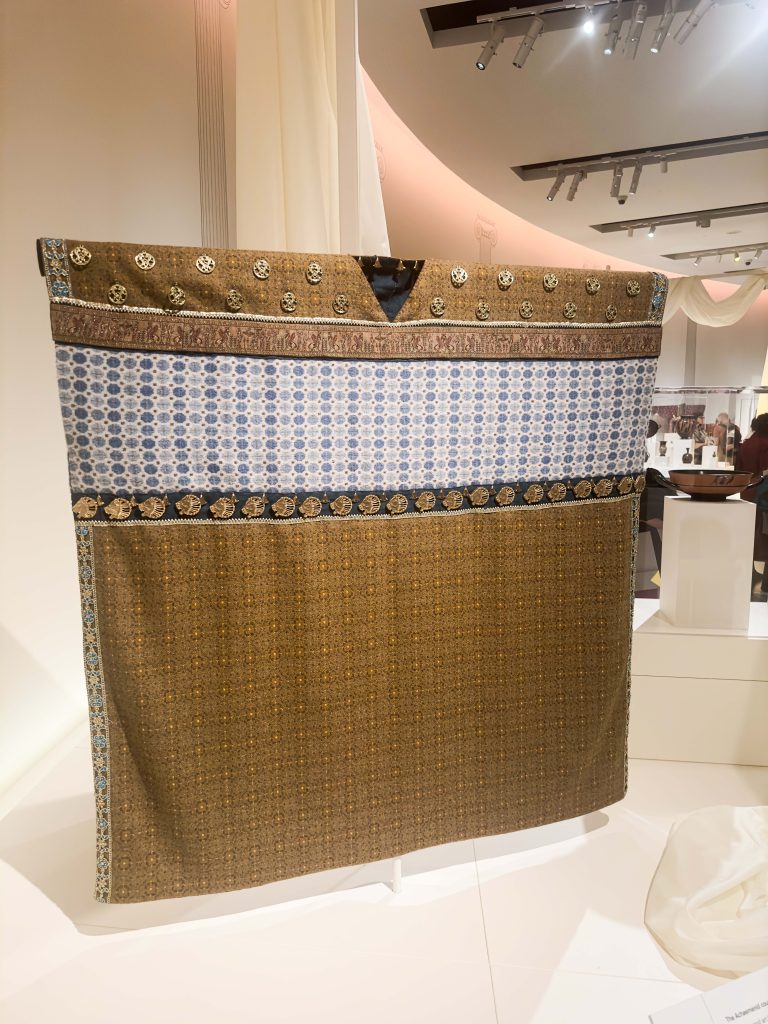
Table of Contents
Achaemenid clothing: Luxury as a Marker of Status and Wealth
In the exalted courts of the Achaemenid Persian Empire, Achaemenid clothing was more than a mere indulgence. It was a form of communication, a demonstration of status, and a tangible marker of the empire’s wealth and power. Through vibrant textiles, intricate jewellery, and splendid accessories, the Persian court projected a radiant image of affluence and authority, impressing both domestic spectators and foreign dignitaries.
The importance of clothing in the Achaemenid Empire cannot be overstated. Ancient Persian clothing was a reflection of the societal hierarchy and the centralisation of power. The luxurious materials, rich dyes, and elaborate decorations used in Achaemenid fashion were not only symbols of wealth but also tools for reinforcing social structures.
Achaemenid clothing: An Expression of Hierarchical Status
In the intricately woven fabrics, rich dyes, and ostentatious embellishments that characterise Achaemenid clothing, Persian courtiers showcased the splendour and opulence of the empire. The nature and quality of a courtier’s attire often corresponded directly to their status within the societal hierarchy.
The Persian robe, a fundamental piece of Achaemenid Empire clothing, was a status symbol. Those of higher rank wore robes made from luxurious materials such as silk and fine wool, dyed in vibrant hues and adorned with gold threads and precious stones. Lower-ranked individuals, on the other hand, wore robes of simpler fabric and less vibrant coloration.
In addition to clothing, jewellery was another important marker of wealth and status. Courtiers often wore elaborate pieces made from gold, silver, and precious gemstones. The richness of one’s adornments provided a clear indication of their position within the court and the wider societal structure of the empire.
| Social Rank | Materials Used | Colours/Dyes | Decorations |
|---|---|---|---|
| Royalty | Silk, fine wool | Purple, crimson | Gold threads, gemstones |
| High Nobility | Fine wool, linen | Rich blues, reds | Silver threads, embroidery |
| Lower Nobility | Wool, linen | Earth tones | Modest embroidery |
| Commoners | Coarse wool, linen | Natural undyed shades | Minimal or none |
Royal Attire: The Significance of Achaemenid clothing in Rewarding Loyalty
One key aspect of the luxurious culture of the Achaemenid era was the practice of the king’s gift-giving. The Greek historian Xenophon provides valuable accounts of this custom, which involved bestowing generous gifts—often luxurious items—upon courtiers. These gifts could include items like a horse with a gold bit, golden necklaces and bracelets, a golden scimitar, and even the highly prestigious Persian coat.
However, these gifts served more than just expressions of royal generosity. They were strategic tools designed to secure loyalty and foster obedience within the court. By rewarding his courtiers with such extravagant gifts, the king could effectively ensure their allegiance and encourage their support.
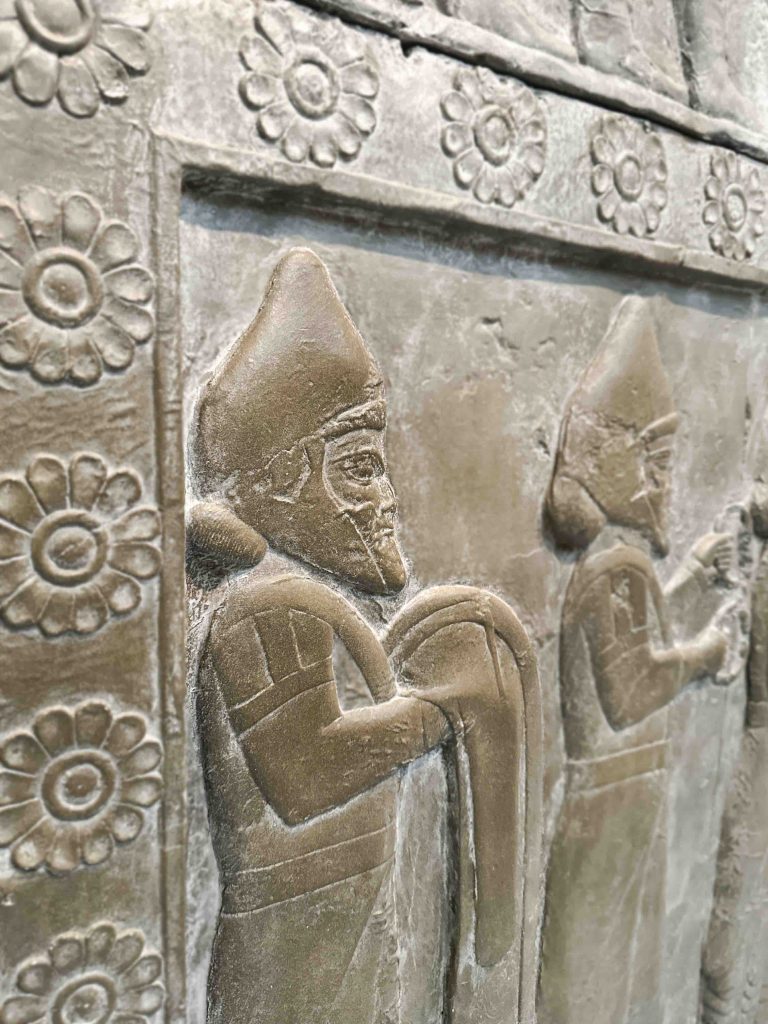
This strategy was particularly effective because it played into the societal norms and expectations of the time. The receipt of a royal gift was not just a mark of favour; it was a public recognition of one’s value and status within the court. It added to the recipient’s prestige and standing, making them more influential within the court and society at large.
The use of luxurious clothing and accessories as markers of status and wealth, and as tools for political manoeuvring, underscores the sophisticated socio-political dynamics that characterised the Achaemenid Persian court. These practices highlight how the Persians used material culture to reinforce social hierarchies, ensure loyalty, and project power – providing a fascinating glimpse into the intricacies of ancient Persian society.
The Achaemenid Court Robe: A Pinnacle of Achaemenid clothing
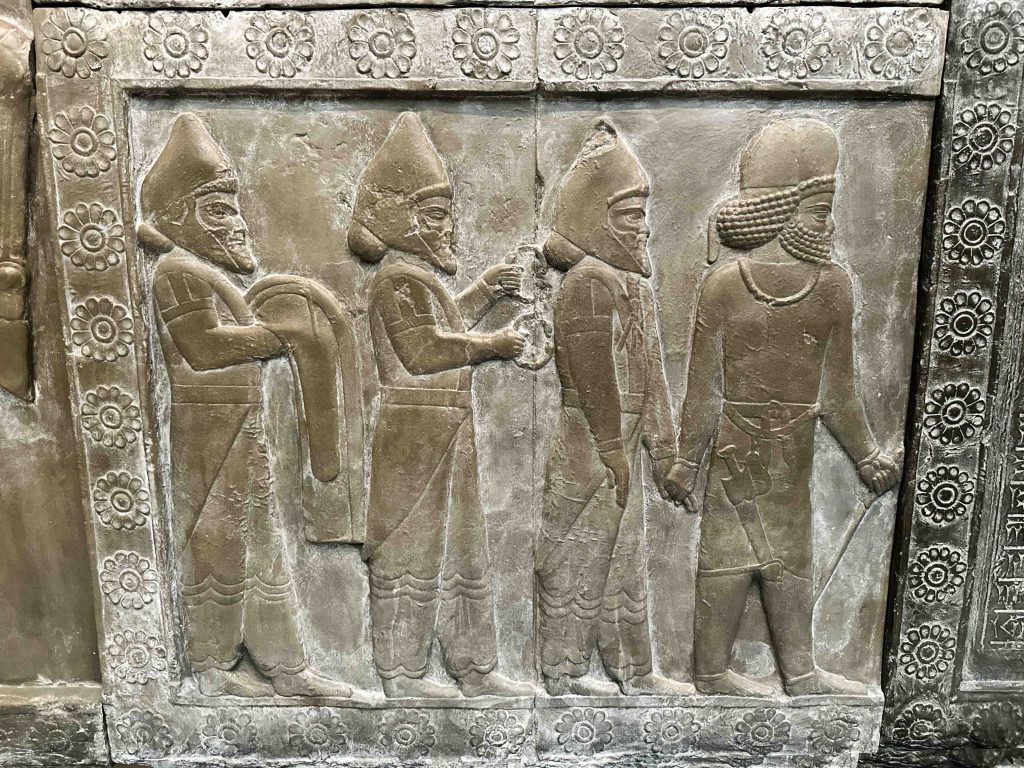
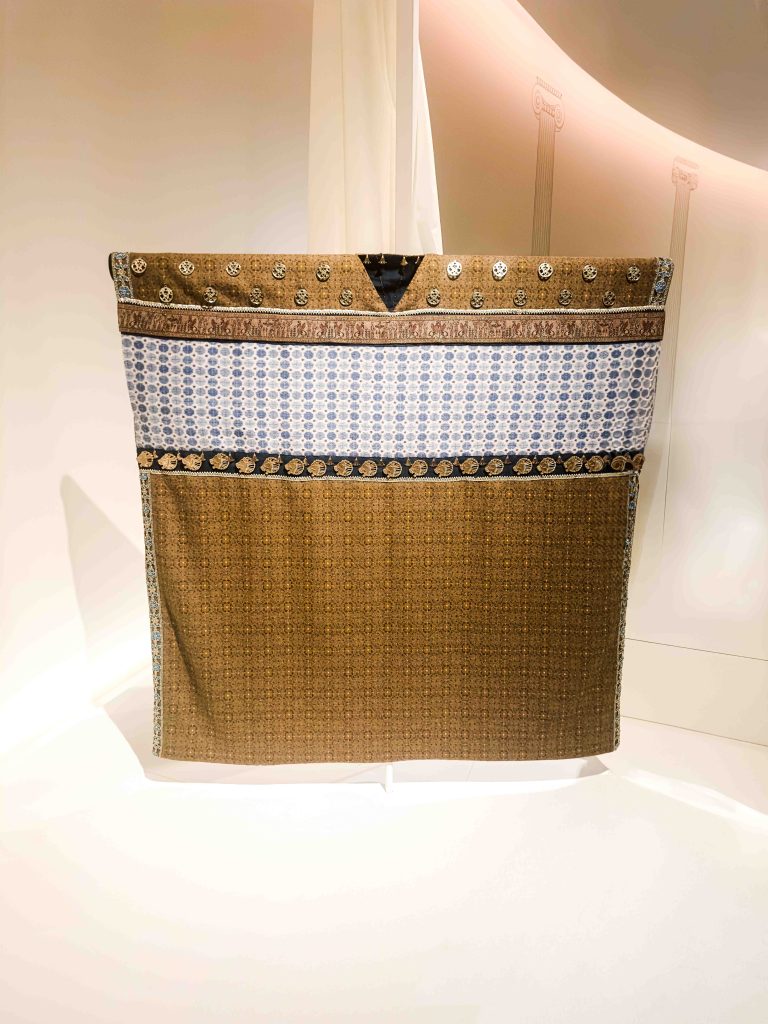
At the pinnacle of the hierarchy, the king’s attire was of paramount significance. Within the rich visual culture of Achaemenid art, the king was often depicted wearing a voluminous court robe, symbolic of royal authority. This robe, often rendered in rich colours and intricately embroidered patterns, was a mark of his position as the ruler of the expansive empire.
The robe’s design was both practical and symbolic. Constructed from a large rectangular piece of cloth, the robe was draped over the body and secured with a belt around the middle. Despite its simple construction, the robe was far from easy to wear or manoeuvre in, adding an element of discipline and training to the wearing of it.
Beyond the difficulty of movement, the robe’s complexity was also in its detailing. The cloth was dyed with expensive colours, a testament to the empire’s trade networks and wealth. Furthermore, it was adorned with gold appliqués and rich embroidery, adding to its splendour and magnificence. These decorative elements were not just aesthetic enhancements; they were visual declarations of the king’s immense wealth and power.
| Component | Description |
|---|---|
| Fabric | Luxurious silk or fine wool |
| Dye Colours | Purple, crimson, indigo |
| Decorations | Gold appliqués, intricate embroidery |
| Accessories | Gold belt, jewellery (bracelets, necklaces) |
Ancient Persian Textiles: The Art of Dyeing and Weaving
The textiles of the Achaemenid era were renowned for their quality and beauty. Ancient Persian textiles were crafted using advanced weaving techniques and dyed with colours derived from natural sources. Dyes such as Tyrian purple, extracted from sea snails, and vibrant reds from madder root were highly prized.
Weavers employed complex patterns and motifs, often featuring symbolic designs such as the lotus flower, the winged sun disk, and animal figures. These patterns were not merely decorative; they held cultural and religious significance, reflecting the cosmology and beliefs of the ancient Persians.
| Dye Source | Colour Produced | Availability | Social Association |
|---|---|---|---|
| Tyrian Purple | Purple | Rare, expensive | Royalty |
| Madder Root | Red | Common | Nobility |
| Indigo Plant | Blue | Moderate | Nobility and Merchants |
| Saffron | Yellow | Expensive | Religious figures |
| Walnut Hulls | Brown | Common | Commoners |
Recreating Achaemenid clothing: The Achaemenid Royal Costume in the Modern Era
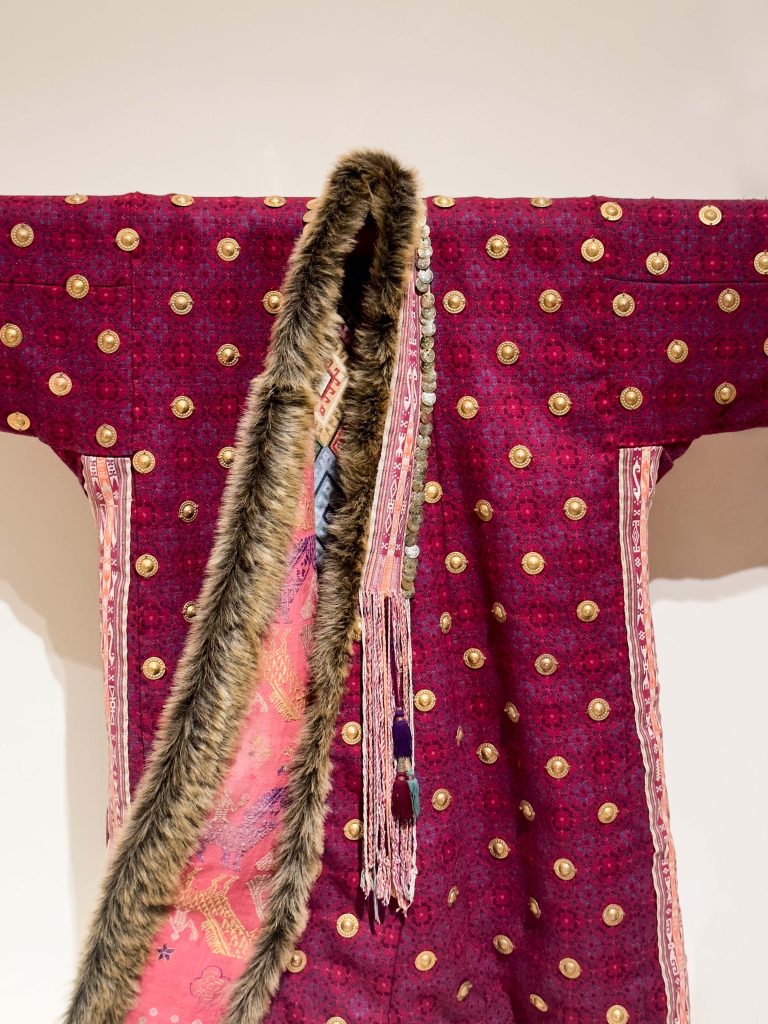
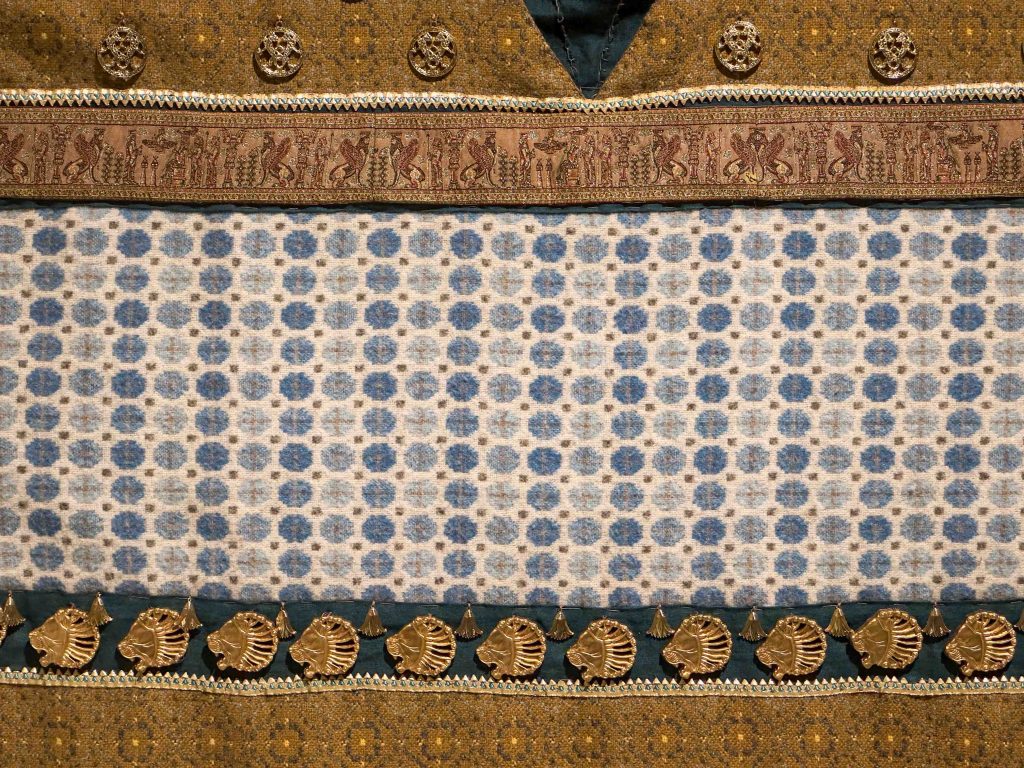
In 2022, historians and textile experts Lloyd Llewellyn-Jones and Rebecca Southall embarked on a project to recreate the grandeur of Achaemenid clothing from the Achaemenid era. This painstaking process involved meticulous research, in-depth understanding of ancient textiles and clothing techniques, and exceptional craftsmanship.
The recreated costume was made using lamb’s wool, a material often associated with luxury and comfort during the Achaemenid era. The use of lamb’s wool not only added to the authenticity of the costume but also signified the opulence that was associated with the royal court.
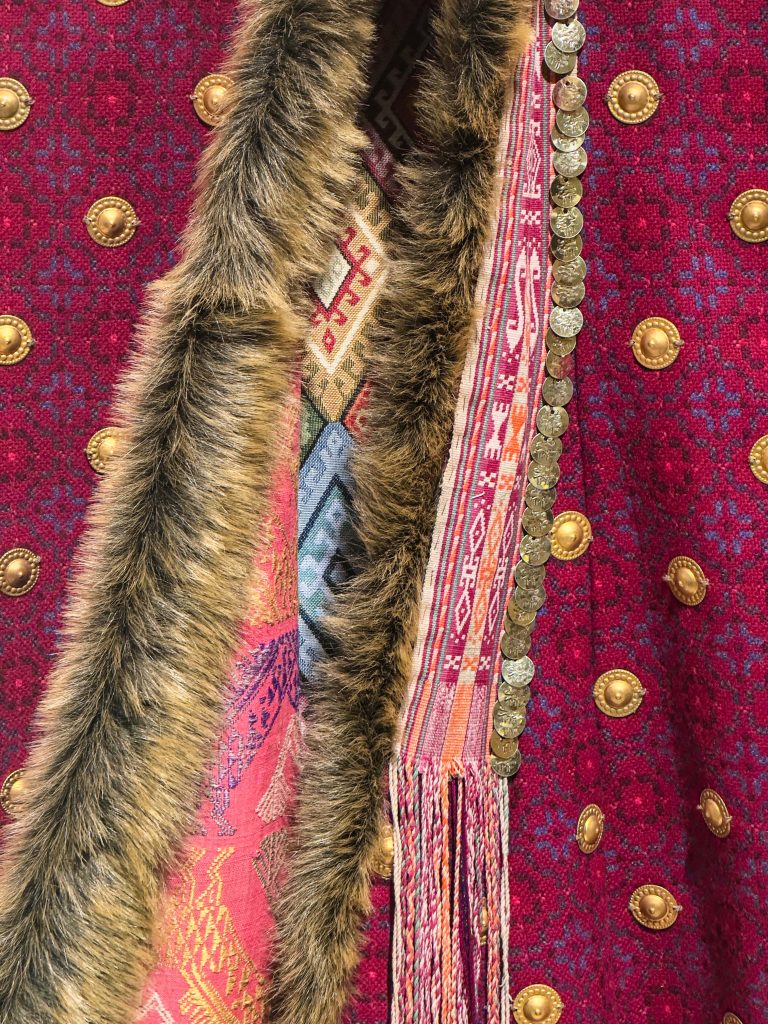
The recreation was adorned with intricate metallic embroidery, a feature that mirrored the rich detailing found on the ancient Achaemenid robes. Metallic threads were used to create intricate designs and motifs, each one painstakingly stitched to reflect the grandeur of the original costume.
In a nod to the ornate appliqués found on the original robe, the recreation also featured gold-painted resin appliqués. These details further added to the costume’s visual richness and complexity.
The result was a tangible, wearable piece of history—a testament to the grandeur and sophistication of the Achaemenid era’s royal attire. This recreated costume offered a unique glimpse into the past, allowing us to better understand the magnificence and significance of the court robe in the ancient Persian court.
Ancient Persian Clothing Royalty: The Attire of Queens and Noblewomen
While much focus is often placed on the attire of kings and male courtiers, the ancient Persian clothing of royalty also included the splendid garments worn by queens and noblewomen. Women of the royal court adorned themselves with luxurious fabrics and elaborate jewellery, reflecting their high status.
Queens and princesses wore long robes made of fine materials like silk and linen, often layered and embellished with intricate embroidery and precious stones. Veils and head coverings were common, sometimes adorned with gold and silver ornaments. Jewelry played a significant role, with items such as earrings, necklaces, bracelets, and anklets crafted from precious metals and gems.
These garments and accessories were not only expressions of personal wealth but also served to reinforce the social hierarchy and the divine right of the royal family. The elegance and opulence of women’s attire in the Achaemenid court contributed to the overall image of the empire’s grandeur.
Ancient Persian Equestrian Attire: The Achaemenid Riding Costume
In the expansive Achaemenid Empire, the equestrian tradition was deeply ingrained into the societal and military structures. An official’s Achaemenid clothing was not only about prestige and authority; it was also about practicality and function. This costume comprised a cap, coat, tunic, and trousers with enclosed feet. Carefully tailored to ensure comfort and flexibility, these garments were designed for horse-riding—a key activity within Persian society.
The trousers, a defining feature of the riding costume, had a stitched crotch with folds, allowing the wearer ease of movement and comfort in the saddle. This detail, though seemingly minor, illustrates the thoughtfulness and attention to detail that went into the creation of these costumes, balancing the needs of style, status, and practical use.
Interestingly, Alexander the Great, following his conquest of the Achaemenid Empire, was known to blend Persian and Macedonian attire in his dress. He adopted elements of the Persian riding costume such as the tunic, cap, and sash but refrained from donning the trousers. The Greeks had long perceived trousers as a symbol of the ‘foreigner,’ and thus, Alexander’s choice to forgo them is a fascinating insight into the cultural perceptions and biases of the era.
| Garment | Purpose |
|---|---|
| Cap | Protection from sun and elements |
| Coat | Warmth and protection |
| Tunic | Base layer for comfort |
| Trousers with Feet | Ease of movement while riding |
| Sash | Securing garments and carrying items |
Reconstructing the Ancient Persian Riding Costume: A Blend of Luxury and Function
In a similar vein to the recreated court robe, Lloyd Llewellyn-Jones and Rebecca Southall undertook the task of reconstructing Achaemenid clothing suitable for riding in 2022. Their recreation, like the original, was designed with a strong emphasis on historical authenticity and attention to detail.
The costume was crafted using lamb’s wool and faux fur, mirroring the materials used in the Achaemenid era. The use of these materials not only added a sense of realism to the costume but also demonstrated the level of comfort and luxury associated with the original attire.
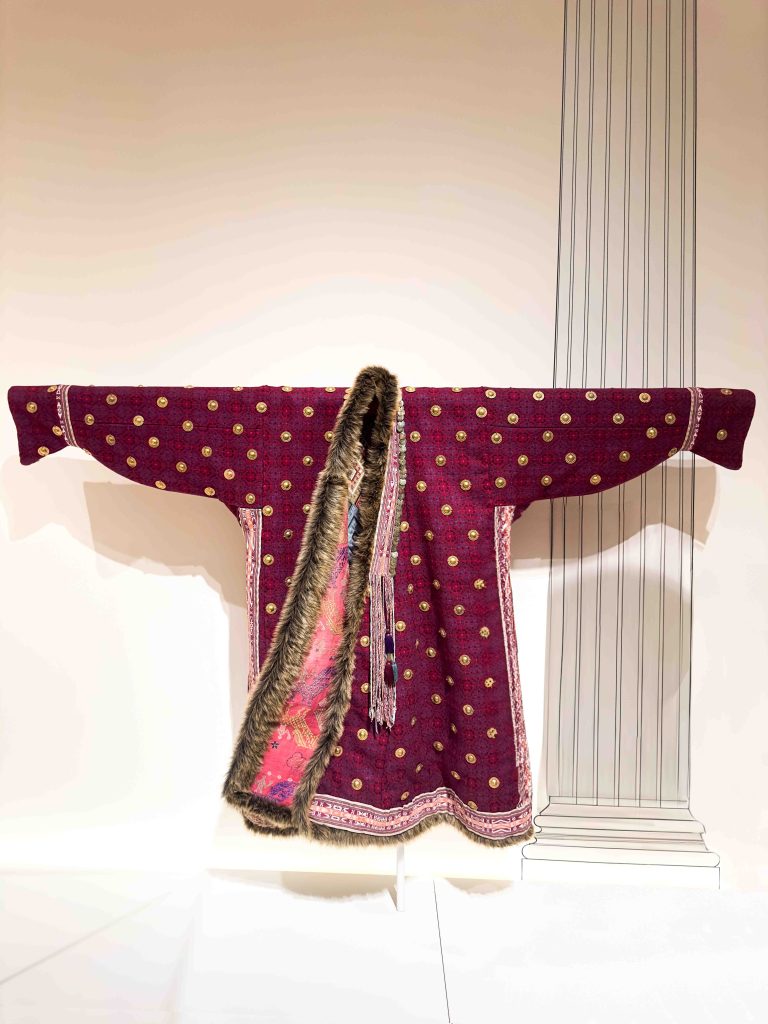
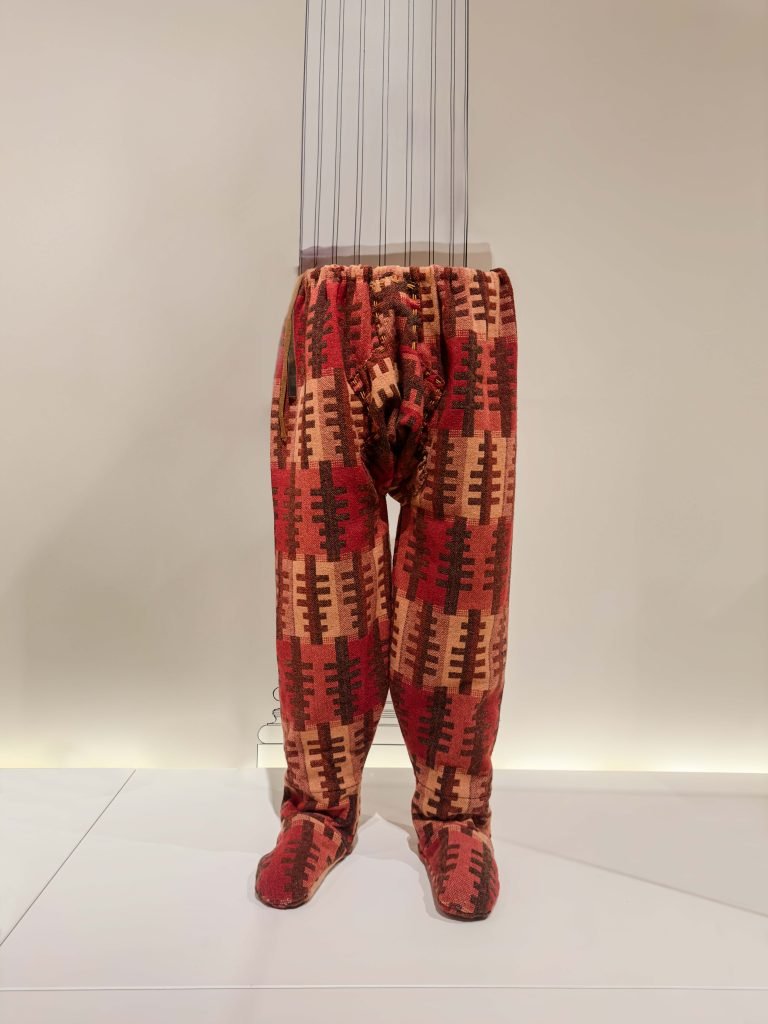
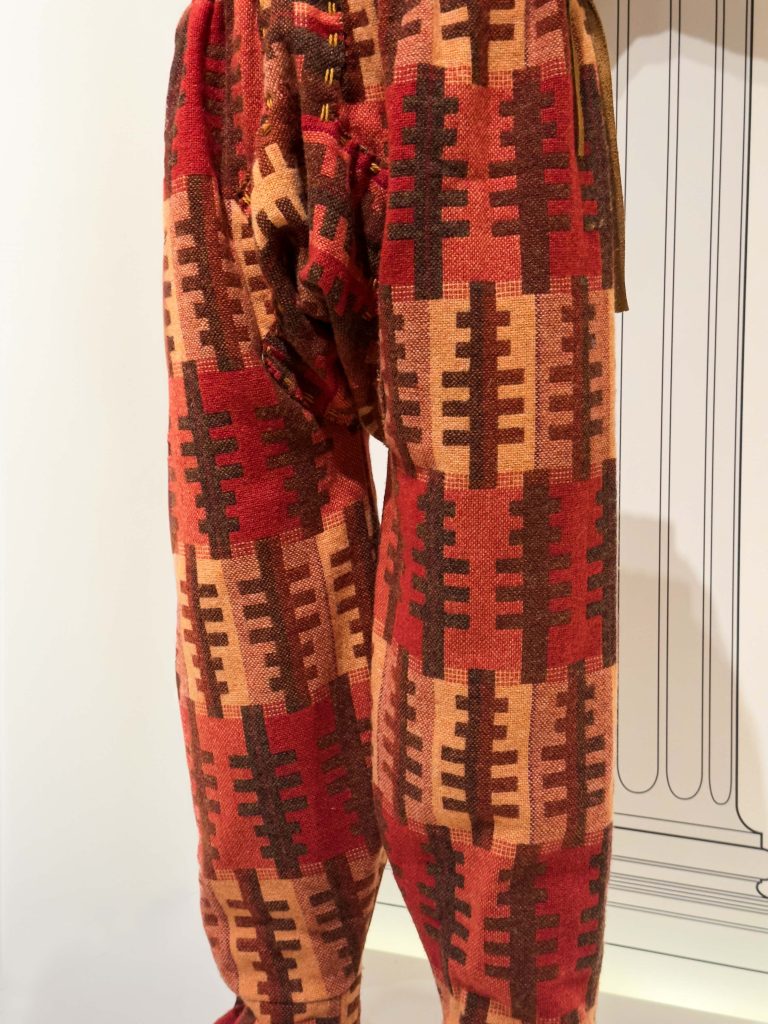
To echo the original costume’s aesthetics, the recreated attire was adorned with metallic appliqués. This detail contributed an added layer of sophistication to the costume, reflecting the distinctive aesthetic tastes of the ancient Persians.
The result was a testament to the rich sartorial traditions of the Achaemenid Empire, providing us with an incredible visual reference for understanding the dress and cultural practices of ancient Persia. It underscores the ways in which clothing served as a crucial intersection of function, status, and identity in Persian society.
The Hellenistic Blend: How Conquerors Were Influenced by Achaemenid Clothing Luxury
Ancient Persian clothing’s charisma was so potent that it crossed not just cultural barriers, but also those The charisma of ancient Persian clothing was so potent that it crossed not just cultural barriers but also those of conflict and conquest. This influence is best embodied in the figure of Alexander the Great. Following his conquest of the Achaemenid Empire, he did not discard the Persian traditions of luxury; on the contrary, he embraced and integrated them into his own court, embodying the saying, “to the victor belong the spoils.”
Alexander’s adoption of Persian luxury was a strategic move, reflecting his understanding of the psychological power of opulence. By embracing the luxurious lifestyle of the Persian court, he not only indulged in the visible signs of his victory but also signaled his authority to the conquered peoples. This adoption of Persian luxury served as a visual and symbolic continuation of the high standards of the Achaemenid court, presenting a picture of stability and continuity that helped consolidate his rule.
This blend of cultures didn’t stop with Alexander. His successors, the Diadochi, who came to power in various parts of his vast empire following his death, carried forward this fusion of Greek and Persian styles. This amalgamation was far from a simple imitation; instead, it was a creative synthesis that resulted in the unique cultural phase known as the Hellenistic period. During this era, Greek-speaking dynasties, while maintaining their own cultural roots, also adopted and adapted elements of Persian art, dress, architecture, and traditions.
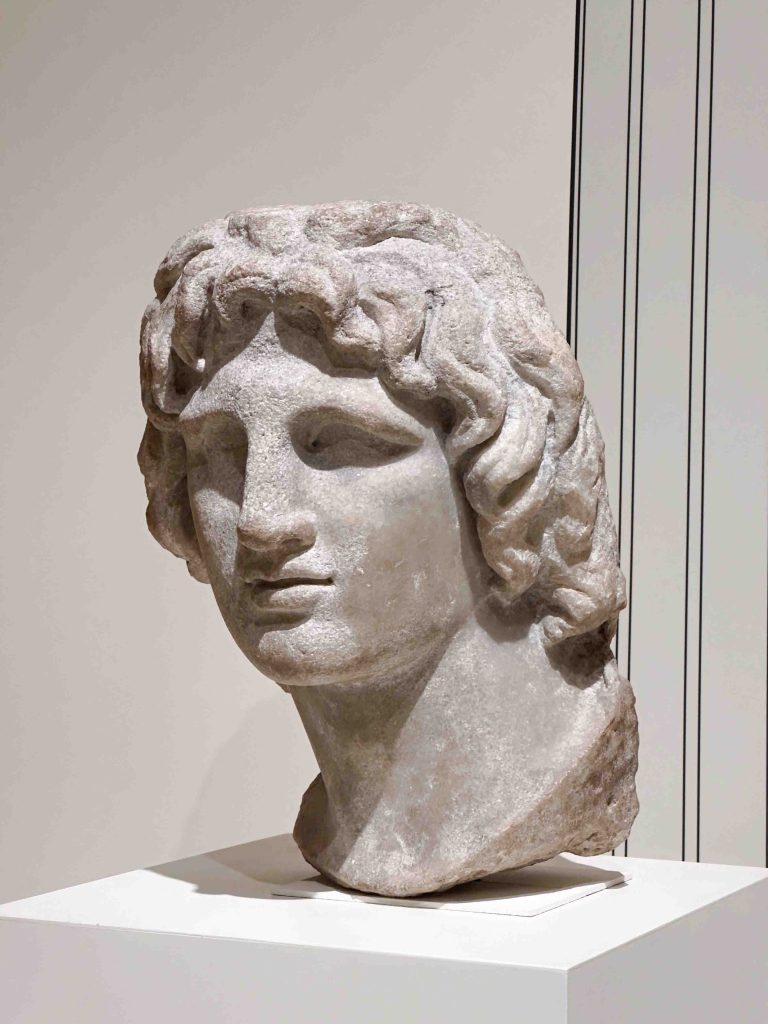
The blending of Greek and Persian styles is most evident in the luxury objects and art forms from this period. The intricate designs and craftsmanship, combined with a hybrid aesthetic, offer a tangible testament to the depth and breadth of Persian influence. Luxury items from the Hellenistic era, whether they were sculptures, jewellery, or ceremonial attire, bore the imprint of Persian luxury, suffused with Greek elements, creating a distinctive fusion that was greater than the sum of its parts.
| Aspect | Persian Influence | Hellenistic Adaptation |
|---|---|---|
| Clothing Styles | Robes, tunics, sashes | Blended with Greek chitons |
| Materials | Silk, fine wool | Incorporation into Greek attire |
| Decorations | Gold embroidery, appliqués | Used in Hellenistic garments |
| Jewellery | Elaborate designs with gemstones | Adopted in Greek styles |
One must not forget, however, that this cultural blend was not merely a one-way street. While the Greek world was absorbing and transforming Persian luxury, the Persian territories under Greek rule were also adopting and adapting Greek ideas and practices, enriching their own culture. The cultural exchange during the Hellenistic era is a testament to the dynamic and reciprocal nature of cultural influences and the enduring impact of Persian luxury.
Conclusion: The Intricacies and Influence of Ancient Persian Clothing in the Achaemenid Era
As we journey back in time, tracing the history of ancient Persian clothing of the Achaemenid era, we find that it played far more than just a sartorial role. It was an eloquent language, a visual narrative that told tales of power, wealth, and prestige. Every jewel, every robe, every pair of finely crafted boots served not just an aesthetic or practical purpose but also functioned as an instrument of political strategy, a badge of societal standing, and a symbol of personal achievement.
The Persians possessed an acute understanding of the power of presentation and the psychological impact of visual symbolism. Each intricate detail, each vibrant dye, each piece of glittering gold was deliberately chosen and masterfully used to impress, influence, and command both local subjects and foreign dignitaries. The Persian court was a stage where the theatre of power was performed with the costumes playing an essential role.
This influence of Persian luxury did not stop at the borders of the empire. The Greeks, despite being conquerors, succumbed to the allure of Persian opulence. Alexander the Great’s assimilation of Persian luxuries into his court, followed by the Hellenistic fusion of Greek and Persian styles by his successors, is a powerful testament to the captivating charm and enduring impact of Persian luxury.
Ancient Persian textiles and clothing were symbols and instruments of cultural exchange, diplomacy, and power dynamics—a statement that echoed throughout the empire, reverberating even in the corners of the conquered lands.
As we delve deeper into the tapestry of history, it becomes clear how closely intertwined are the threads of fashion, power, culture, and politics. The legacy of luxurious and symbolic attire from the Achaemenid era continues to captivate us today, serving as a stark reminder of how fashion is not merely about personal style but is also a reflection of the zeitgeist of an era, a civilisation’s values, and the machinations of power.
Whether in the form of a king’s robe or a courtier’s jewelry, the echo of Persian luxury still resonates, reminding us of an ancient civilization’s grandeur and its sophisticated understanding of the interplay between appearance, power, and influence. It is a legacy that not only adorns the pages of history but continues to inspire and intrigue the realms of fashion, culture, and history, underscoring the timeless allure of Achaemenid clothing.
About Craftestan
Now that we’ve taken a journey through the opulent world of Achaemenid-era Persian clothing, you might find yourself yearning to add a touch of this historical grandeur to your own life. If that’s the case, we have an irresistible invitation for you.
Craftestan, a purveyor of authentic Persian textiles, offers you the unique opportunity to bring a piece of this ancient luxury into your home. Craftestan’s collection, sourced from the historic city of Yazd, is a tribute to the centuries-old tradition of Persian textile crafting.
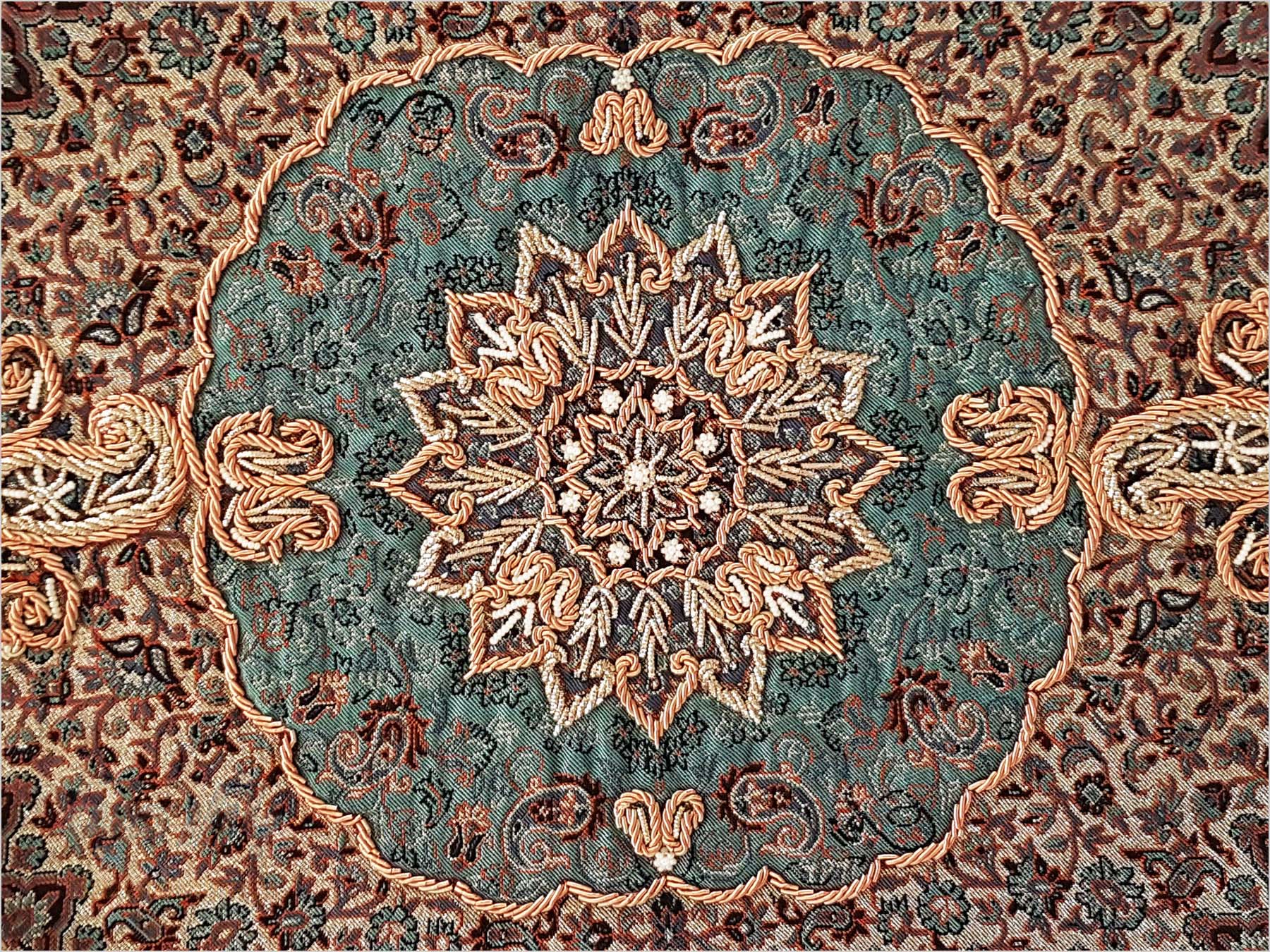
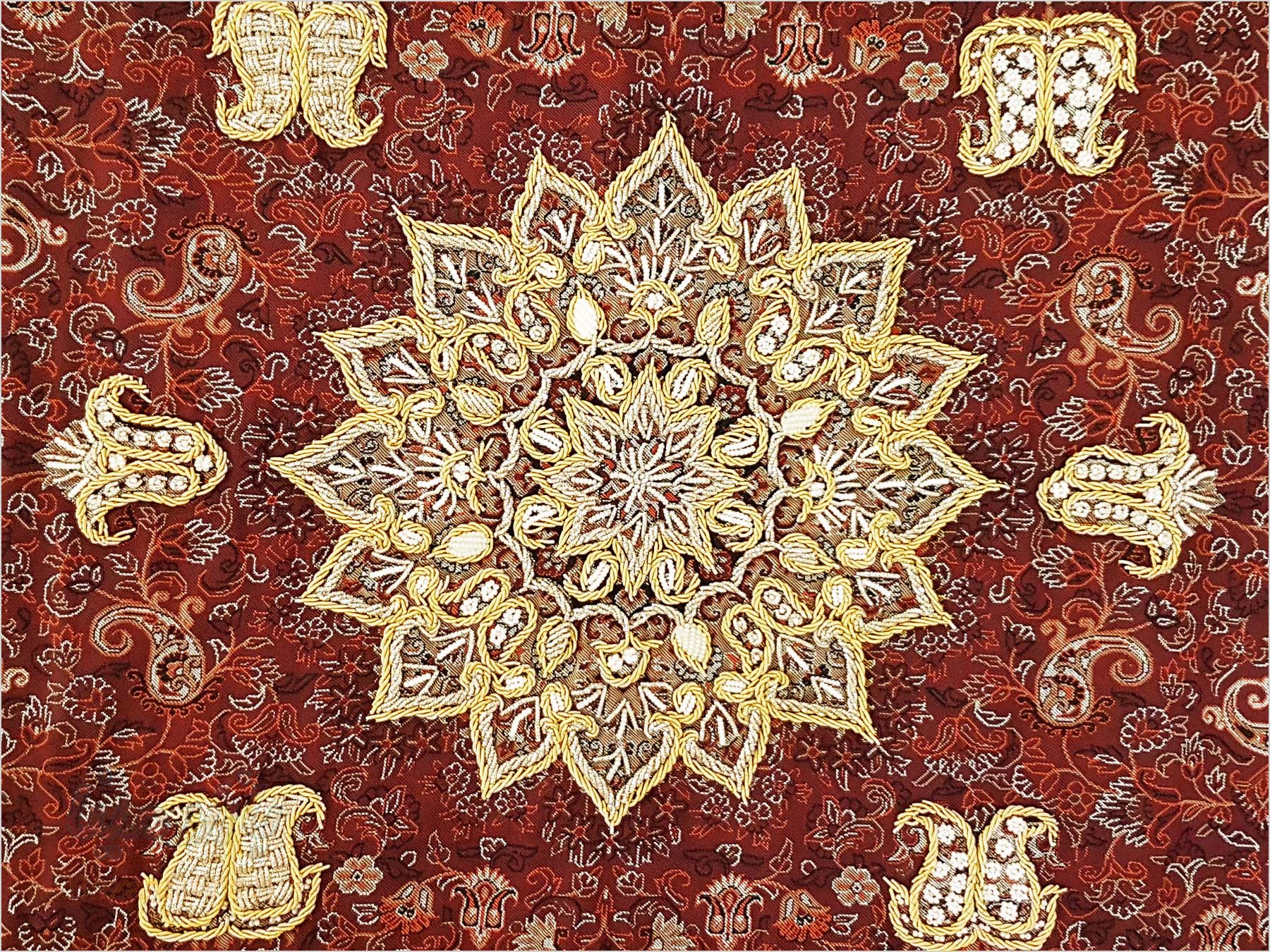
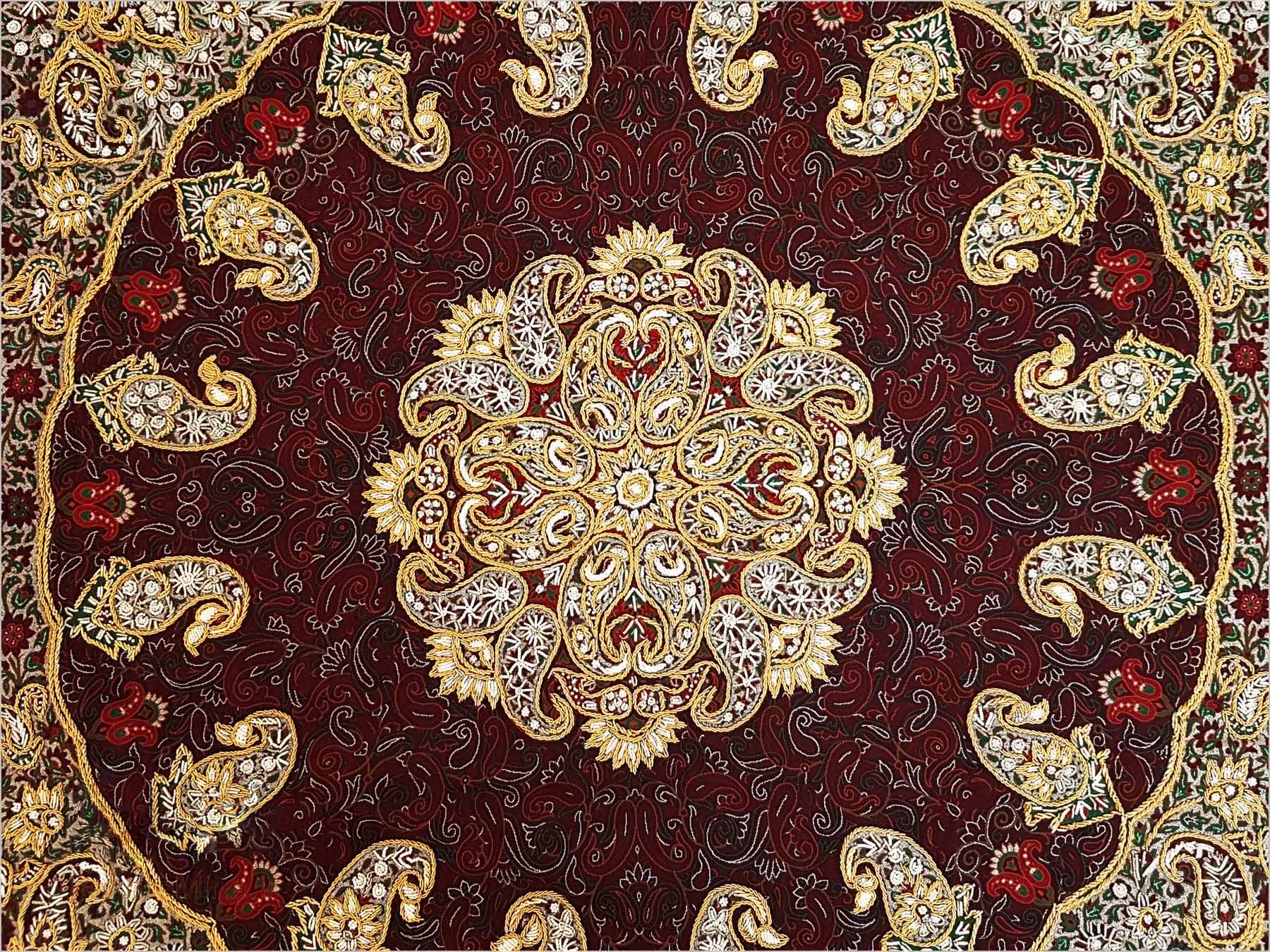
Known as Termeh (Persian: ترمه), this exquisite textile has a rich history dating back thousands of years. The city of Yazd, with its deep historical roots and time-honored reputation for high-quality textiles, offers the perfect setting for the production of these luxurious fabrics.
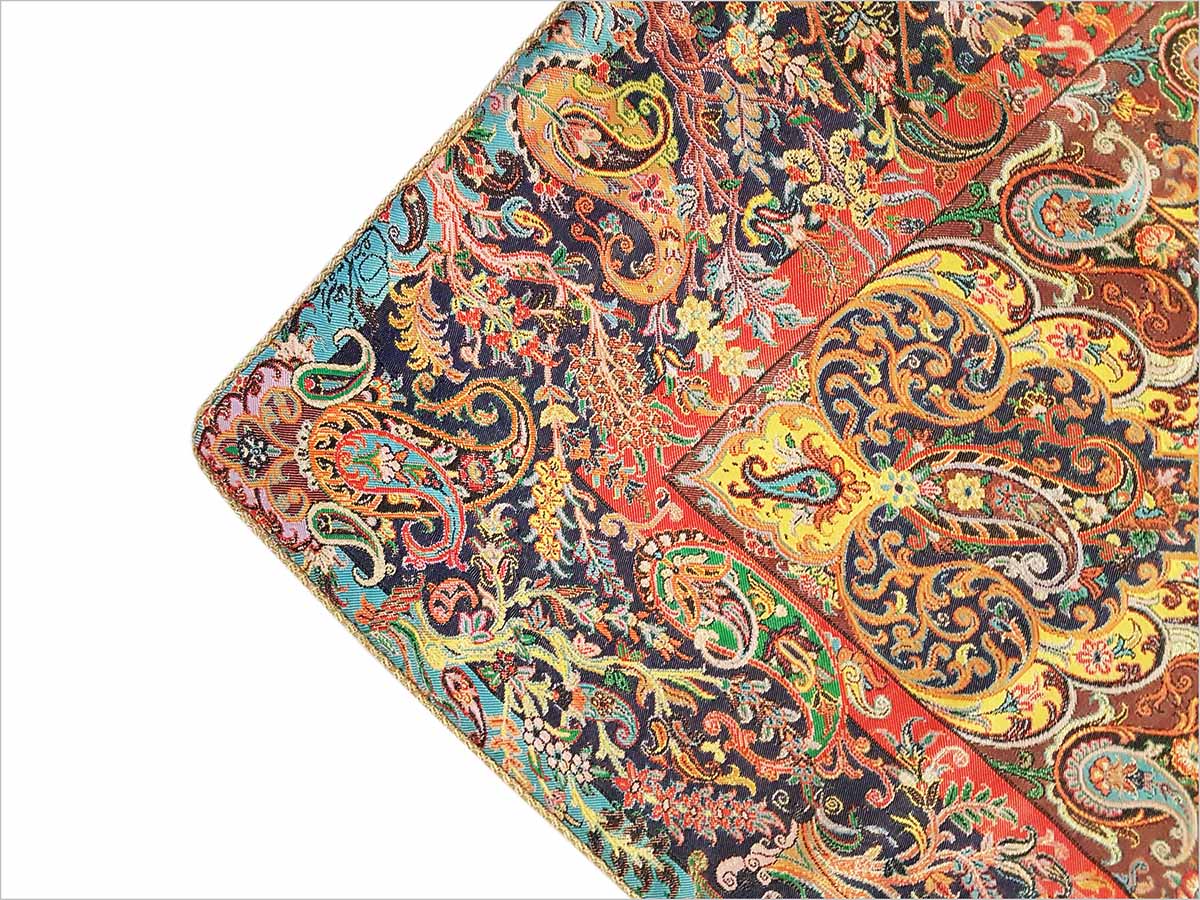
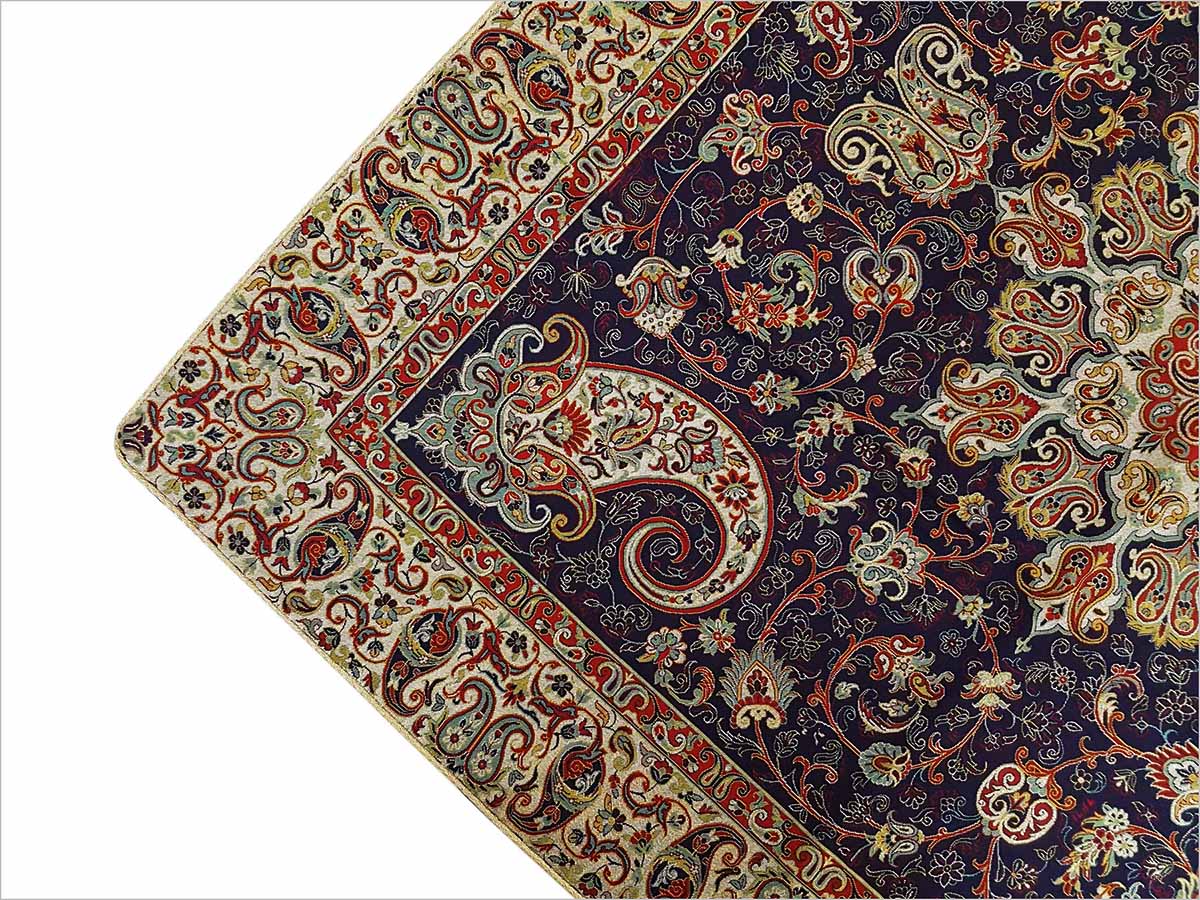
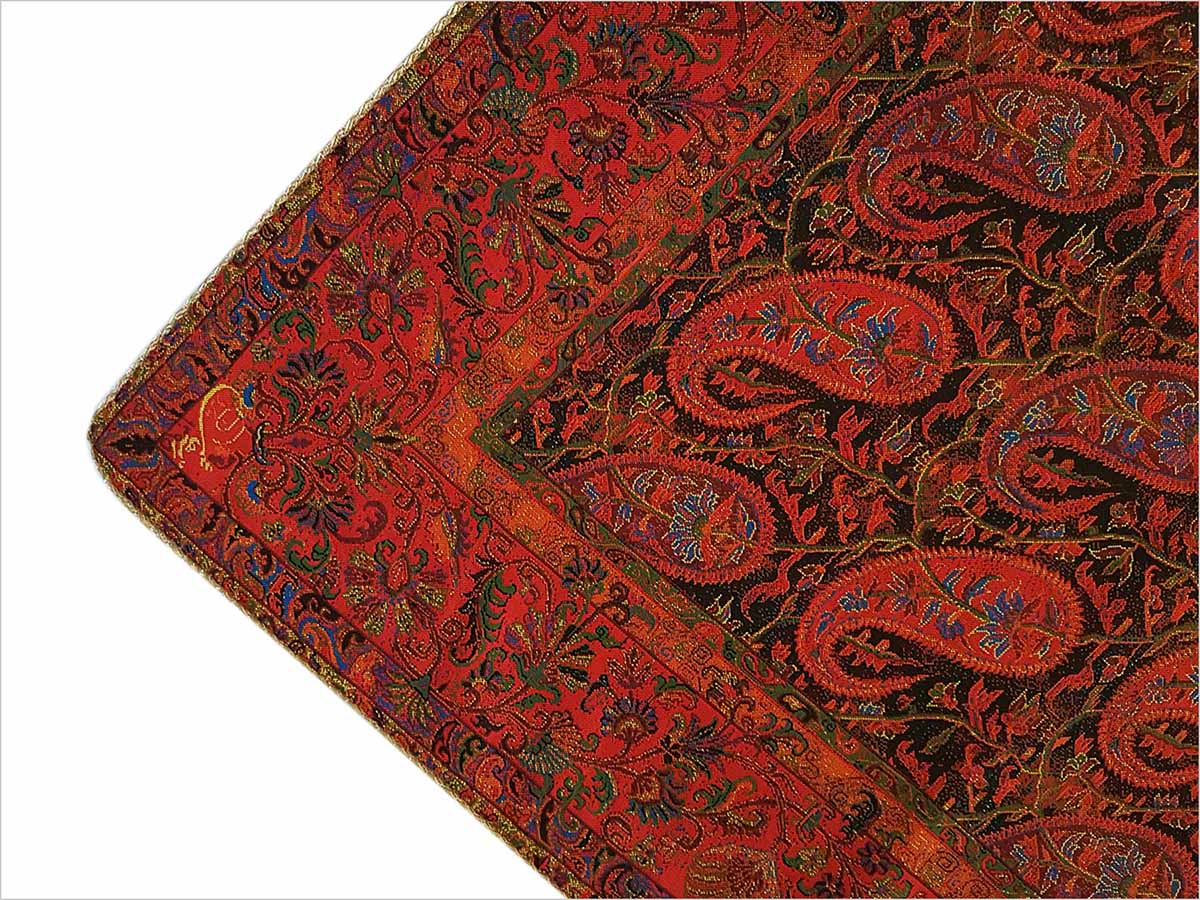
Hand-crafted with meticulous attention to detail, each piece in Craftestan’s collection embodies the same commitment to quality, beauty, and luxury that was the hallmark of Persian clothing during the Achaemenid era. Richly embroidered and sumptuously dyed, these textiles are more than just fabric – they are pieces of art, fragments of history, and symbols of an enduring cultural legacy.
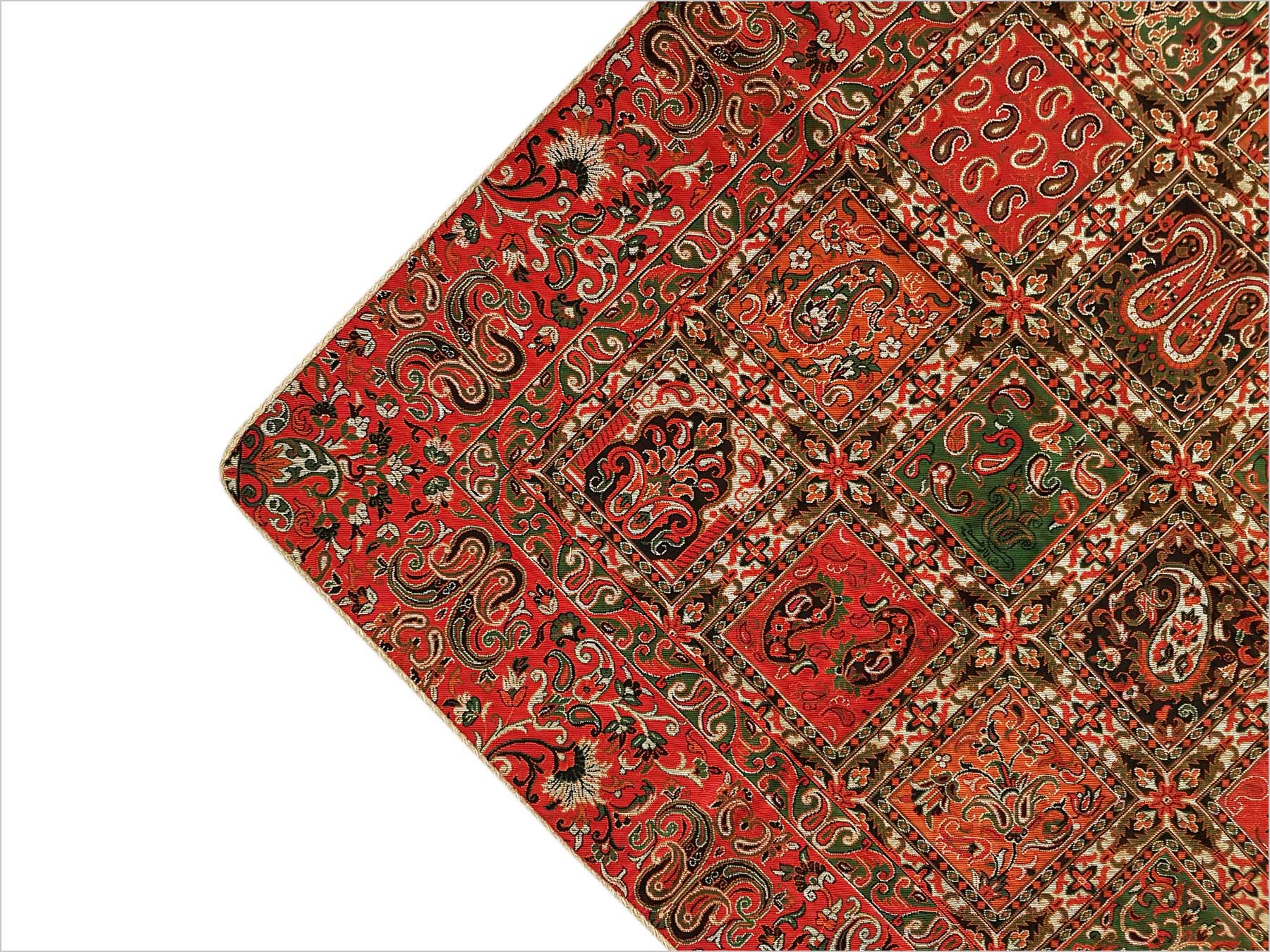
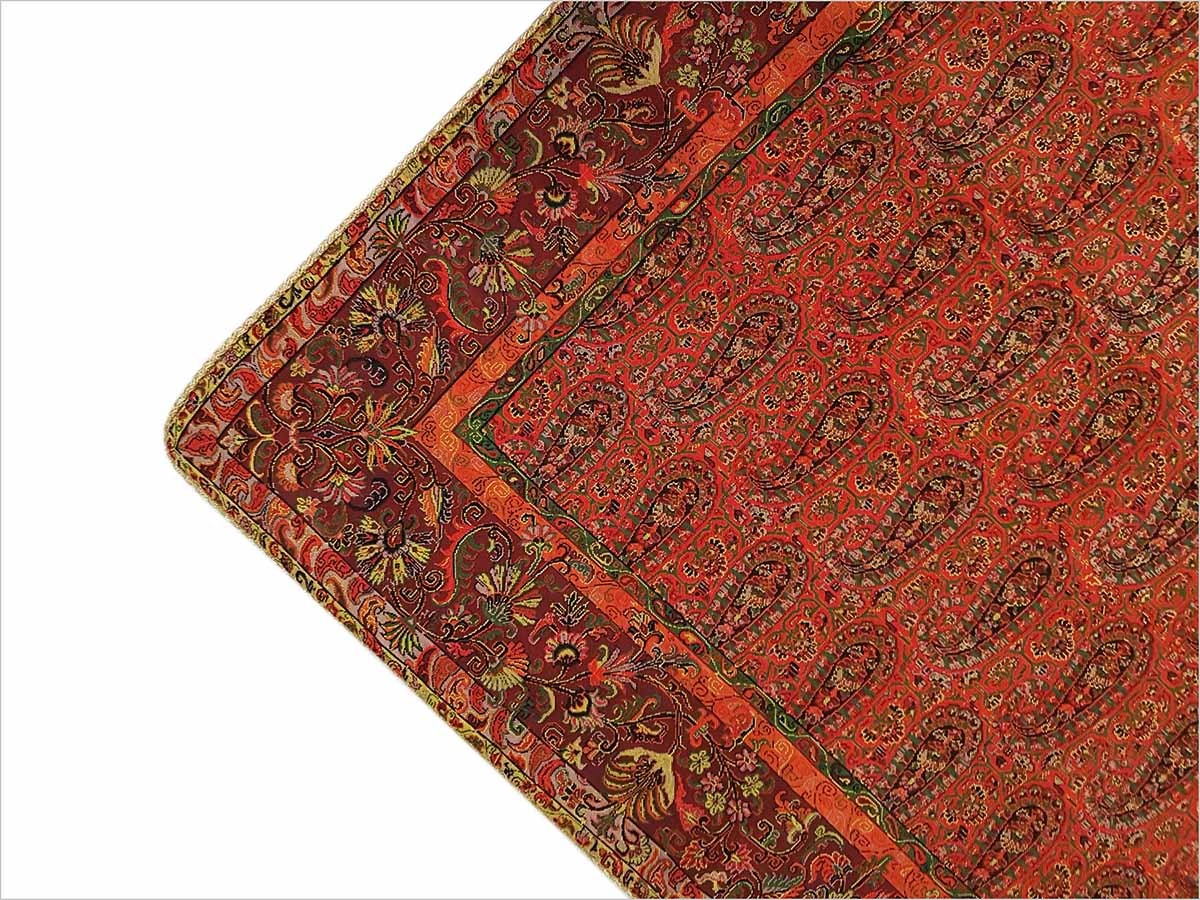
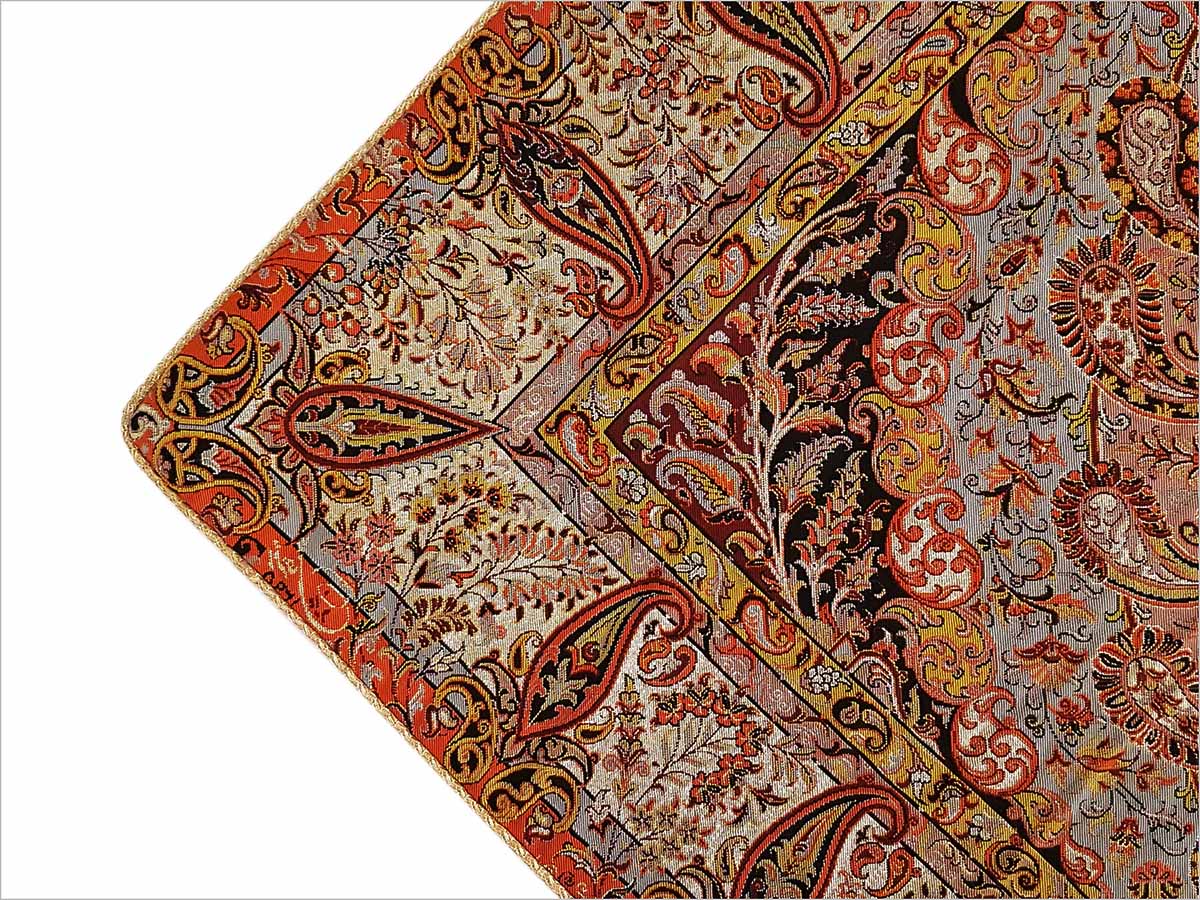
Whether you’re looking for an addition to your wardrobe, a unique piece for your home decor, or a special gift, the authentic Persian textiles from Craftestan can deliver a touch of ancient luxury to your modern life.
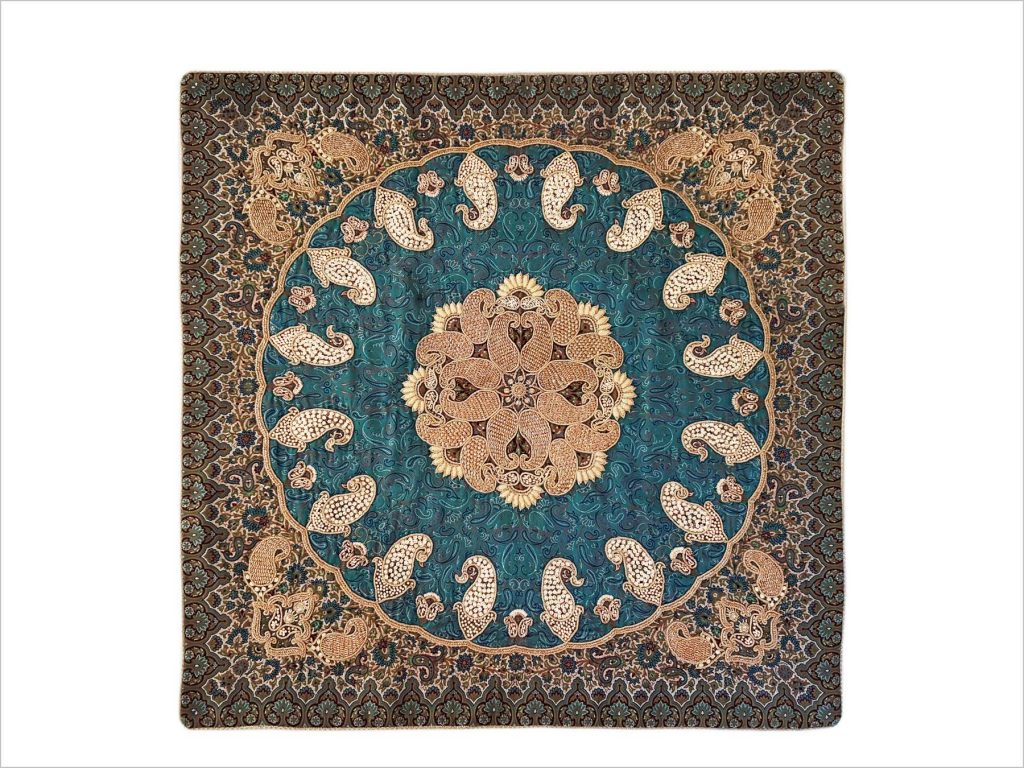
Your Touch of Timeless Luxury
So why not experience the allure of Persian luxury for yourself? Explore Craftestan’s exquisite collection of Termeh textiles. See, touch, and feel the rich history of Persian craftsmanship in every thread. And remember, when you purchase from Craftestan, you’re not just buying a product – you’re becoming a part of preserving a rich and vibrant cultural heritage.
FAQs
What materials were commonly used in Achaemenid clothing?
Achaemenid clothing was crafted from luxurious materials such as silk, fine wool, and linen. Lamb’s wool was particularly valued for its comfort and quality. These materials were often dyed with rich, vibrant colours derived from natural sources like Tyrian purple from sea snails, red from madder root, and blue from indigo plants. The use of such high-quality textiles was a marker of status and wealth within the Achaemenid Empire.
How did Achaemenid clothing signify social status in the Persian Empire?
Clothing in the Achaemenid Empire was a direct reflection of one’s position within the societal hierarchy. Royalty and high-ranking officials wore garments made from the most luxurious materials, adorned with gold threads, intricate embroidery, and precious gemstones. The richness of the colours and the complexity of the decorations indicated higher status. In contrast, lower-ranked individuals wore simpler fabrics with minimal adornment. This distinction in attire served as a visual representation of social stratification and reinforced the power dynamics within the empire.
What was the significance of the royal robe in Achaemenid fashion?
The royal robe was a pinnacle of Achaemenid fashion and a powerful symbol of the king’s authority. Made from luxurious fabrics and adorned with gold appliqués and intricate embroidery, the robe was not only a display of immense wealth but also a visual declaration of royal power. Its design required discipline to wear, emphasising the king’s elevated status. The robe’s rich colours and elaborate decorations were meant to impress subjects and foreign dignitaries alike, reinforcing the king’s supreme position in the empire.
How did Achaemenid clothing influence other cultures, particularly during the Hellenistic period?
Achaemenid clothing had a profound influence on other cultures, especially after Alexander the Great conquered the Persian Empire. Alexander adopted elements of Persian luxury in his own attire, integrating them into Macedonian fashion as a strategic move to consolidate his rule. This cultural blending continued during the Hellenistic period, where Greek and Persian styles fused to create a unique hybrid fashion. Luxury items from this era often featured Persian-inspired designs and materials, reflecting the enduring impact of Achaemenid fashion on subsequent civilisations.
What role did ancient Persian textiles and dyes play in Achaemenid clothing?
Textiles and dyes were central to Achaemenid clothing, contributing to the garments’ luxury and symbolic significance. Ancient Persian textiles were known for their high quality and intricate weaving techniques. Natural dyes produced vibrant colours—purple from sea snails signified royalty, red from madder root indicated nobility, and blue from indigo was associated with wealth. The choice of colour and textile not only enhanced the aesthetic appeal but also communicated the wearer’s social status and wealth, making textiles and dyes integral to the fashion and culture of the Achaemenid Empire.
Reference
Cawkwell, G. (2012). The Greek Wars : the Failure of Persia. Oxford: Oxford University Press.
Curtis, J., St John Simpson, British Museum and Iran Heritage Foundation (2010). The World of Achaemenid Persia : history, Art and Society in Iran and the Ancient near East. London: Tauris.
Curtis, J., Tallis, N., Béatrice André Salvini and Al, E. (2006). Forgotten Empire : the World of Ancient Persia. London: The British Museum Press.
Seyyed Hossein Nasr and Mehdi Amin Razavi (2008). An Anthology of Philosophy in Persia. London ; New York: I.B. Tauris Publishers.
Stoneman, R. and Yale University Press (2015). Xerxes : a Persian Life. New Haven ; London: Yale University Press.
Wiesehöfer, J. (2011). Ancient Persia : from 550 BC to 650 AD. London: Tauris.
Related Blog Posts




 Oil Painting
 Miniature Painting
 Wall Ornaments
 Enamel
 Filigree
 Turquoise
 Decorative Plate
 Home Accents
 Decorative Vase
 Pāteh
Pāteh Térméh
 Home Accents
 Mirror
 Tea ware & Tea
 Backgammon / Chess Board
 Home Accents
 Office
 Wall Clock
 Home Accents
 Vase
Vase Decorative Vase
 Wall Decor
 Home Accents
 Mirror
 Vase
Vase Embroidery
 Enamel
 Marquetry
 Watercolour Painting
 Under £20
 Under £50
 Under £100
 Under £200
 Under £300
 Mother’s Day
 Anniversary
 Her
Her Him
Him Ancient Persia
 Persian Artefacts
 Persian Clothing
 Persian Gift Ideas
 Oil Painting
If some one needs expert view regarding running a blog then i advise him/her
to pay a quick visit this website, Keep up the nice work.
It’s as if you read my mind; you seem to know so much about this that it’s as if you penned the book in it or something. Although, I believe you could use a few images to help drive home the point, other than that, this is an excellent blog. I will definitely be back for more.
Thanks for your kind words and valuable feedback! Integrating images does indeed enhance the narrative, but capturing the essence of ancient Persian clothing poses unique challenges. Unlike more durable artifacts like jewelry or pottery, textiles from thousands of years ago rarely survive. The intricate and costly nature of Achaemenid royal attire means few have attempted recreations. However, thanks to the efforts of Lloyd Llewellyn-Jones, Rebecca Southall, and the British Museum, a rare exhibition showcased remakes of these magnificent garments. I was fortunate to capture photos of this exceptional display.