




Persian Artefacts
The Glowing Legacy: Unveiling the History of Enamelling

Journeying through the annals of human creativity, we often unearth treasures that silently narrate tales of innovation, artistry, and cultural exchange. Enamelling, an art form that has adorned objects from jewellery to architectural masterpieces, stands as a testament to humanity’s enduring quest for beauty and expression. In this exploration, we delve into the history of enamelling, tracing its evolution from ancient techniques to its spread across civilisations. Join us as we unravel stories of radiant artistry, transcontinental journeys, and the indomitable spirit of artisans who shaped this timeless craft.
Table of Contents
Ancient Beginnings: The Roots of Enamel Art
Enamelling’s origins are as rich and varied as the cultures that embraced it. This ancient art, which involves fusing powdered glass to metal at high temperatures, can be traced back to civilisations such as the Egyptians, Celts, and Mycenaeans. These early artisans developed ancient enamelling techniques that would lay the groundwork for future innovations.
In the Islamic world, enamelling found a fertile ground for development. Drawing inspiration from neighbouring cultures like Persia, Byzantium, and the Greco-Roman traditions, Islamic craftsmen inherited and transformed the art. The tradition of glass-making and enamelling, initially influenced by Roman and Byzantine practices, evolved uniquely within Islamic culture. Artisans introduced new motifs and refined techniques, embedding their creations with symbols and aesthetics emblematic of Islamic art.
The fusion of glass and metal in Islamic enamelling led to creations that were not only visually stunning but also technologically advanced for their time. These pieces became integral to the broader tapestry of Islamic artistry, reflecting a seamless blend of ancient enamelling techniques and innovative practices.
| Period | Region | Key Developments in Enamelling |
|---|---|---|
| Ancient Times | Egypt, Mycenae, Celts | Early enamelling techniques on jewellery and artefacts |
| 9th Century | Iraq (Islamic World) | Development of lustre painting on ceramics and glass |
| 10th Century | Nishapur, Iran | Emulation of Iraqi lustre techniques |
| 13th Century | Kashan, Iran | Advances in stonepaste tiles with enamel decoration |
| 15th-16th Century | Deruta and Gubbio, Italy | Fusion of Islamic enamelling with Renaissance art |
| 19th Century | Britain | Revival of enamelling inspired by historical techniques |
Take, for instance, the mesmerising Samarra bowl—a pinnacle of early Islamic enamel work. This vessel epitomises the brilliance of combining lustre painting with enamelling, showcasing the rich legacy of Arab artisans. Its resplendent hues echo the first lustrous techniques that surfaced on glass in Egypt and later on pottery in Iraq around the 9th century. The bowl’s design and craftsmanship are reminiscent of treasures from the caliphal city of Samarra, serving as a testament to the origins of enamelling within Islamic culture and the enduring allure of traditional techniques.
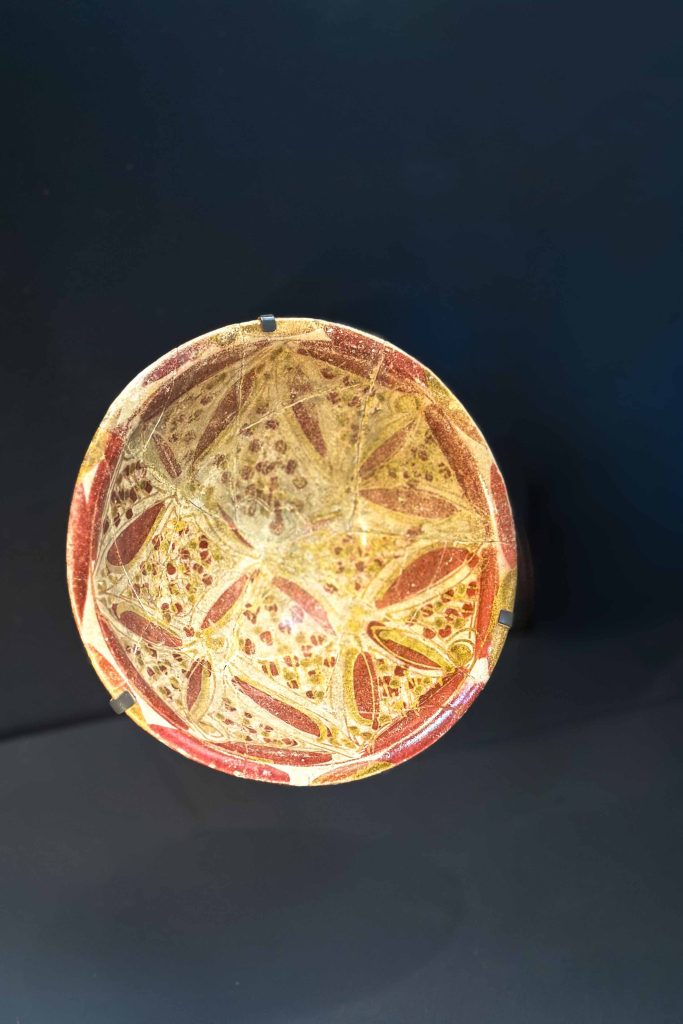
Such pieces were not confined to local admiration; they traversed continents, inspiring and being emulated by artisans across the globe. The Samarra bowl, in particular, highlights the early stages of enamelling’s journey—a journey that would see the art form evolve and spread, influencing countless cultures along the way.
The Nishapur Bowl: A Glimpse into Early Enamelling Techniques
One of the treasures that beautifully encapsulates the evolution of enamel art is the stunning bowl from Nishapur, a relic from the Samanid dynasty in the 10th century. Gazing upon this bowl transports us back to a time when artisans were experimenting with new methods, adapting techniques, and bringing to life wondrous artistry inspired by distant lands.
The Intricate Art of Early Enamelling
Before delving into the bowl’s story, it’s essential to understand the context of enamelling during this period. Early enamelling involved meticulous techniques where artisans would apply metallic oxides mixed with substances like vinegar onto glazed surfaces. In the case of Islamic enamelling, silver and copper oxides were often used. The object, typically made of earthenware coated with a tin-based white glaze, would then undergo a firing process in a reduction kiln. The low-oxygen environment caused the metallic compounds to break down, leaving a thin layer of shimmering metal particles fused within the glaze. Once cleaned, the results were spellbinding—bright, captivating colours that seemed to dance across the surface.
Achieving this effect was no simple task. The precision required in both the application of the metallic mixture and the control of the kiln environment meant that many pieces might not have turned out as intended. Some bowls painted with the metallic oxide mixture may not have been subjected to the reduction firing, leading to different visual outcomes.
The Story of the Nishapur Bowl
The Nishapur bowl, painted in an enticing olive slip, tells a tale of exploration and emulation in the realm of enamelling. Made of earthenware, this vessel stands out with designs that intricately imitate the lustre wares of Iraq. This imitation is significant—it indicates that even in Nishapur, situated in Northeast Iran, the allure of Iraqi enamelling techniques was undeniable. The designs are believed to be attempts at replicating the revered and imported enamelled ceramics from Iraq.

Tracing the bowl’s origins leads us to the thriving cultural centre of Nishapur during the Samanid dynasty. The 10th century marked significant advancements in art, culture, and trade in the region. The Nishapur bowl not only showcases the ancient enamelling techniques but also reflects the cultural significance of enamelling as a medium of artistic expression and a symbol of interconnected civilisations.
The Enchanting Journey of Enamelling Across Time and Cultures
In the vast tapestry of art history, the evolution of enamel art stands out as a luminous thread, showcasing the creativity and innovation of craftsmen across different civilisations. Among the many techniques that have spread their allure over the centuries, the art of lustre enamelling shines brightly for its shimmering magic and intricate beauty.
The journey of lustre enamelling is as intricate and enchanting as the patterns it adorns upon pottery and metalwork. Originating with ancient enamelling techniques in Iraq, this method flowed like a river, nurturing and enriching the artistic expressions of the Middle East and beyond. Artisans became the vessels of this luminous art form, carrying it to new horizons, including the enamelling centres of Egypt, Syria, and Iran. By the time it reached Egypt, innovative experiments were conducted with the ceramic body itself. The transition from traditional earthenware to a sophisticated material called stonepaste marked a significant milestone in the history of enamelling, becoming by the 12th century the prime medium for crafting lustre wares and other pottery forms.
One of the paramount examples of this evolution is a jar from the late 13th century—a masterpiece crafted from yellow-brown painted ceramic. This exquisite piece hails, quite possibly, from Syria—a region that embraced and enhanced the art of lustre enamelling. Decorated with elegant medallions segmented by prunus blossoms, the jar’s artistry echoes the essence of the Islamic era from which it originates. Each stroke and design evokes the meticulous hands of an artisan well-versed in their craft, weaving a tale of beauty and tradition.
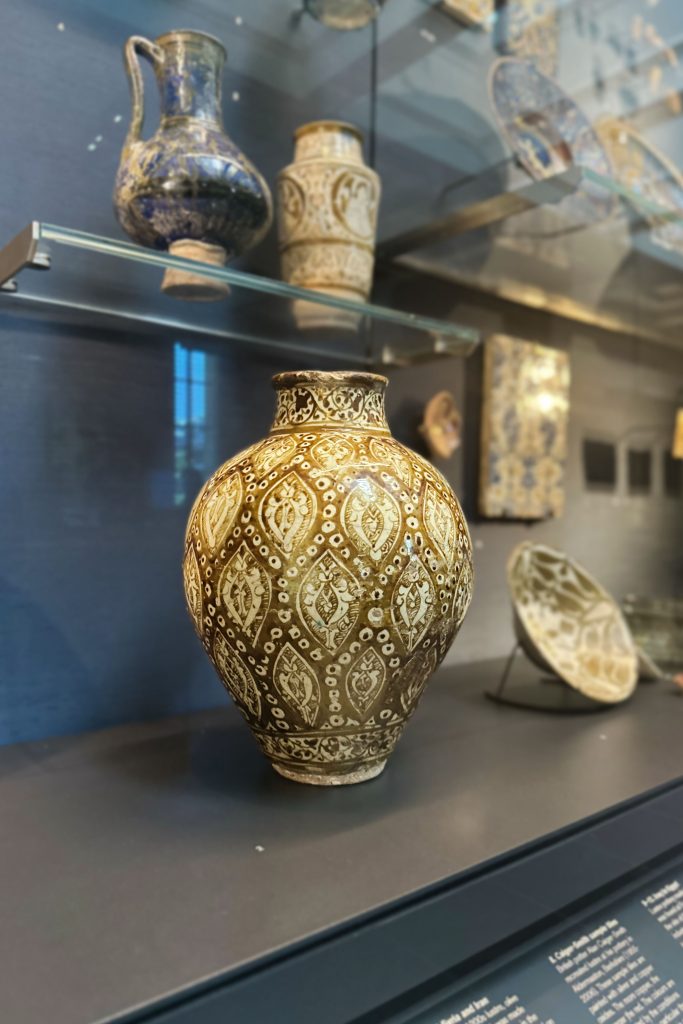
This jar not only exemplifies the ancient enamelling techniques perfected over generations but also reflects the cultural significance of enamelling in conveying artistic expression and preserving heritage. The spread of lustre enamelling across regions highlights the interconnectedness of societies and the shared human pursuit of creating objects of beauty. This journey underscores the theme of enamelling around the world, illustrating how a technique born in one culture can inspire and influence countless others, enriching the global artistic landscape.
The Global Journey of Enamelling: Techniques Across Time and Geography
The history of enamelling is a tapestry woven with threads of innovation, cultural exchange, and artistic brilliance. As techniques evolved and spread, enamelling became a universal language of beauty, transcending borders and time periods.
The Shimmering Tiles of Kashan: Enamel Art in Iran
Delving deeper into the illustrious world of enamel art, we encounter another exquisite representation of enamelling techniques: a resplendent tile from the heartlands of Kashan. Kashan, located in the province of Isfahan in central Iran, is a city steeped in art and history, often associated with intricately designed ceramics and architectural marvels. By the 13th century, during the urban renaissance of the Middle Islamic period, Kashan emerged as a hotspot for ceramic innovation, blending art and science in a harmonious dance of creativity.
The tile in question is a rectangular frieze made from stonepaste—a material that represented a significant advancement in ceramic technology. Its surface is brought to life with split-palmette scrolls, painted in evocative shades of blue and turquoise. These designs, molded in relief, are set against a luminous background achieved through advanced enamelling techniques, adorned with petite scrolling leaves in reserve. The shimmering leaf patterns not only offer visual pleasure but also echo the intricate designs found in manuscripts of the era.
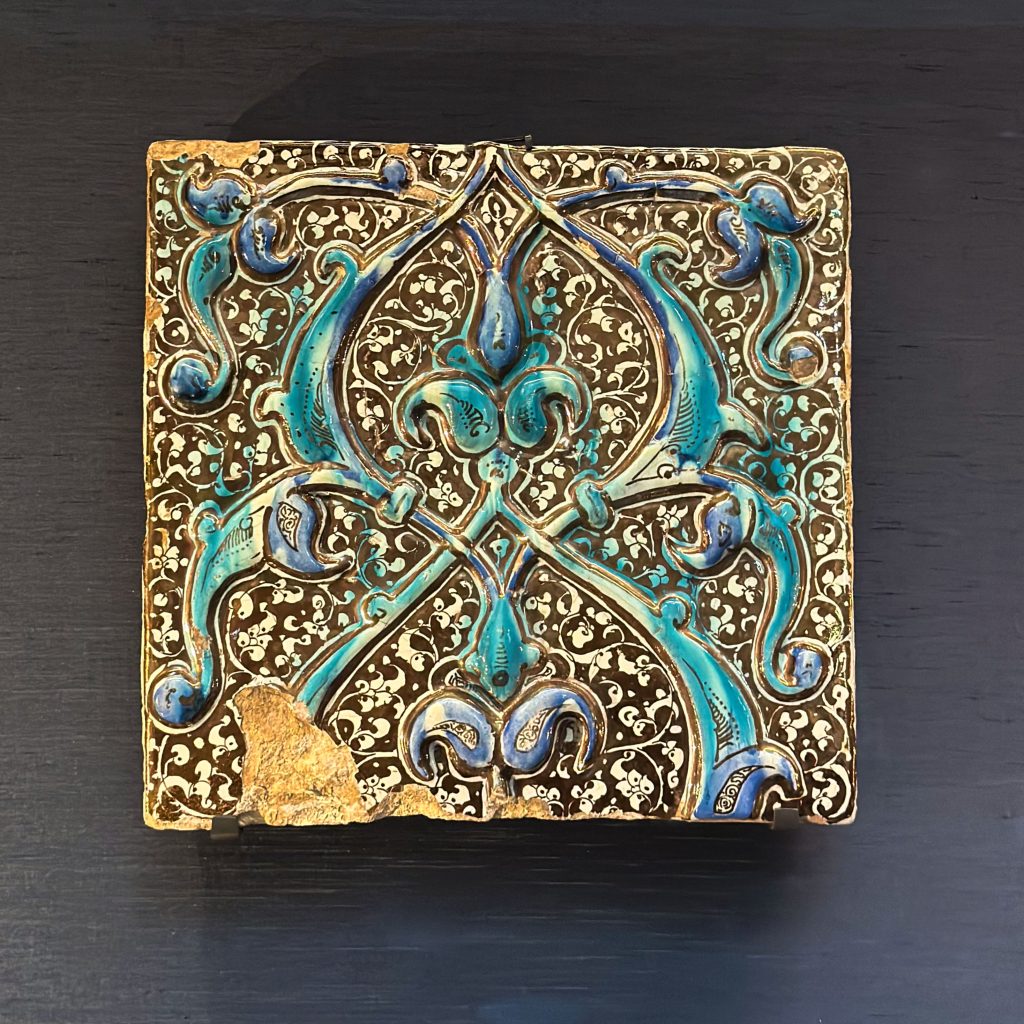
This Kashani tile encapsulates the essence of enamelling’s journey. It serves as a tangible link between the ancient enamelling techniques of the past and the evolving practices of the Middle Islamic period. The tile reflects the cultural significance of enamelling in architectural decoration and storytelling, highlighting how artisans used the medium to convey both aesthetic beauty and cultural narratives.
European Elegance: Enamelling in Italy’s Renaissance
As enamelling continued its voyage, it eventually found a new home in Renaissance Italy, where the art form was embraced and transformed with Italian finesse. The fusion of Middle Eastern artistry with European creativity led to remarkable developments in enamel art.
Deruta’s Radiant Portraits: Evolution of Enamel Art
A striking dish from Deruta, crafted between 1500 and 1525, stands as a testament to this blend of craftsmanship and innovation. Central to the dish is a mesmerising female portrait, intertwined with the singular letter “N”—perhaps an ode to an enigmatic muse or a subtle nod to a patron. Rendered in rich blue and enhanced by enamelling techniques, the portrait is surrounded by ornate patterning featuring panels of scale designs and stylised foliage. The addition of a lustrous finish adds an element of intrigue, an artistic choice rooted in its Middle Eastern predecessors.
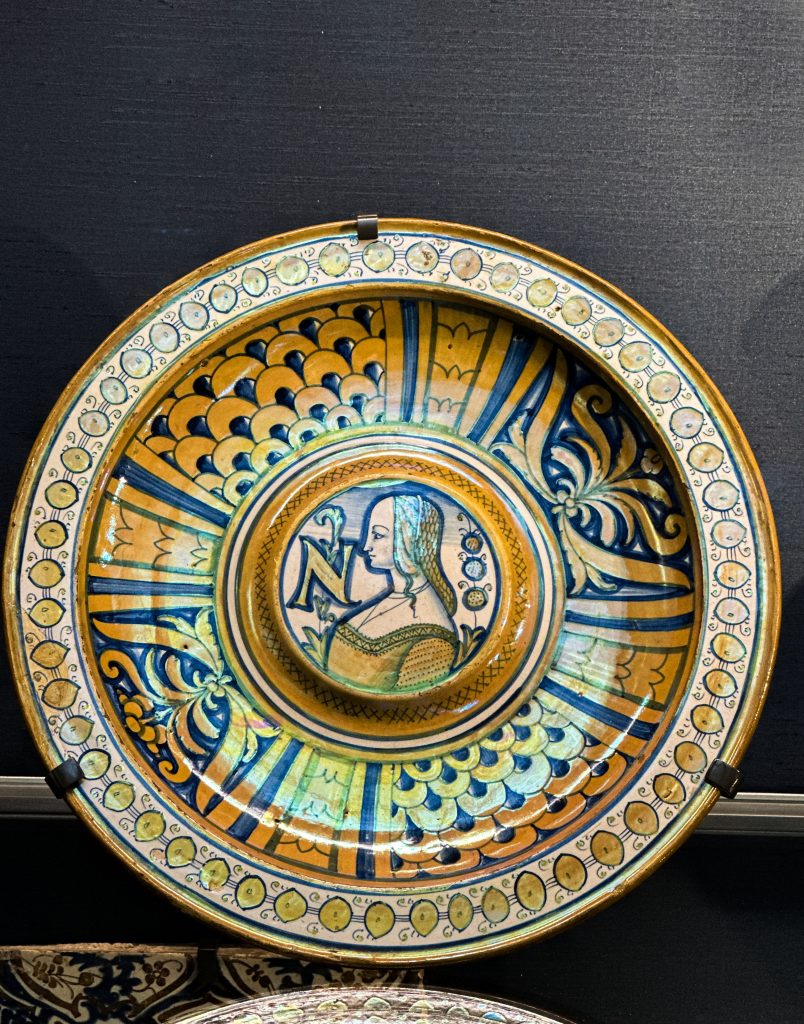
This dish not only showcases Deruta’s expertise in ceramic craftsmanship but also highlights the evolution of enamel art within the European context. The influence of Spanish and Islamic lustreware on Italian maiolica becomes apparent in such pieces, where tradition and innovation entwine to create objects of unparalleled beauty.
Gubbio’s Golden Touch: The Cultural Significance of Enamelling
Moving slightly north to Gubbio, between 1525 and 1535, we find another exemplar of Italian enamel art: a broad-rimmed bowl shimmering with golden hues achieved through enamelling. At its heart lies a playful cherub, complete with gossamer wings and adorned with a red necklace, merrily riding a stick hobby horse. This cherub, often referred to as a putto in Renaissance art, symbolises love and playful abandon. The rim displays intricate arabesques scratched out of a rich blue field, further accentuated by enamelled highlights.
The bowl’s reverse holds its own tale, with scrolls and possible initials pointing to the artisan or patron. Created in the workshop of the renowned Maestro Giorgio Andreoli, this piece exemplifies Gubbio’s mastery of enamelling techniques and underscores the cultural significance of enamelling during the Renaissance.
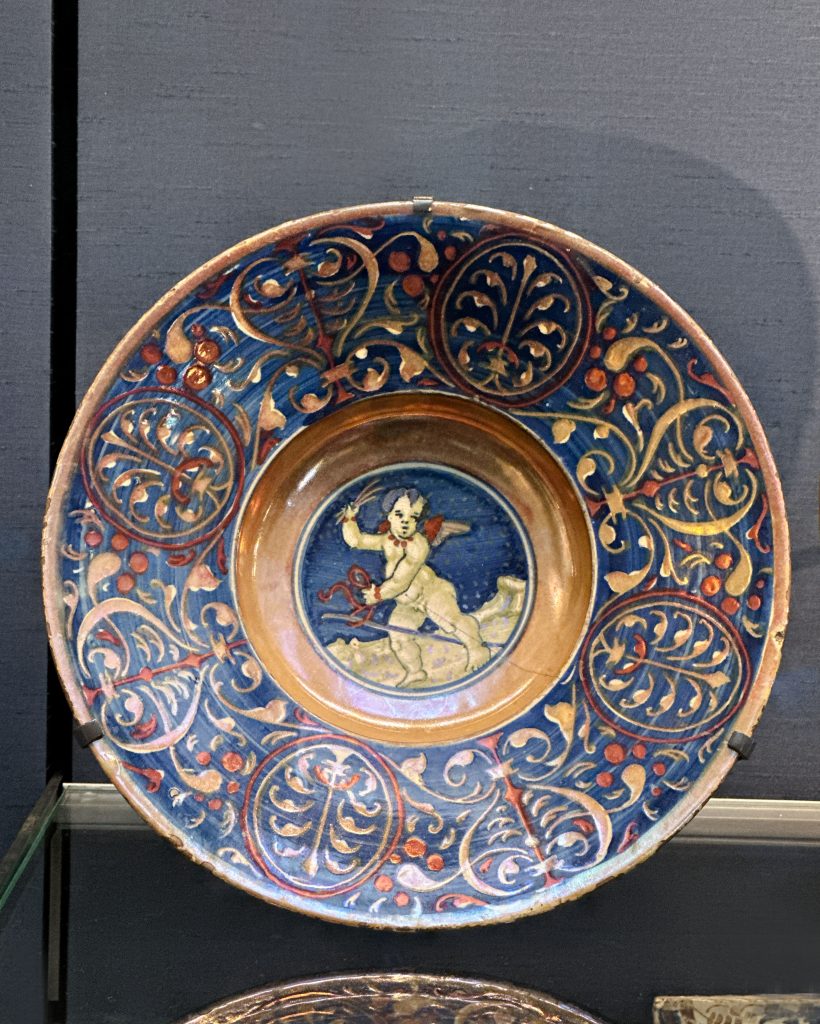
By the 16th century, Italy had not only embraced enamelling but had also made it its own. The secrecy surrounding certain techniques adds a layer of intrigue to these pieces. Regions like Deruta and Gubbio, with their illustrious ceramics, stand tall in the annals of European artistry, drawing on a legacy that spans continents and centuries.
| Material | Purpose in Enamelling |
|---|---|
| Metal Oxides | Provide colour and lustre when fused (e.g., copper, silver) |
| Stonepaste | A ceramic body ideal for enamel application |
| Glass Powders | Base for creating enamel when fused onto surfaces |
| Metals | Substrates like gold, silver, copper for enamelling |
| Kiln Equipment | Essential for firing and fusing enamel onto substrates |
The Enamel Legacy: Global Influences and Cultural Significance
The delicate sheen of enamelled objects has traveled across continents, bearing witness to the confluence of cultures and the intermingling of artistic traditions. The heart of this story lies in how enamelling became a shared language of beauty among diverse civilisations.
Enamelling Around the World
Enamelling’s global journey saw it flourish in various cultures, each adding their unique touch to the art form. In China, cloisonné enamelling became prominent during the Ming dynasty, characterised by intricate designs filled with vibrant enamel. Japanese artisans developed their own styles, such as the shippō enamelling technique, which emphasised translucency and delicate coloration.
In the Byzantine Empire, enamelling was used extensively in religious iconography and jewelry, often incorporating precious stones and metals. The Byzantine techniques influenced enamelling practices in medieval Europe, particularly in the production of religious artefacts and royal regalia.
The evolution of enamel art continued as it reached the shores of the New World, where indigenous cultures integrated enamelling into their artistic expressions. Each region adapted the techniques to local materials and cultural motifs, showcasing the versatility and universal appeal of enamelling.
The Cultural Significance of Enamelling
Enamelling has always been more than just a decorative technique; it holds deep cultural and symbolic meanings. In many societies, enamelled objects were associated with wealth, power, and spiritual significance. The durability and brilliance of enamel made it a preferred medium for preserving important symbols and stories.
In Islamic culture, enamelling was often used to adorn architectural elements, vessels, and jewelry, serving both aesthetic and symbolic purposes. The intricate designs reflected mathematical principles and philosophical concepts prevalent in Islamic thought.
During the Renaissance, enamelling became a way to showcase artistic prowess and technological advancement. The ability to manipulate materials to such exquisite ends was a point of pride and a marker of cultural sophistication.
Enamelling also played a role in cross-cultural exchanges. As enamelled objects were traded and gifted, they carried with them artistic influences and techniques, fostering a global dialogue. The cultural significance of enamelling lies in its ability to bridge gaps between societies, creating a shared heritage of beauty and craftsmanship.
Conclusion
The history of enamelling is not just a chronicle of materials fused by fire but a narrative shaped by centuries of evolution, passion, and artistry. These stories have witnessed the rise and fall of empires, the melding of traditions, and the relentless pursuit of innovation. They remind us of the intricate web of interconnectedness that binds diverse cultures and highlight the boundless fluidity of art.
From the workshops of ancient Egypt, where the first enamelling techniques were honed, to the bustling markets of Baghdad and the regal courts of Renaissance Italy, the journey of enamelling is emblematic of human creativity. Each phase of this journey, every adaptation and innovation, has added to a rich narrative that continues to inspire.
| Artifact | Origin | Date | Significance |
|---|---|---|---|
| Samarra Bowl | Samarra, Iraq | 9th Century | Early example of Islamic lustre enamelling |
| Nishapur Bowl | Nishapur, Iran | 10th Century | Imitation of Iraqi lustre ware; showcases cultural exchange |
| Kashan Tile | Kashan, Iran | 13th Century | Represents advanced enamelling techniques on stonepaste |
| Deruta Dish | Deruta, Italy | 1500-1525 | Illustrates Italian adaptation of enamelling and lustre |
| Gubbio Bowl | Gubbio, Italy | 1525-1535 | Example of Renaissance enamelling by Maestro Giorgio Andreoli |
The gleaming artefacts, with their shimmering surfaces and intricate designs, are not merely decorative pieces in museums or private collections. They echo conversations between civilisations, dialogues between artists across time and space, and the ceaseless quest for beauty and perfection. The journey of enamelling—spanning continents and millennia—is truly a vivid tapestry of history, resilience, and brilliance. It stands as a testament to humanity’s shared legacy and the inexhaustible spirit of creation that continues to drive the evolution of enamel art.
About Craftestan
As we reflect the history of enamelling on the enduring beauty and heritage of lustre, enamelling, and gilding, we’re reminded of the values that bind these timeless arts. In this spirit, allow us to introduce you to Craftestan, our embodiment of art, culture, and history.
Craftestan isn’t simply a business. It’s a tapestry of stories, a confluence of emotions, and a commitment to preserving the exquisite Persian culture. Every piece you see on our platform isn’t just an artefact but a representation of an artist’s dream, journey, and soul. By supporting Craftestan, you aren’t just purchasing an item; you’re fostering dreams and championing a rich cultural heritage.

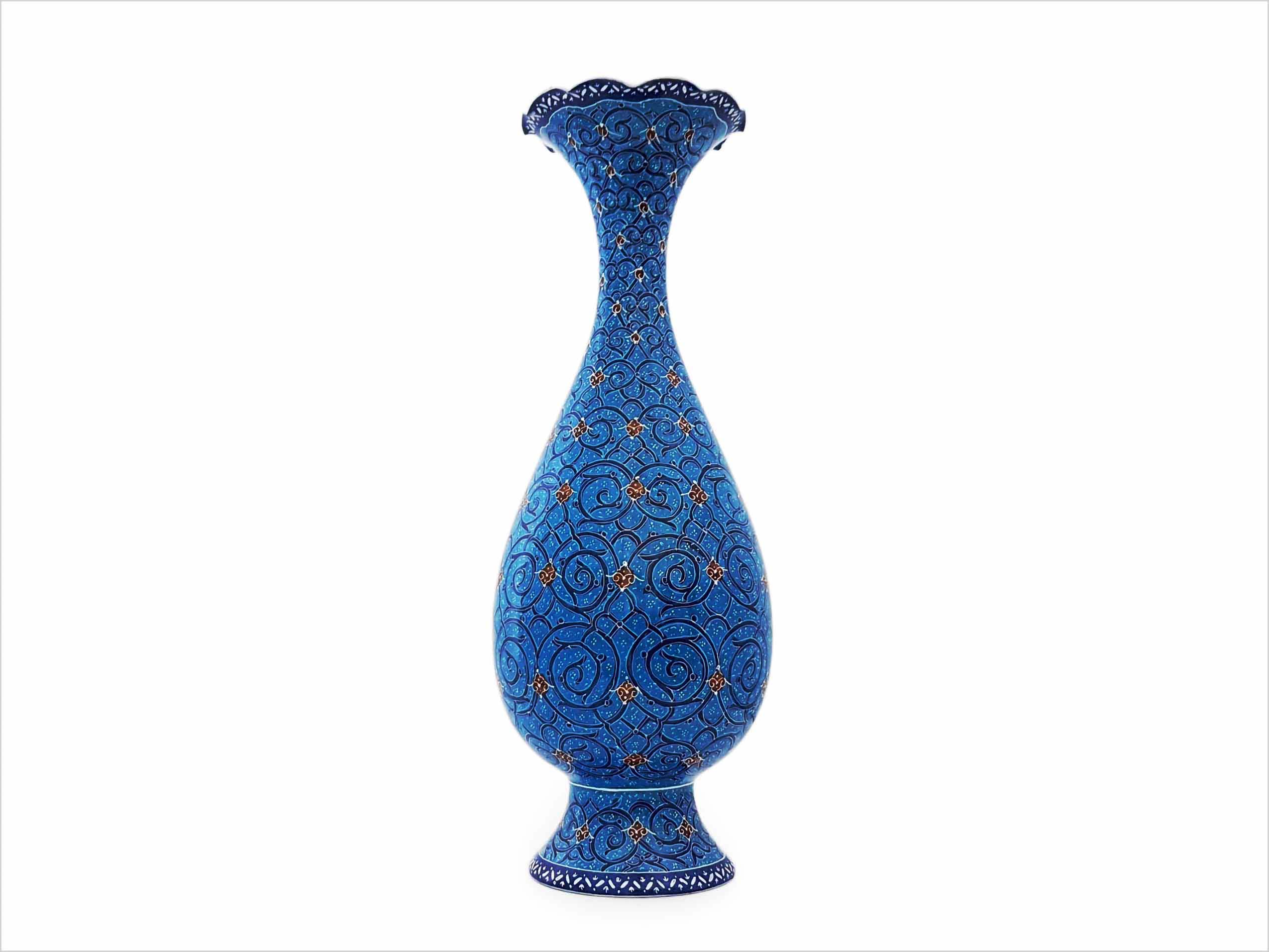
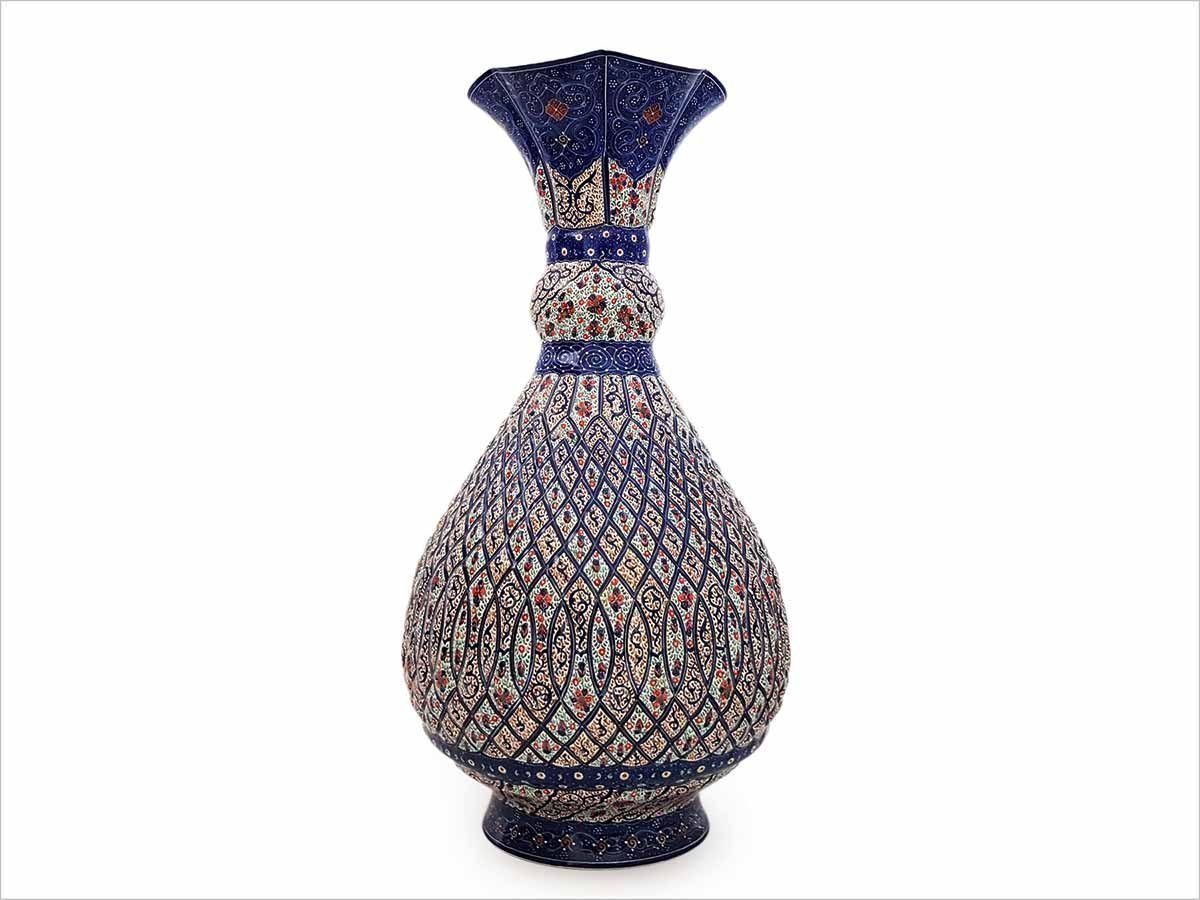
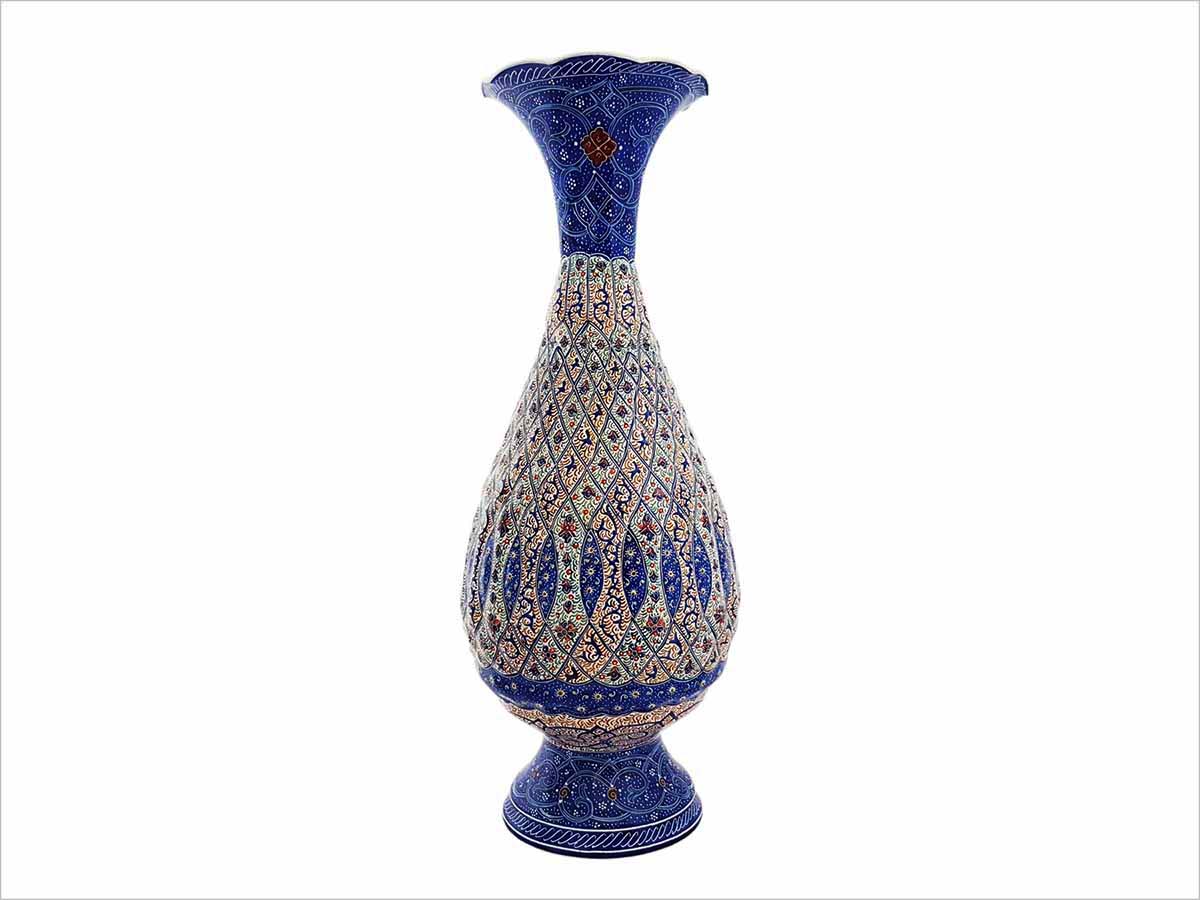
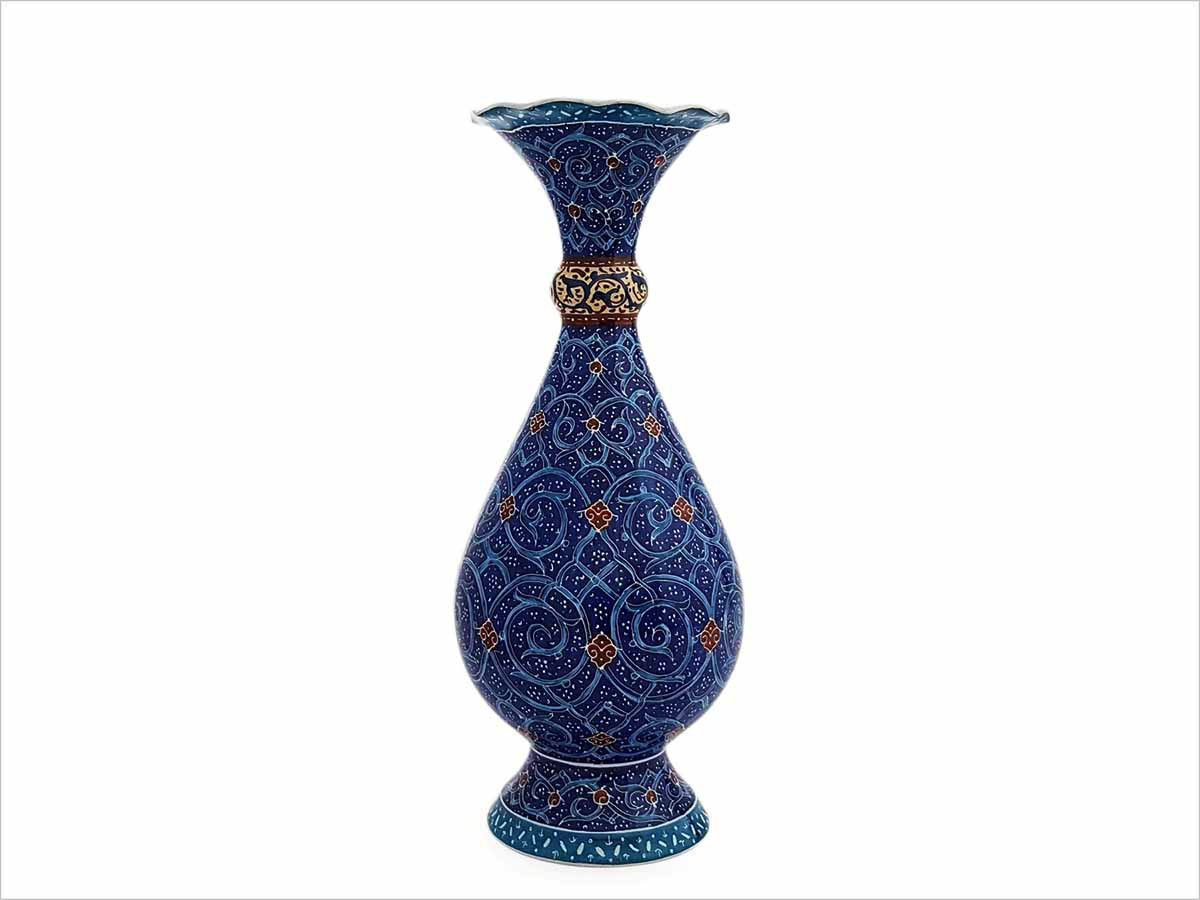
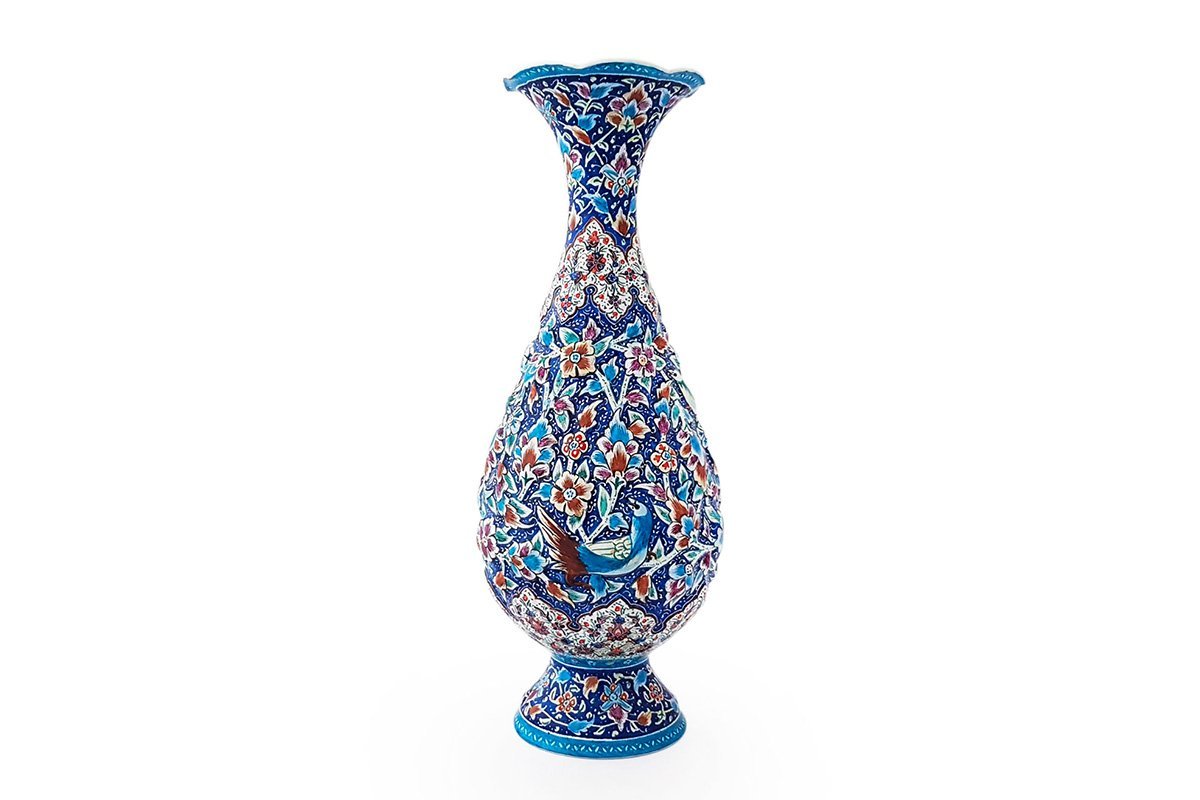
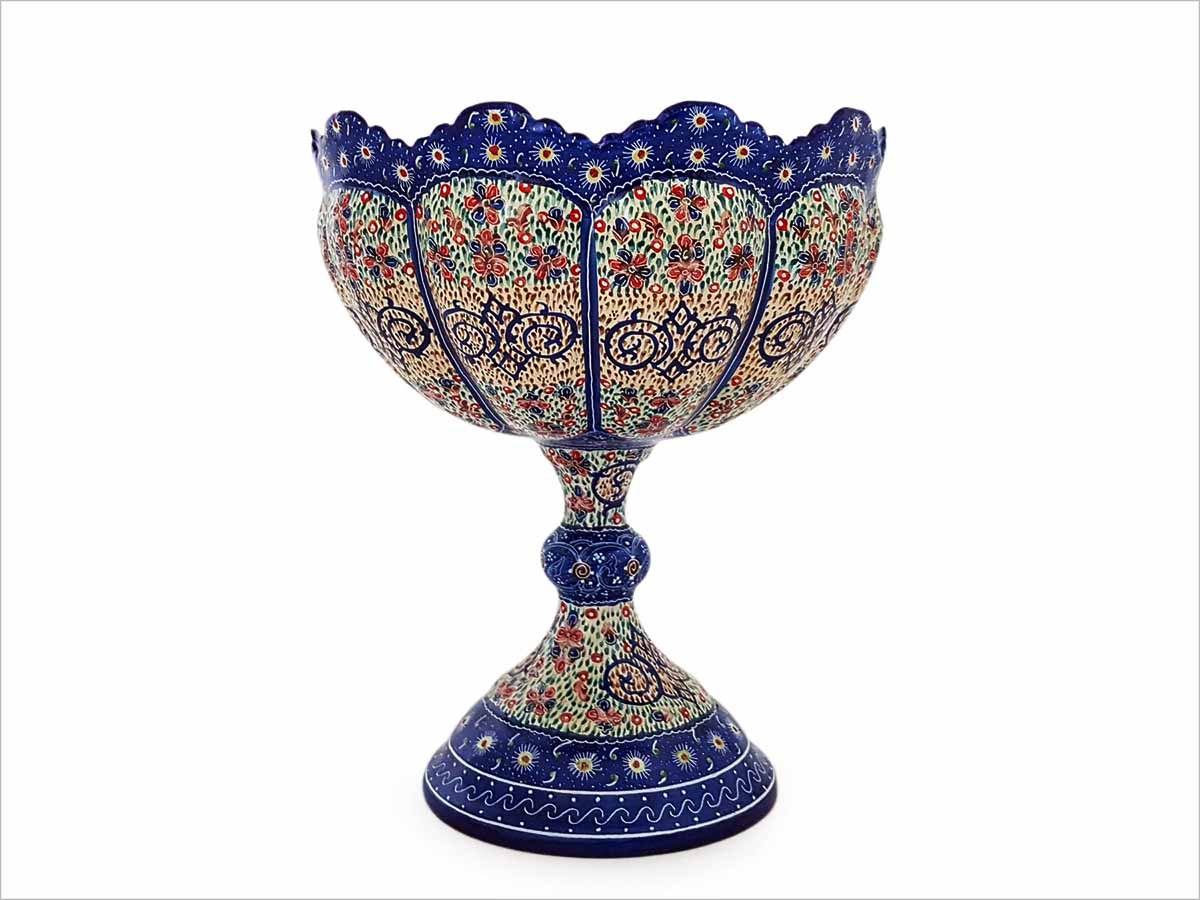
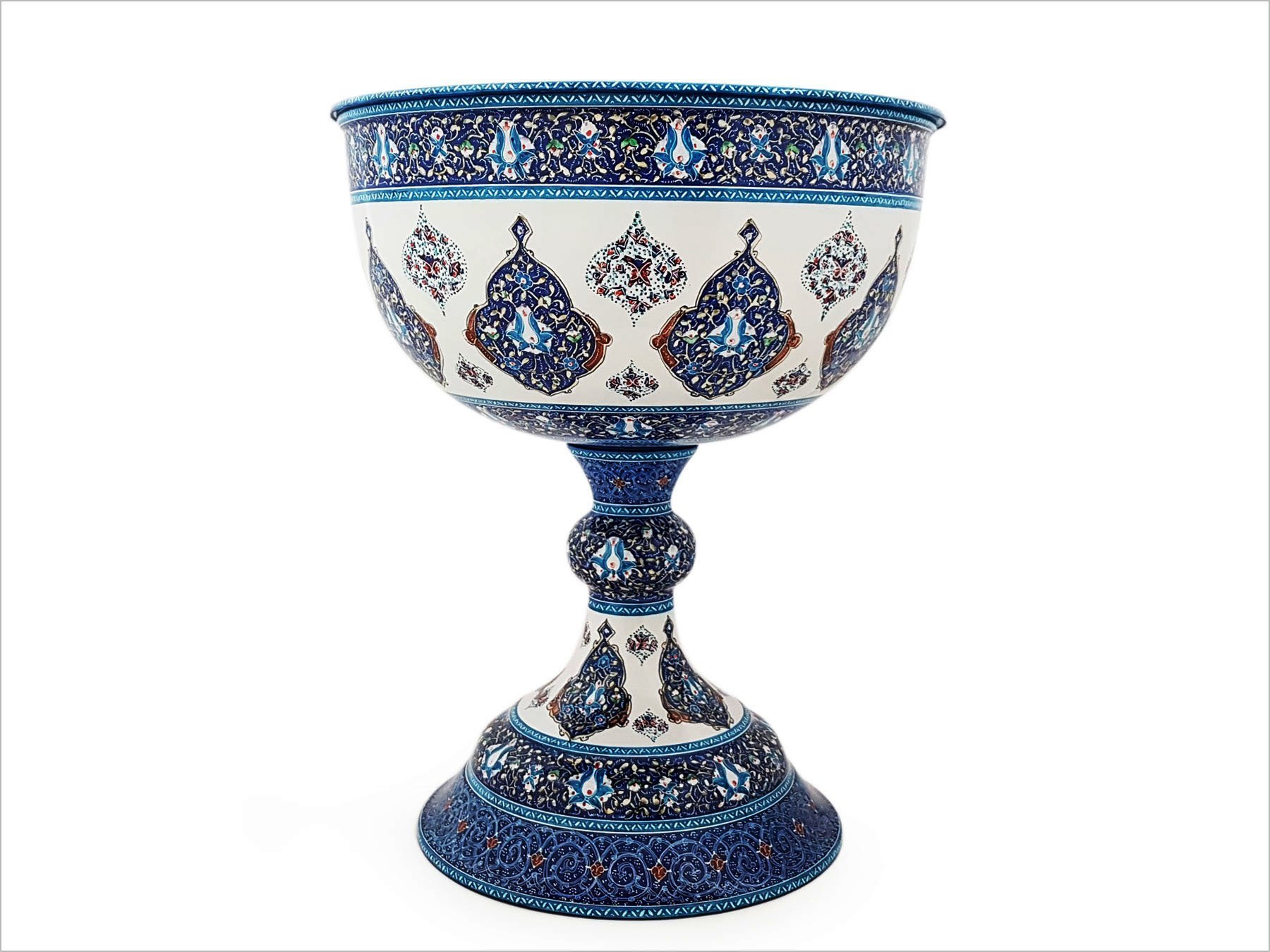
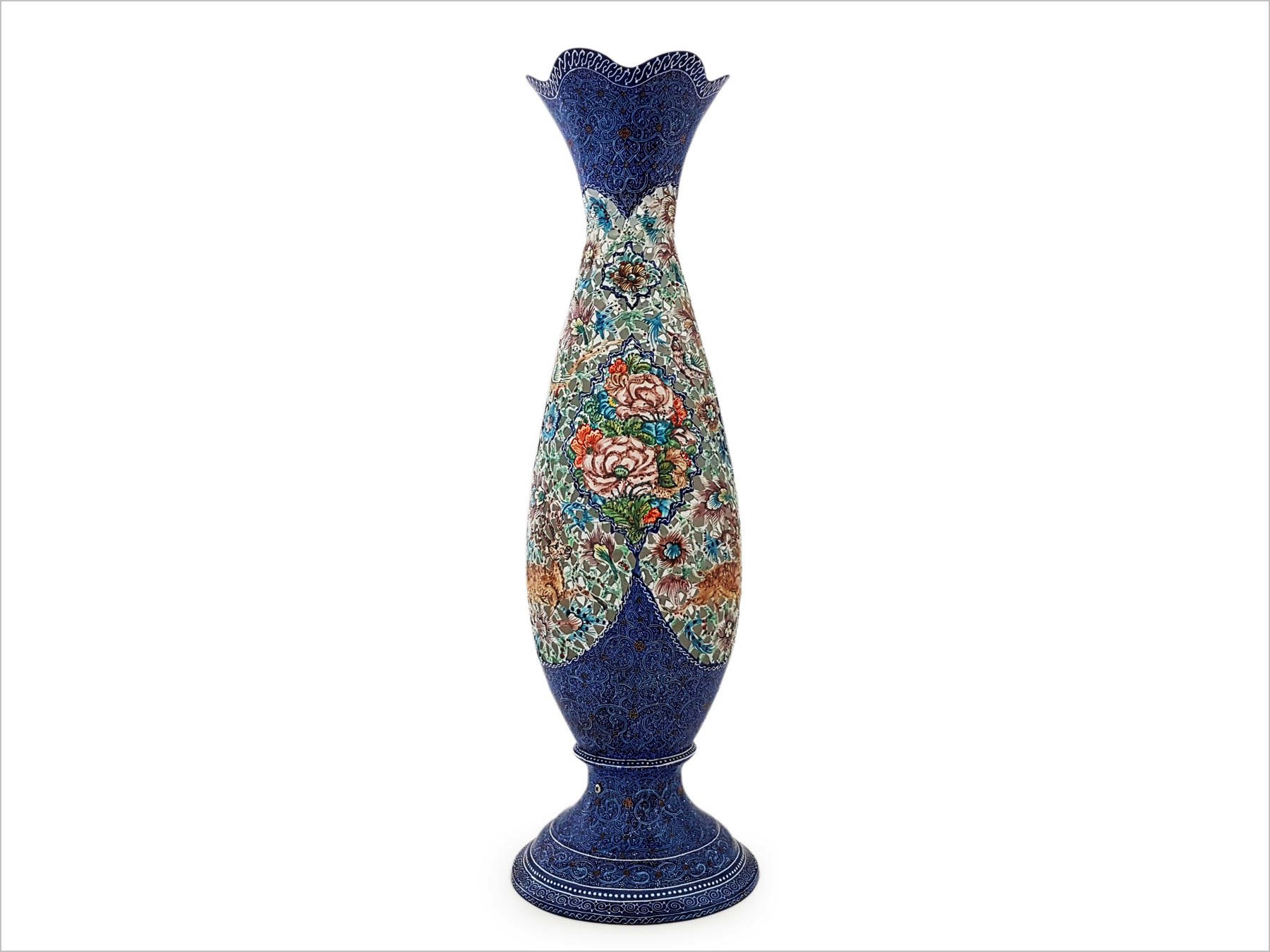
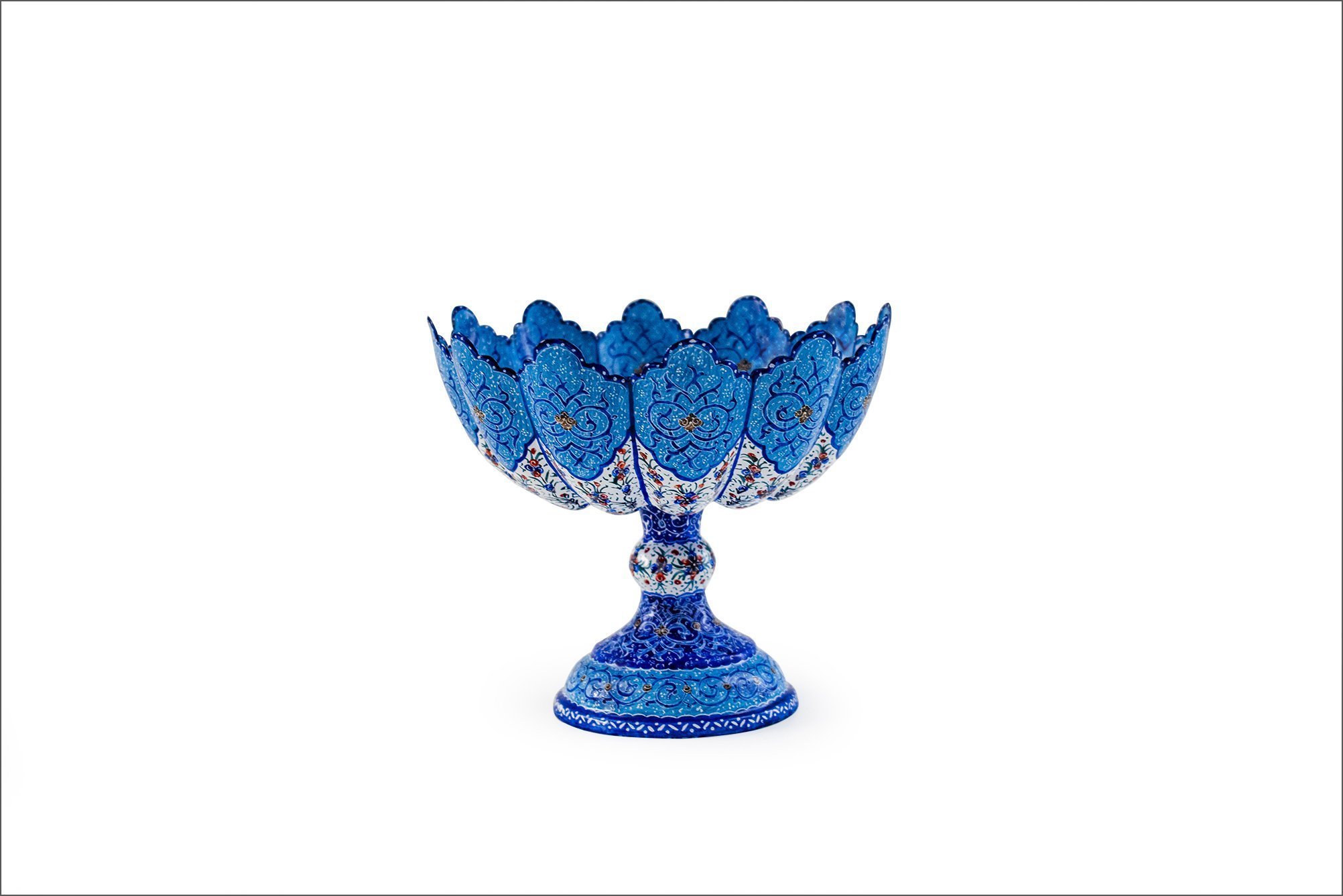
Now, as you revel in the intertwining tales of arts from different eras and regions, we invite you to step into the world of Craftestan. Adorn your homes with authentic Persian handcrafted homewares that echo tales of yesteryears and visions of tomorrow. Discover our range of decorative vases, ornate plates, candy jars, and so much more. Experience the culmination of history, art, and passion in every curve and colour.


FAQs
What is the history of enamelling and how did it originate?
The history of enamelling dates back to ancient civilisations such as the Egyptians, Celts, and Mycenaeans. Enamelling originated as an art form involving the fusion of powdered glass to metal at high temperatures to create decorative objects. Early artisans developed ancient enamelling techniques like cloisonné and champlevé, which laid the groundwork for future innovations. The craft evolved uniquely in different cultures, with the Islamic world transforming enamelling by introducing new motifs and refining techniques influenced by neighbouring regions like Persia and Byzantium.
How did the evolution of enamel art influence different cultures around the world?
The evolution of enamel art significantly influenced various cultures by serving as a medium for artistic expression and cultural exchange. As enamelling techniques spread globally, each culture adapted the art form to reflect their aesthetic preferences and societal values. In the Islamic world, enamelling became integral to artistry, blending ancient techniques with innovations. Renaissance Italy embraced enamelling, merging Middle Eastern artistry with European creativity, leading to remarkable developments. This cross-cultural adoption highlights the universal appeal of enamelling and its ability to transcend geographical boundaries.
What are some ancient enamelling techniques used by early artisans?
Ancient enamelling techniques include:
- Cloisonné: Involves creating compartments (cloisons) on a metal object using thin metal wires, then filling them with enamel powder before firing.
- Champlevé: Entails engraving or etching designs into the metal surface and filling the recessed areas with enamel.
- Plique-à-jour: Similar to cloisonné but without a metal backing, resulting in a translucent effect like stained glass.
- Lustre Painting: Developed in the Islamic world, this technique uses metallic oxides to create a shimmering finish on ceramics and glass.
These techniques showcase the ingenuity of early artisans and their contributions to the history of enamelling.
| Technique | Description | Regions Practiced |
|---|---|---|
| Cloisonné | Enamel poured into wire compartments | Egypt, China, Byzantine Empire |
| Champlevé | Enamel filled into engraved or etched recesses in metal | Celtic regions, Medieval Europe |
| Plique-à-jour | Enamel applied in cells without backing, creating a stained-glass effect | France, Russia |
| Lustre Painting | Application of metallic oxides to create iridescent sheen | Islamic World, later Europe |
How did enamelling develop around the world, and which cultures contributed to its advancement?
Enamelling around the world developed through cultural interactions, trade, and the spread of artistic ideas. Key contributors include:
- Islamic World: Advanced enamelling with lustre painting and intricate designs, influencing neighboring regions.
- China: Perfected cloisonné enamelling during the Ming dynasty, known for vibrant colors and detailed patterns.
- Japan: Developed unique styles like shippō enamelling, emphasizing translucency and delicate coloration.
- Byzantine Empire: Used enamelling extensively in religious iconography and jewelry, influencing medieval Europe.
- Renaissance Italy: Merged Islamic enamelling techniques with European art, leading to innovative creations in places like Deruta and Gubbio.
Each culture adapted enamelling techniques to their materials and aesthetics, enriching the global history of enamelling.
What is the cultural significance of enamelling in art history?
The cultural significance of enamelling lies in its role as a medium that embodies artistic expression, technological innovation, and cultural identity. Enamelled objects often symbolize wealth, status, and spiritual beliefs. They have been used to preserve important symbols, tell stories, and serve religious purposes across various civilizations. Enamelling facilitated cross-cultural exchanges, as techniques and styles were shared and adapted globally. Its enduring appeal and versatility highlight its importance in connecting diverse cultures and contributing to the collective artistic heritage throughout the history of enamelling.
| Influence Area | Description |
|---|---|
| Artistic Techniques | Sharing of methods like lustre painting and cloisonné |
| Trade and Commerce | Enamelled goods were valuable trade items across regions |
| Symbolism and Motifs | Adoption and adaptation of designs from different cultures |
| Technological Spread | Dissemination of kiln technologies and material processing |
| Religious Artefacts | Enamel used in objects of worship, spreading religious ideas |
Related Blog Posts




 Oil Painting
 Miniature Painting
 Wall Ornaments
 Enamel
 Filigree
 Turquoise
 Decorative Plate
 Home Accents
 Decorative Vase
 Pāteh
Pāteh Térméh
 Home Accents
 Mirror
 Tea ware & Tea
 Backgammon / Chess Board
 Home Accents
 Office
 Wall Clock
 Home Accents
 Vase
Vase Decorative Vase
 Wall Decor
 Home Accents
 Mirror
 Vase
Vase Embroidery
 Enamel
 Marquetry
 Watercolour Painting
 Under £20
 Under £50
 Under £100
 Under £200
 Under £300
 Mother’s Day
 Anniversary
 Her
Her Him
Him Ancient Persia
 Persian Artefacts
 Persian Clothing
 Persian Gift Ideas
 Oil Painting
I do trust all the ideas youve presented in your post They are really convincing and will definitely work Nonetheless the posts are too short for newbies May just you please lengthen them a bit from next time Thank you for the post
Normally I do not read article on blogs however I would like to say that this writeup very forced me to try and do so Your writing style has been amazed me Thanks quite great post
Magnificent beat I would like to apprentice while you amend your site how can i subscribe for a blog web site The account helped me a acceptable deal I had been a little bit acquainted of this your broadcast offered bright clear idea
My brother suggested I might like this website He was totally right This post actually made my day You cannt imagine just how much time I had spent for this information Thanks