





Persian Artefacts
Discover the Rich Culture of Persian Backgammon: Takhte Nard
The intricate designs, the rich history, and the intense gameplay all contribute to the allure of Persian Backgammon. Also known as “Takhte Nard” (Persian: تخته نرد), this ancient game has been played for centuries in Persia (modern-day Iran). It’s more than just a pastime; it’s a reflection of the country’s profound cultural heritage. If you’ve ever considered diving deep into the world of backgammon or purchasing a genuine Persian Backgammon board, this guide will illuminate its enchanting depth and explain why it deserves a spot in your collection.

Table of Contents
The Origin of Backgammon: A Journey to Iran
Backgammon is one of the oldest known board games, with roots deeply embedded in the ancient civilisations of Mesopotamia. But it is in Persia, or modern-day Iran, where the game truly flourished and evolved into what we now know as Takhte Nard.
Backgammon Historia: Tracing the Game’s Ancient Roots
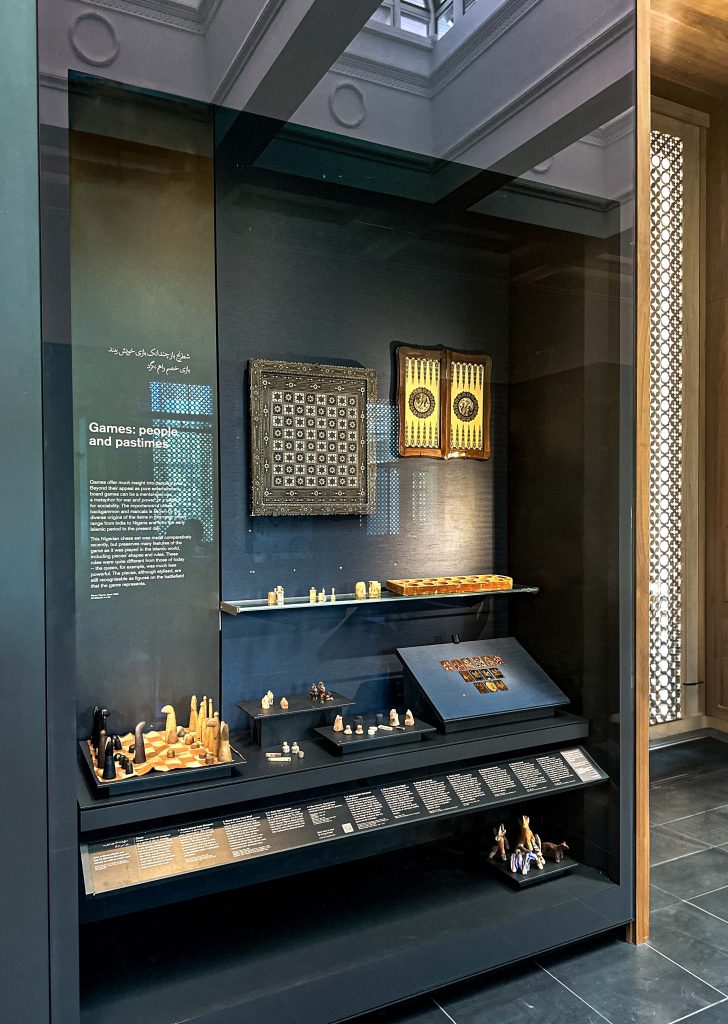
Archaeological findings suggest that early forms of backgammon were played in Iran over 5,000 years ago. Artifacts such as game boards and dice have been discovered in sites like Shahr-e Sukhteh (The Burnt City), indicating the game’s ancient origins.
| Period | Region | Significance |
|---|---|---|
| c. 3000 BCE | Mesopotamia | Earliest board games emerge |
| c. 2000 BCE | Persia (Iran) | Evidence of Takhte Nard’s precursors |
| c. 1500 BCE | Egypt | Similar games like Senet gain popularity |
| c. 6th Century CE | Persia | Takhte Nard becomes a cultural staple |
| Present Day | Global | Backgammon played worldwide in various forms |
Evolution into Takhte Nard in Persia
The game of backgammon underwent significant transformation upon its arrival in Persia, evolving into what is now known as Takhte Nard. This evolution is deeply rooted in Persian history and mythology, particularly during the Sassanian Empire period (224–651 CE), a time marked by cultural richness and intellectual achievements.
The Legend of Bozorgmehr
According to Persian legend, the creation of Takhte Nard is attributed to the wise Persian sage Bozorgmehr-e Bokhtagan, the grand vizier to King Khosrow I Anushirvan. The story unfolds as follows:
- The Indian Challenge: Indian ambassadors arrived at the Persian court bearing the game of chess (known as Chatrang in Persian). They presented it as a test of wisdom, challenging the Persians to decipher the game’s rules and purpose without any instructions.
- Bozorgmehr’s Insight: King Khosrow tasked Bozorgmehr with solving the puzzle. Through keen observation and intellect, Bozorgmehr unraveled the mysteries of chess, understanding its rules and strategies. His success showcased Persian intellectual prowess.
- The Persian Counter-Challenge: In response, Bozorgmehr devised Takhte Nard and sent it to the Indian court with a similar challenge. The game was unfamiliar to the Indians, and they were unable to decipher its complexities, symbolising Persian superiority in wisdom and creativity.
This legend highlights the intellectual rivalry and cultural exchange between Persia and India, emphasising the value both civilisations placed on knowledge, strategy, and innovation.
Cultural Exchange and Intellectual Significance
The creation of Takhte Nard and its presentation to the Indian court symbolise the rich intellectual exchange between ancient civilisations. This exchange had several implications:
- Promotion of Knowledge: Both Persia and India were centres of learning, and such challenges spurred advancements in mathematics, astronomy, philosophy, and the arts.
- Diplomatic Relations: The exchange of games was a form of diplomatic communication, reflecting mutual respect and a desire for cultural understanding.
- Philosophical Ideas: The games were not mere pastimes but vehicles for expressing complex philosophical and cosmological concepts, facilitating discussions on fate, destiny, and human agency.
The Sassanian Empire’s Influence
The Sassanian Empire was a period of renaissance for Persian culture, marked by:
Strategic Position: Persia’s location along the Silk Road facilitated trade and cultural exchange between East and West, making it a melting pot of ideas and innovations.
Cultural Flourishing: Investments in art, architecture, literature, and education led to a rich cultural heritage that influenced neighbouring regions.
Religious Diversity: While Zoroastrianism was the state religion, the empire was home to various beliefs, including Christianity, Judaism, and early forms of Islam, fostering a climate of intellectual diversity.
Symbolism in Takhte Nard
Takhte Nard is rich in symbolic elements that reflect Persian cosmology, philosophy, and understanding of the universe:
- 24 Points on the Board: Represent the 24 hours of the day, symbolising the passage of time and the cycle of day and night.
- 30 Checkers: Correspond to the 30 days of a lunar month, integrating the game with the Persian calendar and celestial observations.
- 12 Points on Each Side: Signify the 12 months of the year or the zodiac signs, connecting the game to astrology and annual cycles.
- Opposing Sides (Black and White Checkers): Symbolise the duality of existence, such as light and darkness, good and evil, or life and death.
- Dice Numbers: The sum of the opposite sides of a die always equals seven, which can represent the seven days of the week or the seven celestial bodies known at the time (Sun, Moon, Mars, Mercury, Jupiter, Venus, and Saturn).
- Movement of Checkers: The journey of the checkers around the board mirrors the journey of life, filled with obstacles, challenges, and the role of fate (represented by the roll of the dice).
| Game Element | Symbolic Representation |
|---|---|
| 24 Points | Hours in a Day |
| 30 Checkers | Days in a Lunar Month |
| 12 Points per Side | Months in a Year |
| Opposing Sides | Day and Night |
The Cultural Significance of Takhte Nard in Persian Society
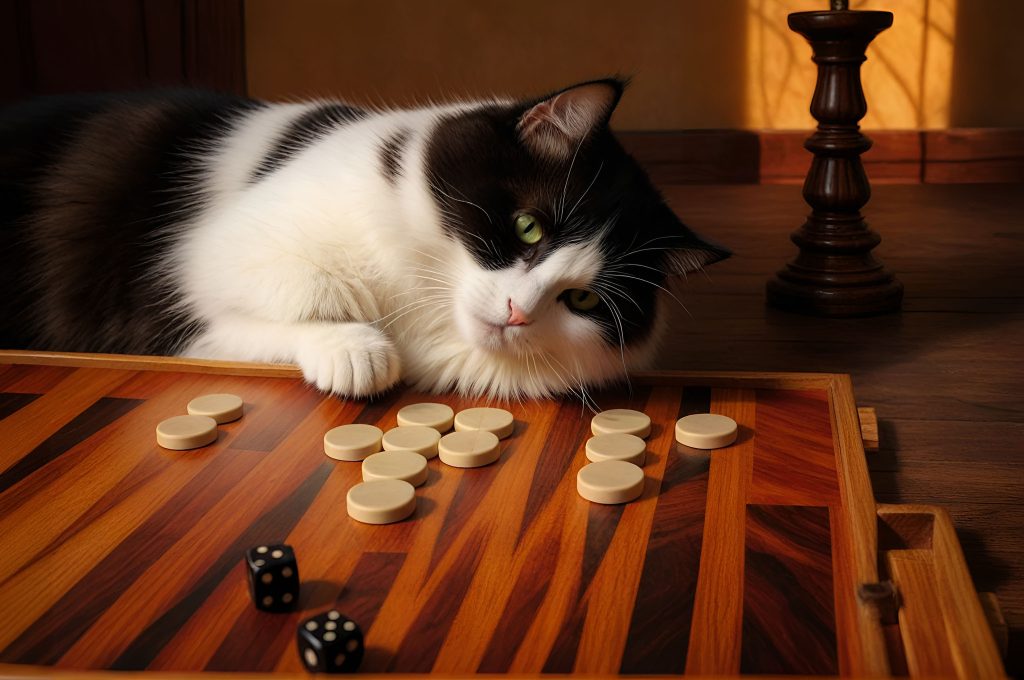
In Iran, Takhte Nard is far more than a mere board game; it is an enduring social ritual that plays a pivotal role in bringing people together, strengthening family bonds, and fostering community spirit.
Family Tradition
- Generational Bonding: Takhte Nard is a cherished pastime passed down through generations. Parents and grandparents teach the game to children, not only imparting the rules but also sharing stories, wisdom, and cultural values during gameplay. This tradition helps preserve the game’s heritage and ensures its continuity.
- Festive Celebrations: During important festivals like Nowruz (Persian New Year), families gather to celebrate, and playing Takhte Nard becomes a central activity. It’s common for extended families to engage in friendly competitions, making the game a staple of holiday festivities.
- Daily Life: In many Iranian households, a backgammon board is always within reach. Family members might play a quick game after dinner or spend leisurely afternoons competing, making Takhte Nard an integral part of daily life.
Hospitality
- Welcoming Guests: Offering a game of Takhte Nard to visitors is a traditional sign of hospitality and respect. It reflects the host’s desire to engage their guests in meaningful interaction, making them feel welcomed and valued.
- Social Hubs: Teahouses and cafés across Iran serve as communal spaces where people of all ages come together to play Takhte Nard. These venues foster a sense of community, as strangers become friends over shared games and conversations.
- Symbol of Friendship: Inviting someone to play Takhte Nard can be a gesture of friendship and goodwill. It breaks down social barriers and encourages open dialogue, embodying the Persian values of camaraderie and mutual respect.
Symbolism and Philosophical Interpretations
Takhte Nard is imbued with deep philosophical and spiritual meanings, often viewed as a metaphor for life’s journey and the human experience.
Philosophical Lessons
- Interplay of Fate and Free Will: The game beautifully illustrates the balance between chance and strategy. While the roll of the dice introduces an element of luck (fate), how a player responds with strategic moves reflects free will. This dynamic mirrors the Persian philosophical view of life’s unpredictability and the individual’s role in shaping their destiny.
- Patience and Perseverance: Takhte Nard teaches the importance of patience and long-term planning. Players learn to remain calm under pressure, adapt to changing circumstances, and persist despite setbacks—valuable life skills that transcend the game.
- Risk and Reward: The game involves assessing risks and making calculated decisions. Players must decide when to play it safe and when to take bold actions, reflecting the complexities of decision-making in real life.
Spiritual Connections
Duality and Unity: The opposing sides of the board and the interaction between two players symbolise the dualistic aspects of existence—such as light and darkness, joy and sorrow—and highlight the interconnectedness of all things.
Sufi Teachings: Some interpretations link Takhte Nard to Sufi mysticism, where the game’s progression symbolises the soul’s journey towards enlightenment. The challenges faced during the game represent spiritual obstacles, and overcoming them signifies personal growth and understanding.
Artistry and Craftsmanship of Persian Backgammon Boards
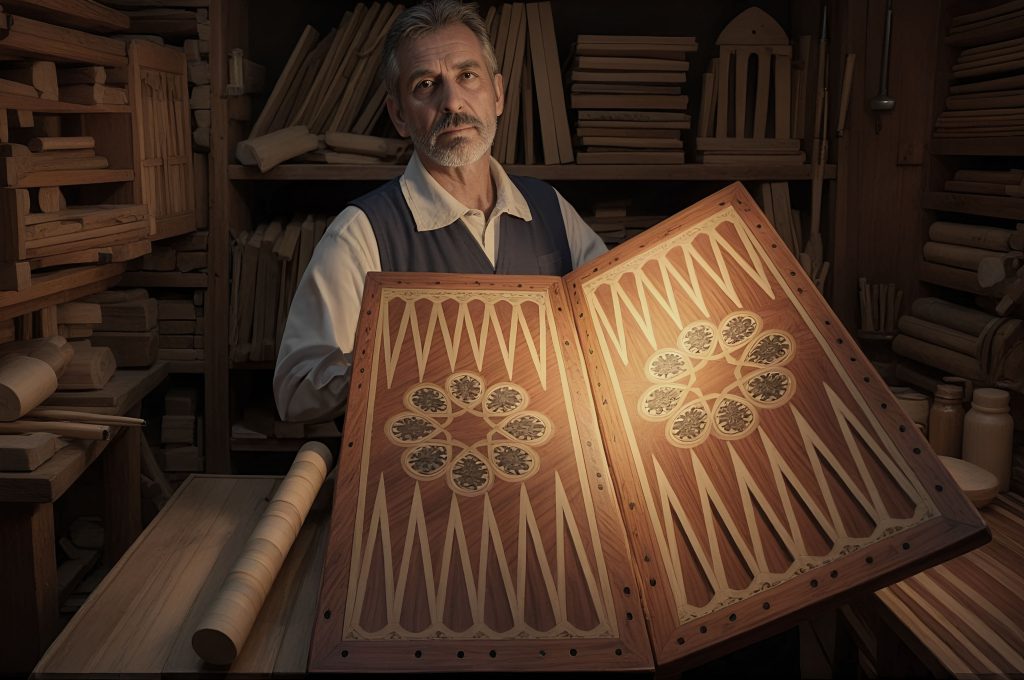
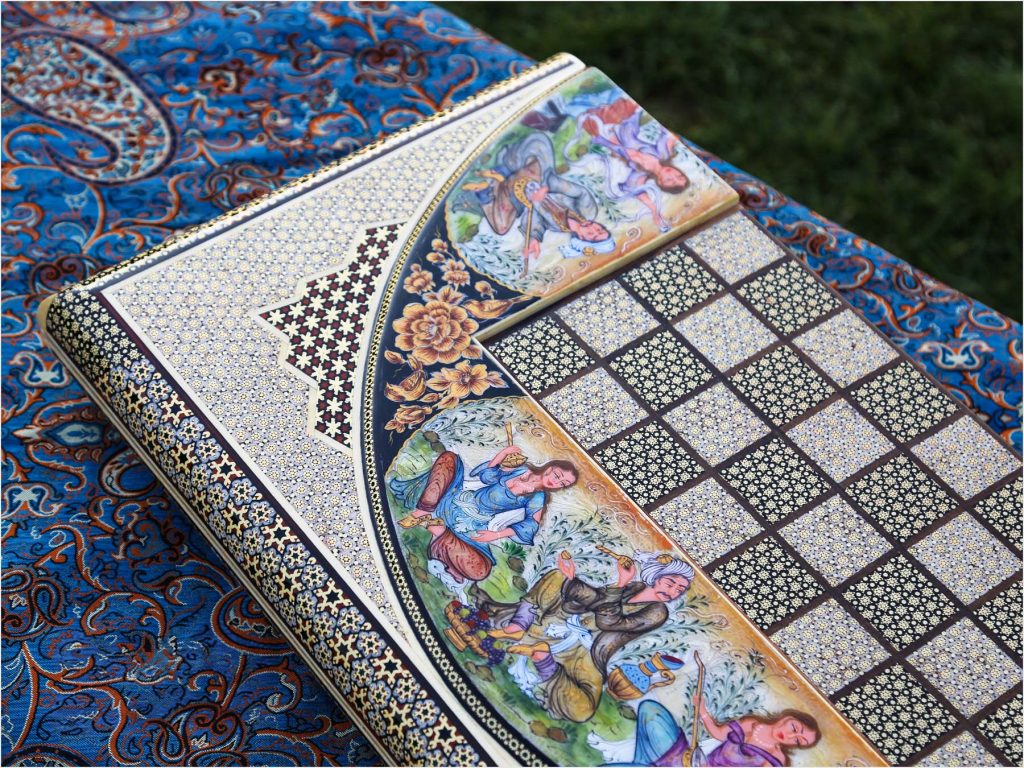
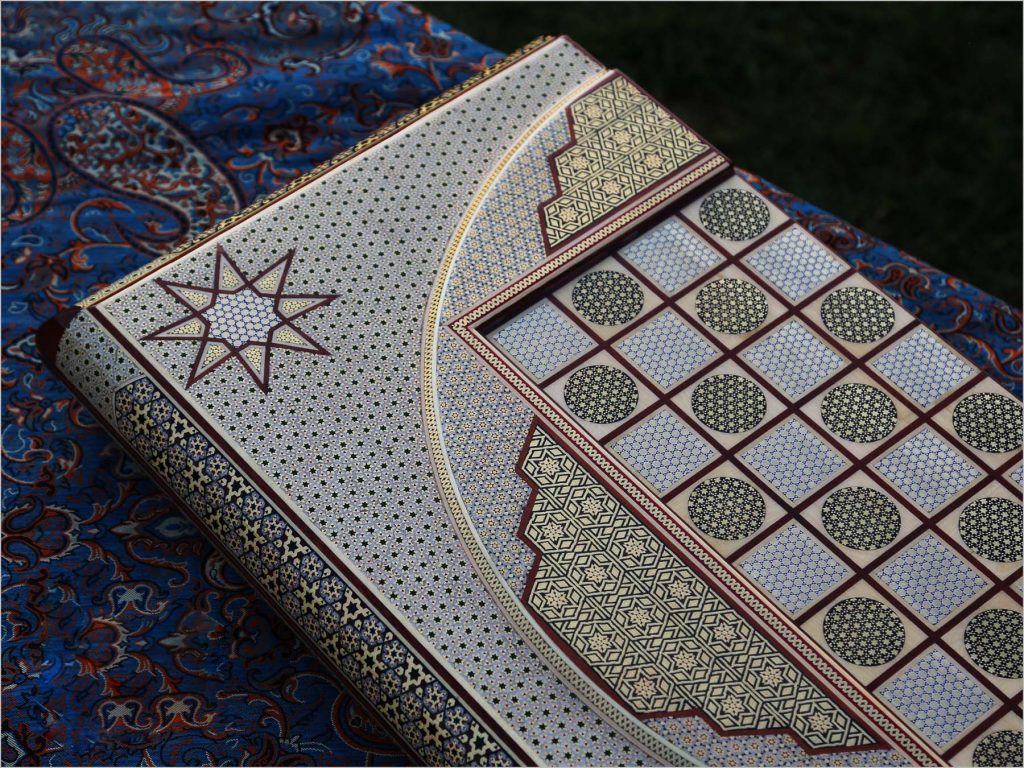
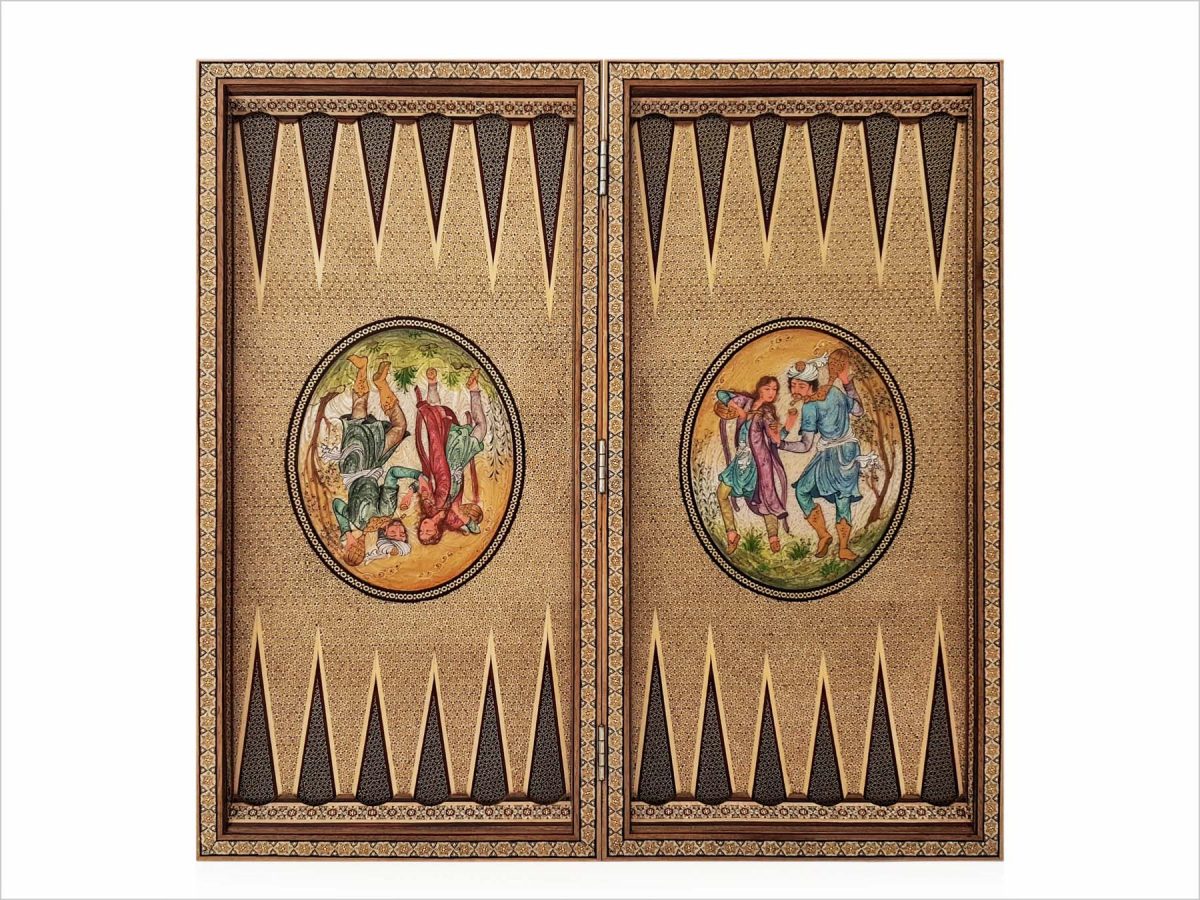
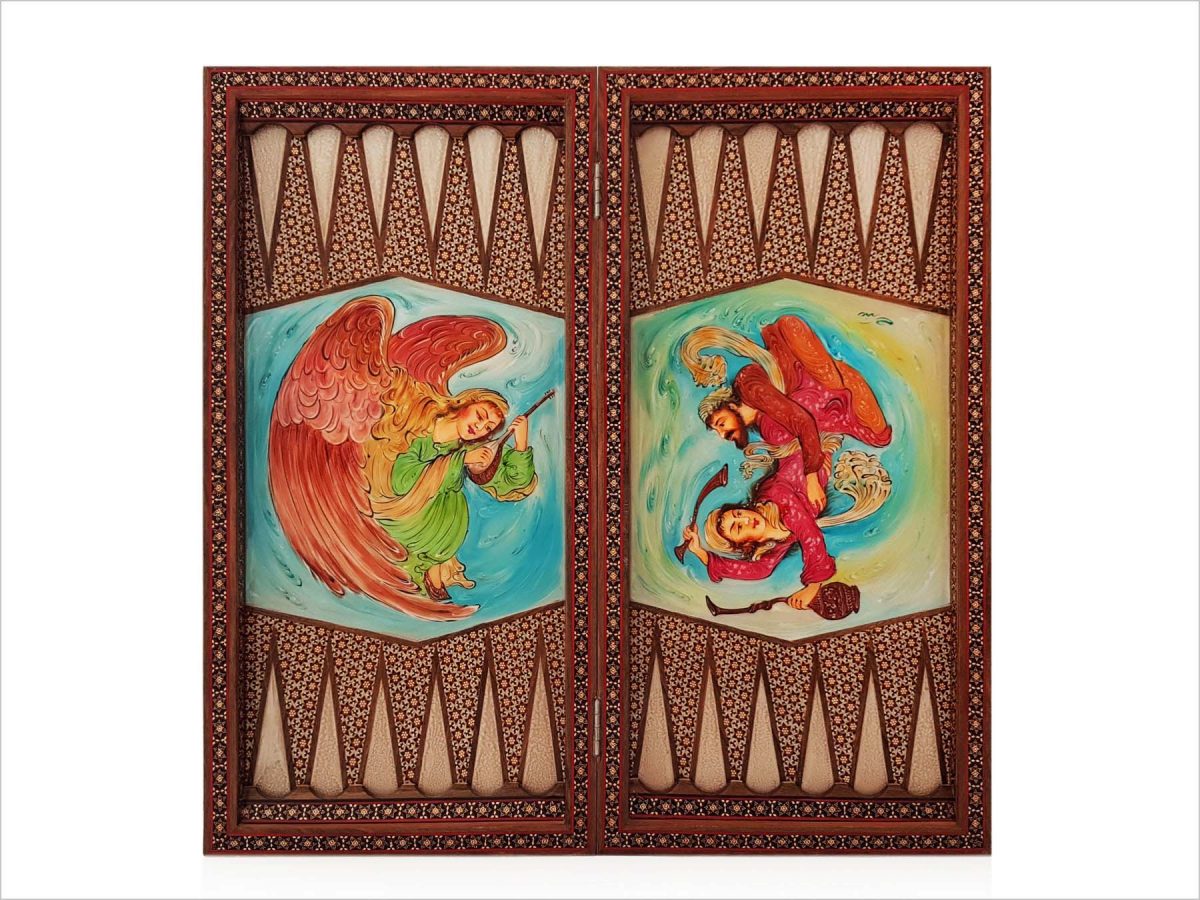
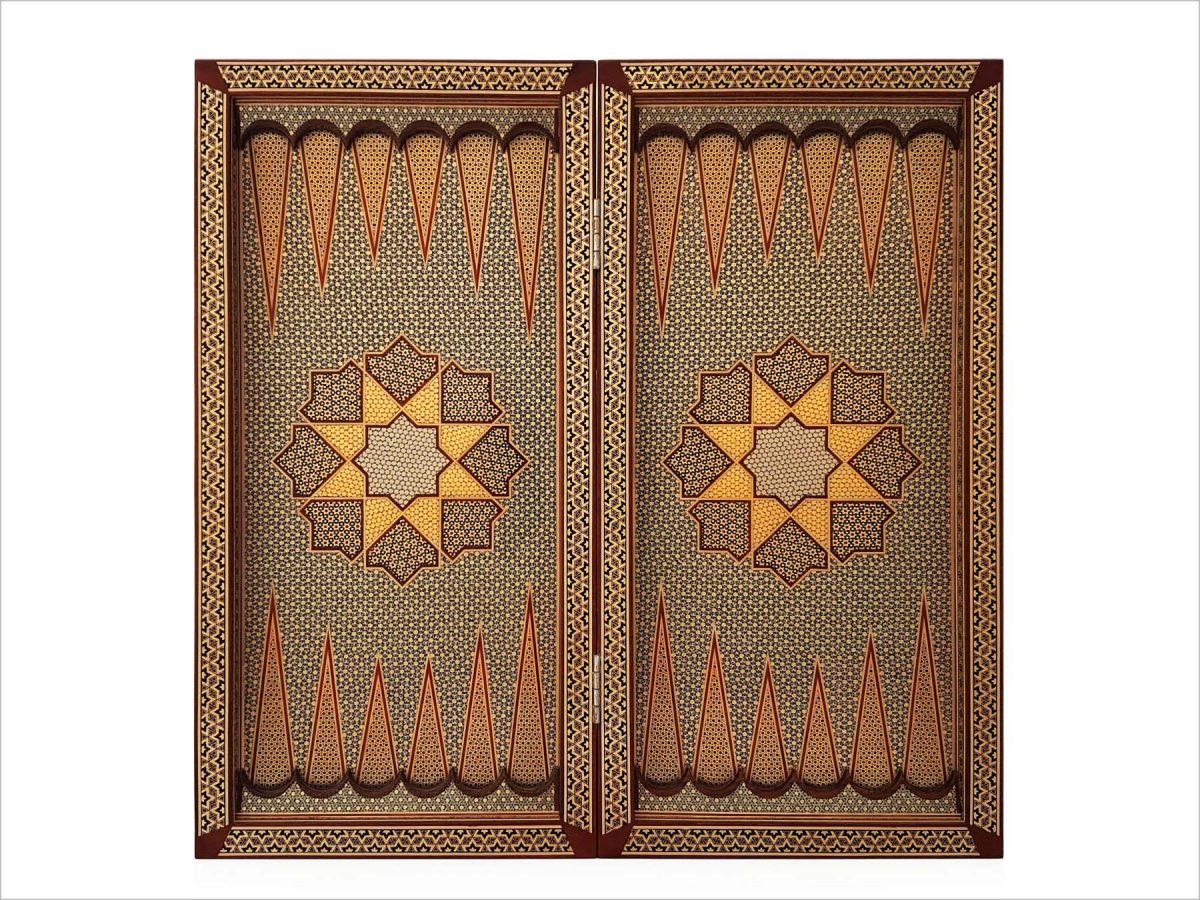
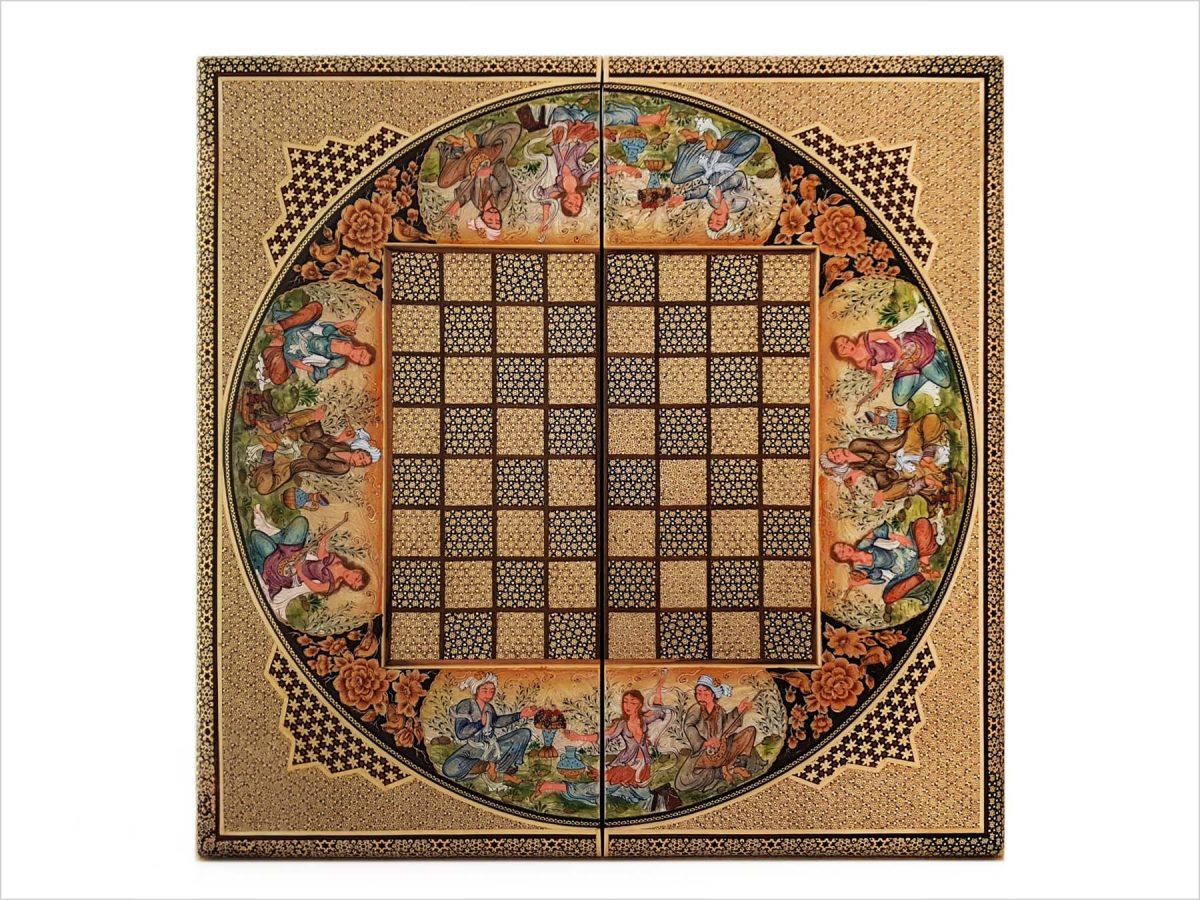
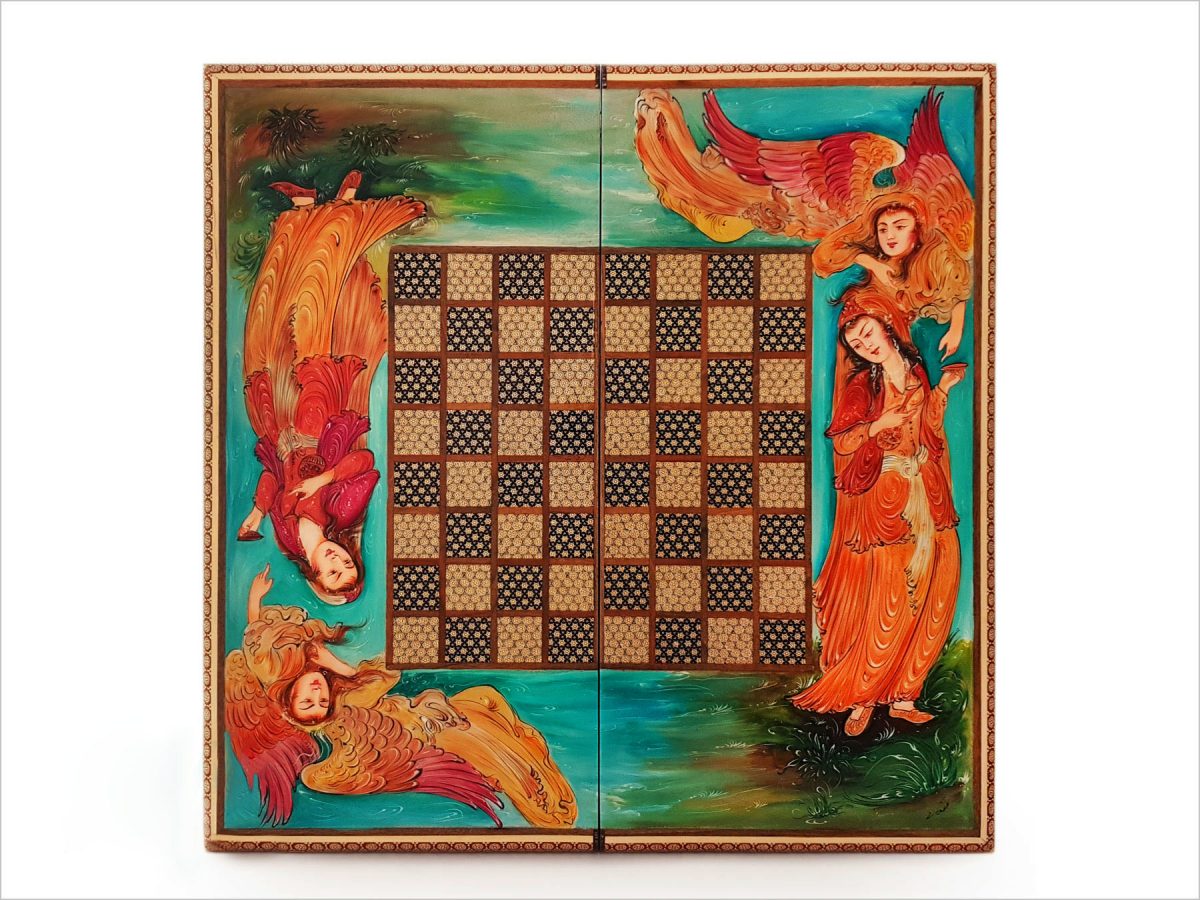
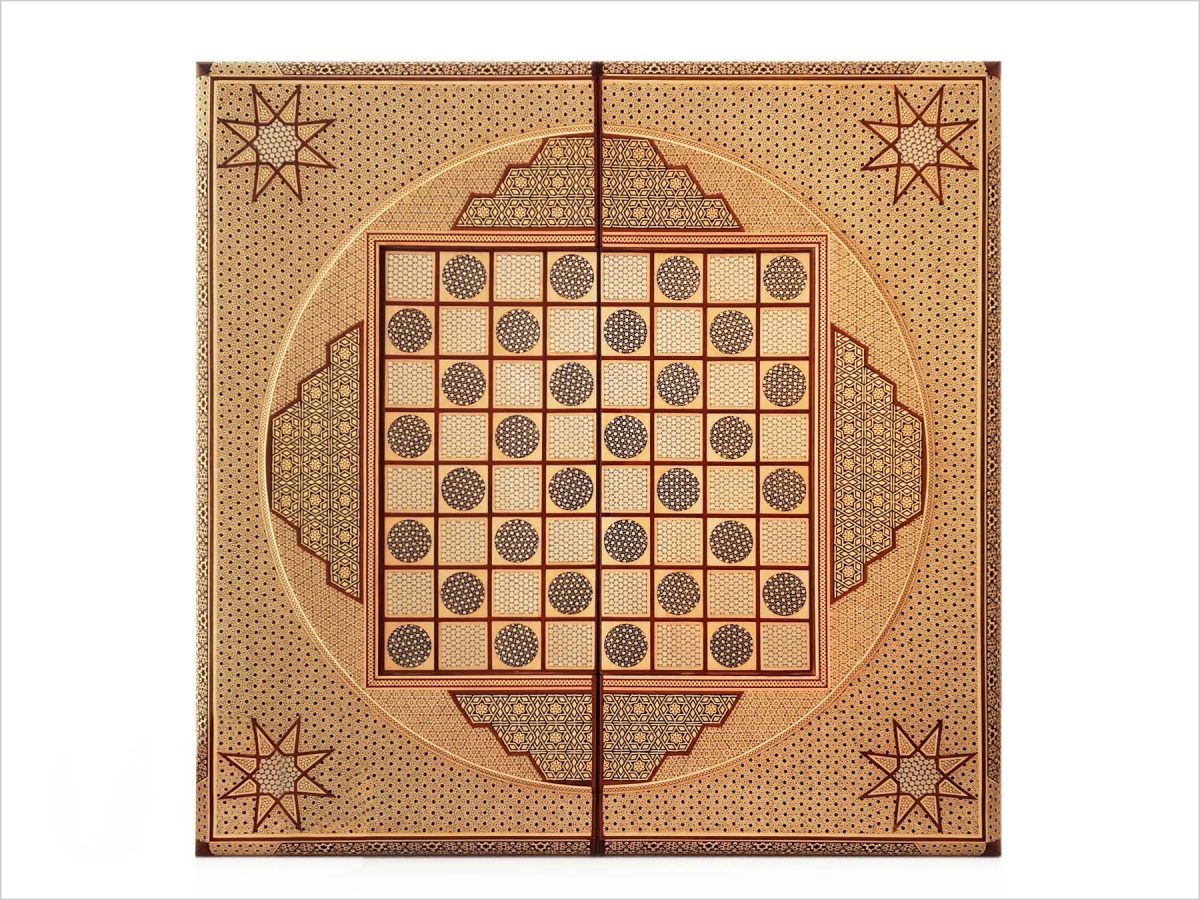
Persian backgammon boards are renowned for their exquisite craftsmanship.
- Materials: Commonly crafted from woods like walnut, rosewood, and sometimes inlaid with precious materials like mother-of-pearl and ivory.
- Techniques:
- Khatamkari: An intricate form of marquetry involving the inlay of various woods, bones, and metals.
- Miniature Painting: Detailed artworks depicting historical scenes or poetic themes.
Design Motifs and Their Meanings
The designs on the boards are rich with symbolism.
Historical Scenes: Depict famous battles, royal courts, or legendary tales.
Geometric Patterns: Represent harmony and the infinite nature of creation.
Floral Motifs: Symbolize growth, beauty, and the connection to nature.
| Motif | Meaning |
|---|---|
| Paisley (Boteh) | Eternity and life |
| Cypress Tree | Immortality and resilience |
| Nightingale | Passion and poetic inspiration |
| Geometric | Unity and harmony |
| Floral Designs | Beauty and growth |
Persian Backgammon: Understanding the Basic Gameplay Mechanics
Much like its global counterparts, Persian Backgammon invites two players to a duel of strategy and luck. Each player is armed with 15 checkers and the unpredictable roll of two dice. These checkers are not just mere pieces on a board; they are soldiers in a silent battle, maneuvering through enemy lines, seeking the sanctuary of their home board. The ultimate victory lies in bearing off all these checkers before the opponent can achieve the same feat.
Rules of Persian Backgammon
Delving into Persian Backgammon is like peering into an ancient artefact. While it adheres to the foundational rules familiar to backgammon enthusiasts worldwide, it offers its unique flavours and subtleties that reflect the region’s rich heritage.
Starting Position
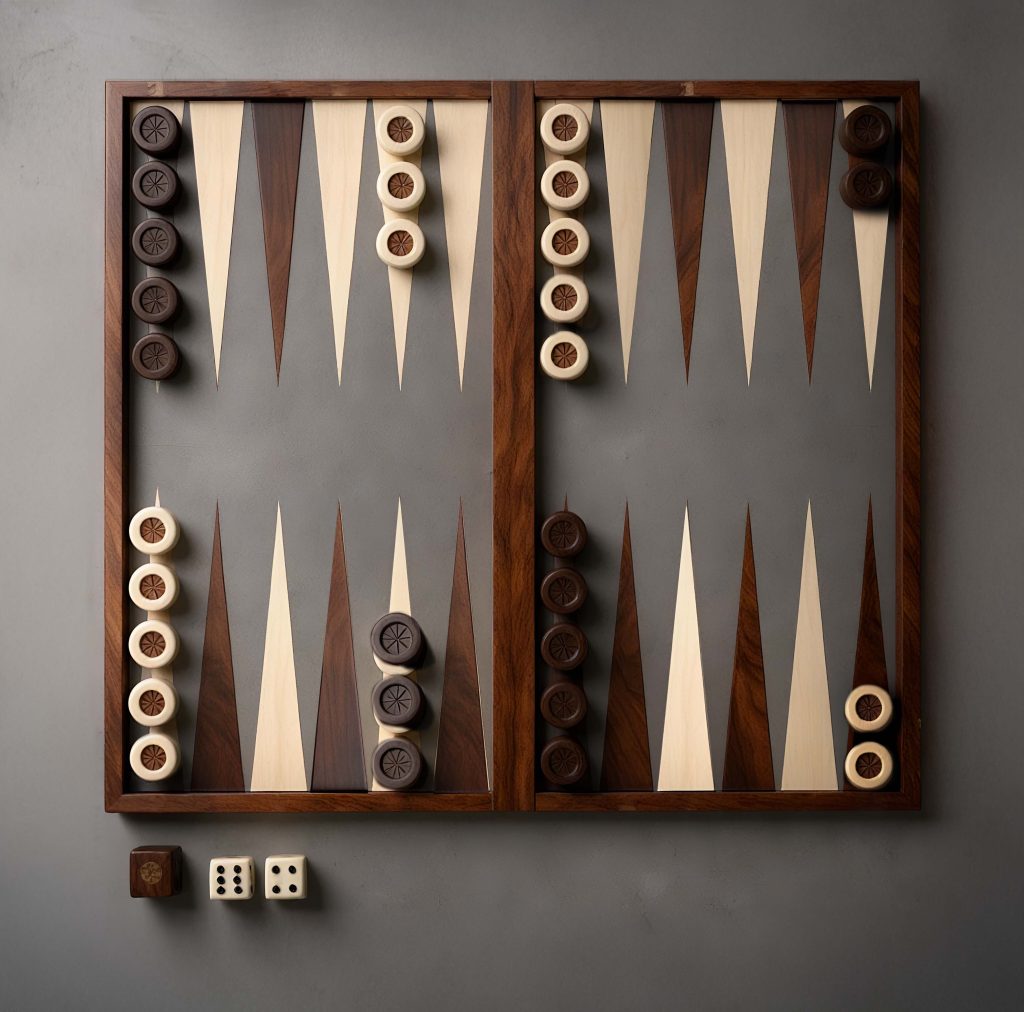
The initial setup in Persian Backgammon is crucial and distinctive. Both players commence with:
- Two checkers on the 24-point: Often referred to as the “distant outpost,” these checkers have the longest journey to the home board, and their movement requires careful consideration.
- Five checkers on the 13-point: This cluster of checkers offers a strategic advantage, enabling players to control the middle of the board or advance quickly.
- Three checkers on the 8-point: These act as a bridge, facilitating smooth transitions and swift movement.
- Five checkers on the 6-point: Positioned close to the home board, these checkers play a vital role during the middle and end stages of the game.
Bearing Off
The process of bearing off is the culmination of a player’s strategy. In Persian Backgammon:
- Every checker must first convene within the player’s home board, symbolising unity and preparation.
- Players can then start removing their checkers based on dice rolls, the goal being to remove all checkers before the opponent. A smooth bearing off can often turn the tables in a close match.
Hitting and Entering
In the captivating dance of Persian Backgammon, hitting and entering add layers of suspense:
- A blot, or a solitary checker on a point, is vulnerable. The opponent can hit this checker, sending it to a purgatorial zone known as the bar.
- Once on the bar, a checker faces a challenge. It must re-enter the opponent’s home board based on the subsequent dice roll. This re-entry can sometimes be challenging, especially if the opponent’s points are blocked.
Local Variations: A Reflection of Regional Heritage
Persian Backgammon’s beauty lies in its local flavours:
- Initial Setup Variations: Some regions might have slight changes in the starting positions, influenced by local traditions or evolved strategies.
- Doubling Cube: While a modern addition, its use in Persian Backgammon varies. Some traditionalists prefer to play without it, while others embrace this strategic twist.
- Special Rules: Depending on the locale, there might be specific rules regarding re-entry from the bar, use of doubles, or handling late-game scenarios.
In conclusion, Persian Backgammon, while rooted in the classic game’s tenets, offers nuances and subtleties that are a testament to Iran’s diverse culture and traditions. Understanding these rules provides a deeper appreciation of the game’s intricacies and the rich tapestry of Persian heritage.
Strategy in Persian Backgammon
Persian Backgammon, a game of both luck and strategy, offers an intricate dance between the two. While the roll of the dice introduces an element of unpredictability, a keen strategic mind can tilt the odds in its favour. Here are some insights into the deeper strategic layers of this ancient game:
Control the Central Points
In the heart of the board lie the mid-points, and controlling them is pivotal to:
- Blocking Advances: Dominance over these central points hinders your opponent’s forward momentum, forcing them to make less optimal moves.
- Facilitating Movement: A stronghold in the middle ensures your checkers have safe points to move to, granting flexibility in both offence and defence.
| Point Number | Strategic Importance |
|---|---|
| 5-Point | Critical for blocking and advancing |
| Bar-Point | Controls the midpoint, hindering movement |
| 7-Point | Serves as a stepping stone to home board |
Leveraging the Doubling Cube
While the doubling cube is a relatively modern addition, it has quickly become a game-changer:
- Psychological Play: The cube isn’t just about increasing the stakes. It’s a tool of psychology. Offering a double can pressurise opponents, potentially forcing errors.
- Timing is Everything: Knowing when to double and when to accept or decline a double is pivotal. Consider factors like the current board position, your potential for bearing off, and the overall game score.
Adopting Defensive Tactics
In Persian Backgammon, defence isn’t just a fallback; it’s an art:
- Blockade Building: Creating a series of blocked points, known as a blockade, can trap your opponent’s checkers, slowing their progress considerably.
- Safe Movement: When you’re in the lead, avoid leaving blots. Move in pairs or ensure that your checkers are on points already controlled by you, minimising the risk of being hit.
Advanced Strategies
For those looking to delve deeper into the game’s intricacies:
- Back Game: This involves maintaining two or more anchor points within your opponent’s home board. While risky, if done right, this can disrupt their bearing off process, providing opportunities to hit vulnerable blots.
- Prime vs. Blitz: Building a ‘prime’ is about creating a wall of six consecutive blocked points, stopping the enemy in their tracks. In contrast, a ‘blitz’ focuses on aggressively hitting the opponent’s checkers, aiming to close them out of the game.
Understanding Your Opponent
- Read Their Playstyle: Are they aggressive? Defensive? Adaptable? Recognizing their tendencies can help you anticipate moves and counteract strategies.
- Engage in Mind Play: Sometimes, the best moves aren’t just about advancing checkers but about playing the player, subtly influencing their decisions through your moves.
Finally, Persian Backgammon isn’t just about understanding the board; it’s about understanding the player across from you:
In essence, while the bones (dice) bring fortune or adversity, a masterful strategy ensures you’re prepared for either. Persian Backgammon, with its unique blend of tradition and strategy, remains an enduring testament to the human love for challenge, competition, and camaraderie.
Online Backgammon: Bringing Takhte Nard to the Digital World
With the rise of technology, Takhte Nard has found a new home online, allowing players worldwide to experience Persian Backgammon.
Best Backgammon Online Platforms
Several platforms offer Takhte Nard, providing opportunities to:
- Play Against Global Opponents: Engage with players from different cultures.
- Improve Skills: Practice strategies against various levels of AI.
- Experience Cultural Exchange: Learn more about Persian traditions through gameplay.
| Platform Name | Features | Availability |
|---|---|---|
| Backgammon Galaxy | Live games, tournaments, strategy tips | Web, Mobile |
| 247 Backgammon | Free play, AI opponents, user-friendly | Web |
| Backgammon King | Traditional Takhte Nard rules, chat feature | Web |
Conclusion
Persian Backgammon, or Takhte Nard, is a timeless game that embodies the rich cultural tapestry of Iran. From its ancient origins to its intricate artistry and strategic depth, it offers players more than just entertainment—it provides a connection to a storied past. Whether you’re a seasoned player or new to the game, embracing Takhte Nard invites you to be part of a tradition that has captivated minds for centuries.
Embrace the rich culture, engage in strategic gameplay, and let every match be a tribute to the illustrious Persian heritage. Ready to make this age-old treasure yours?
FAQs
1. What is Takhte Nard?
Takhte Nard is the Persian version of backgammon, an ancient board game that combines strategy and luck. It holds significant cultural importance in Iran and is played with unique rules and beautifully crafted boards.
2. How does Persian Backgammon differ from the global version in terms of gameplay and rules?
While the core gameplay is similar, Persian Backgammon has differences in starting positions, may not use the doubling cube, and includes unique rules and strategies reflective of Persian culture. Regional variations can also influence specific gameplay elements.
3. What strategies are essential to master Persian Backgammon?
Key strategies include controlling central points to block your opponent, employing defensive tactics like building blockades, understanding your opponent’s playstyle, and adapting your strategy accordingly. Advanced strategies like the back game or deciding between a prime and blitz approach are also valuable.
4. Why is Persian Backgammon considered a cultural journey, and what does owning a set signify?
Persian Backgammon is a blend of game and art. Each handcrafted board tells stories from Persian folklore, mythology, or history. Owning a set is not just about gameplay; it’s about possessing a piece of Iran’s rich cultural heritage and artistic legacy.
5. Can I play Takhte Nard online?
Yes, there are several online platforms where you can play Takhte Nard. These platforms aim to preserve the traditional rules and aesthetics of the game, allowing you to experience Persian Backgammon digitally and connect with players worldwide.


 Oil Painting
 Miniature Painting
 Wall Ornaments
 Enamel
 Filigree
 Turquoise
 Decorative Plate
 Home Accents
 Decorative Vase
 Pāteh
Pāteh Térméh
 Home Accents
 Mirror
 Tea ware & Tea
 Backgammon / Chess Board
 Home Accents
 Office
 Wall Clock
 Home Accents
 Vase
Vase Decorative Vase
 Wall Decor
 Home Accents
 Mirror
 Vase
Vase Embroidery
 Enamel
 Marquetry
 Watercolour Painting
 Under £20
 Under £50
 Under £100
 Under £200
 Under £300
 Mother’s Day
 Anniversary
 Her
Her Him
Him Ancient Persia
 Persian Artefacts
 Persian Clothing
 Persian Gift Ideas
 Oil Painting