




Persian Artefacts
The Art of Persian Enamel Making: A Journey Through History
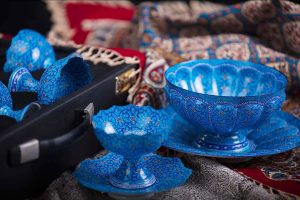
Enamel making is an ancient and complex art form that has been practised for centuries in many different parts of the world. One of the most unique and intricate forms of enamel making is the Persian enamel, also known as Minakari, which has been practised in Iran since the Sassanid era, around 224 to 651 CE. In this article, we’ll take a deep dive into the rich history and evolution of Persian enamel, explore the different types of enamel based on their usage and techniques, and delve into the process of making Persian enamel.
Table of Contents
From Sassanid to Qajar: The Evolution of Persian Enamel
Sassanid Era
The art of Persian enamel making has a rich and fascinating history that spans several centuries. The origins of this art form can be traced back to the Sassanid dynasty, which ruled Iran from 224 to 651 CE. This period saw the emergence of enamel making as a decorative art, with skilled artisans using vibrant colours and intricate designs to adorn jewellery, plates, and other metal objects.
Today, some of the oldest surviving examples of Persian enamel can be found in the British Museum and the Louvre. These artefacts date back to the 6th and 7th centuries and provide a glimpse into the exquisite craftsmanship and artistic expression of Sassanid enamel.

Seljuk Era
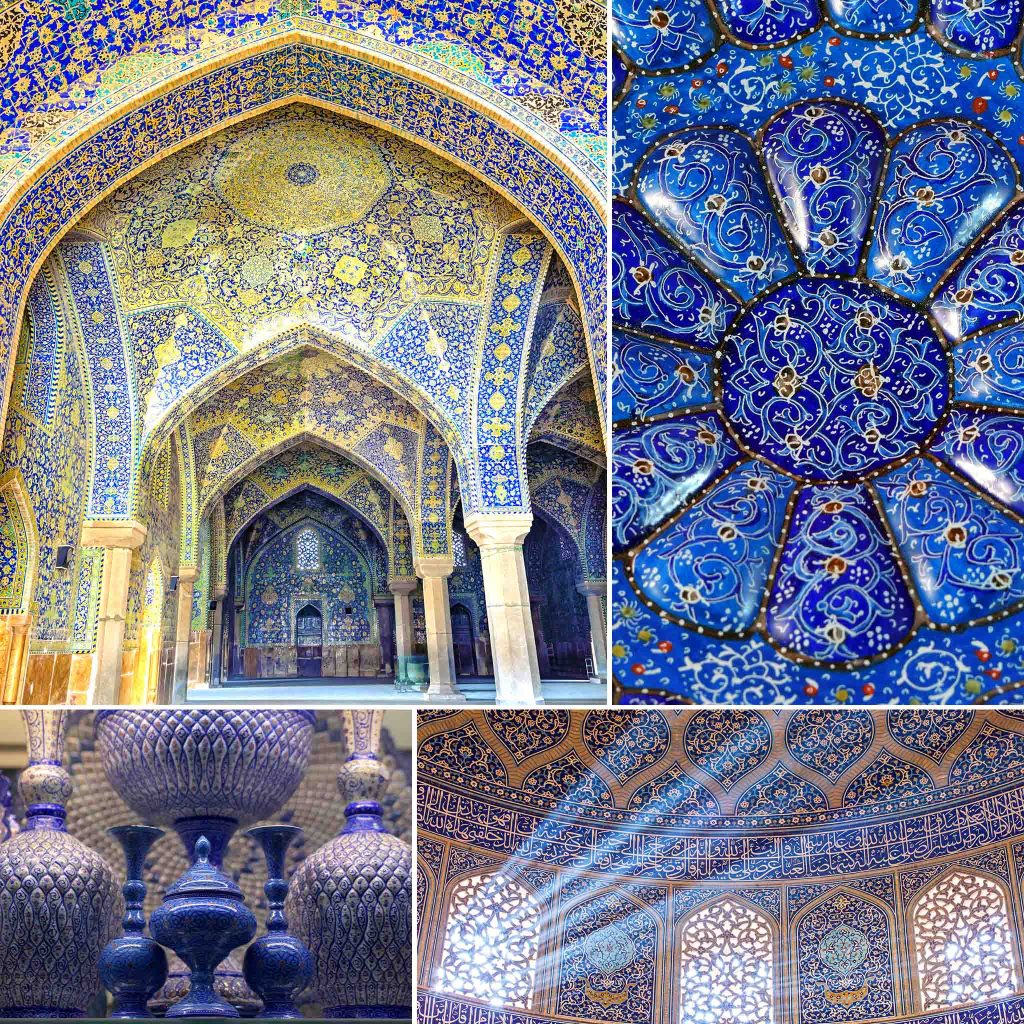
After the Islamic conquest of Persia, enamel-making continued to flourish under the Seljuk and Timurid dynasties. Persian enamel artisans continued to create beautiful and intricate pieces that were highly sought after for decorating mosques, mausoleums, and other religious structures. These structures served as canvases for enamel artists to showcase their skill and creativity. The Jameh Mosque in Isfahan is among the most famous example of Persian enamel from this era. These stunning architectural marvels are adorned with intricate designs and vibrant colours that are emblematic of the beauty of Islamic art. The enamel pieces that decorate these structures are characterised by their intricate details, exquisite craftsmanship, and stunning colours, which continue to inspire awe among visitors and art enthusiasts to this day. The art of enamel-making during this period helped to elevate Persian art to new heights and played a crucial role in the development of Islamic art.

Safavid Era
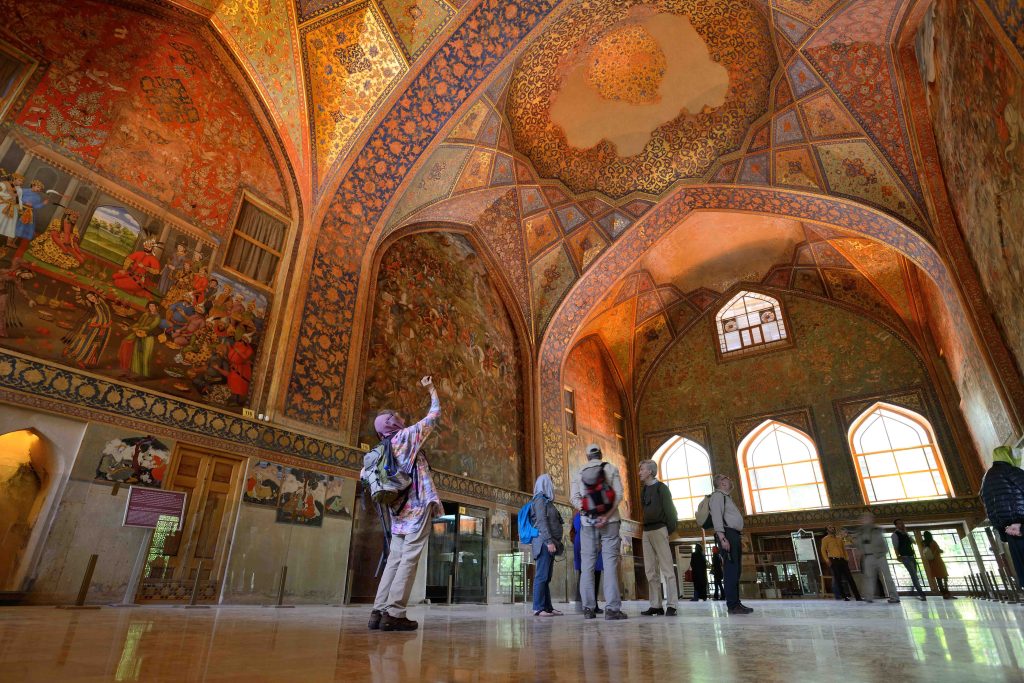
During the Safavid era, which spanned from 1501 to 1722, enamel-making emerged as a prominent art form, and Persian enamel artisans reached new levels of artistic expression. The Safavid rulers were particularly interested in promoting this craft, and they commissioned some of the most stunning and intricate examples of Persian enamel. Today, visitors can marvel at these exquisite works of art at the Chehel Sotoun Palace and the Shah Mosque in Isfahan, which showcase some of the finest examples of Safavid-era enamel. The enamelling technique involved the application of coloured glass paste onto a metal surface, which was then fired in a kiln to create a glossy, vibrant finish. The Safavid artisans were particularly skilled at creating intricate designs and motifs using this technique, and their creations continue to inspire awe and admiration among art enthusiasts today.
Qajar Era
The Qajar dynasty, which ruled Iran from 1789 to 1925, was a time of great artistic and cultural achievements in Persia. The architecture of this period was characterised by a fusion of Persian and European styles, with colourful tiles and intricate designs adorning the buildings. Two prominent examples of Qajar-era architecture are the Nasir al Molk Mosque in Shiraz and the Shah Mosque in Tehran.
The Nasir al Molk Mosque, also known as the Pink Mosque, is renowned for its stunning stained glass windows that cast a kaleidoscope of colours across the interior during the early morning hours. The Shah Mosque, on the other hand, is an imposing structure with towering minarets and intricate tile work, which has been carefully restored to its former glory.
The history of Persian enamel making is a testament to the artistic and cultural richness of Iran. The art form has evolved, reflecting the influences of various dynasties and artistic movements. Despite this evolution, however, the intricate designs and vibrant colours that characterise Persian enamel have remained constant, making this art form a timeless and enduring part of Iran’s cultural heritage.

The Art of Persian Enamelling: A Journey from Ceramic Mastery to Exquisite Metalwork
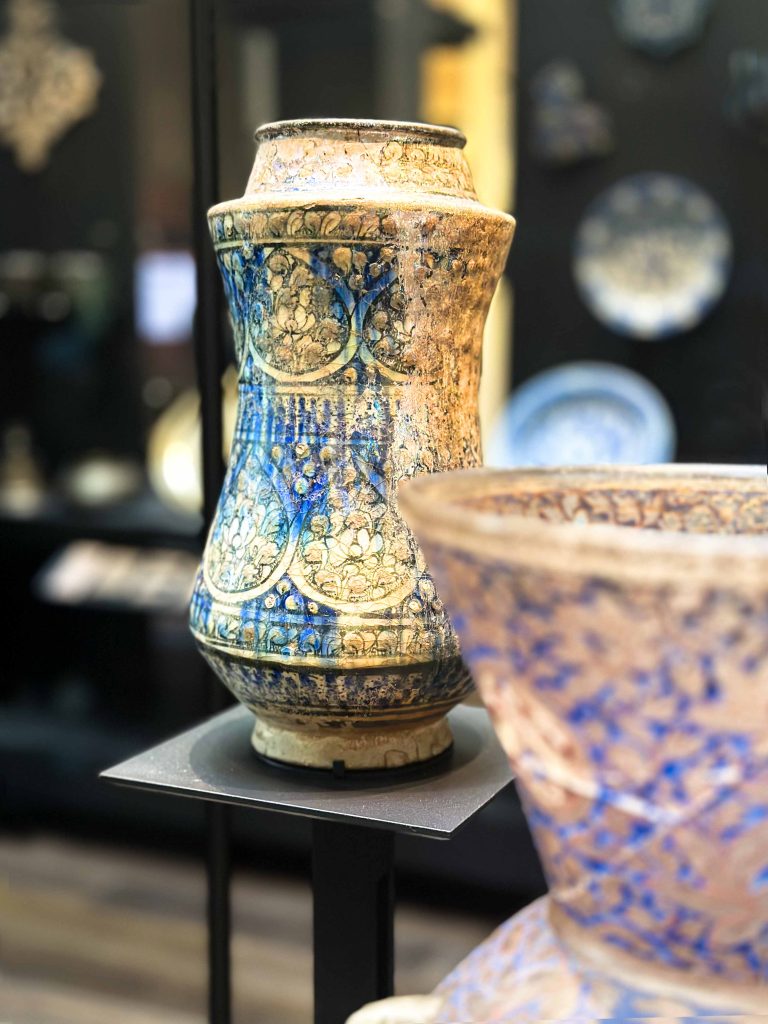
While the evolution of Minakari is a fascinating story in its own right, one can better appreciate its origins by journeying back to an earlier epoch of Persian artistry: the mastery of ceramic-making in Iran. One such embodiment of early Persian craftsmanship is the stonepaste albarello dating back to the period between 1300 and 1400. A traditional medicine jar, this albarello hails from the Ilkhanid Sultanabad group of slip-painted ceramic wares. Its surface is graced with an ornate series of lotus motifs, each meticulously encased within a teardrop-shaped frame inspired by Buddhist symbolism. Despite the grey-green palette typical of Sultanabad wares, this particular piece boasts a blue glaze that beautifully contrasts the slip-painted motifs, demonstrating the artisan’s dexterity in balancing materials and techniques.

What makes this albarello even more intriguing is the cultural journey of its lotus motif, a symbol with roots in Chinese, Buddhist, and Hindu iconography. With similar motifs discovered on a Mamluk mosque lamp in Egypt and Syria, it seems this cultural emblem travelled through trade routes or socio-political interactions from China, through Ilkhanid Iran, and to the Mamluk regions.
Why is this journey important when discussing Persian enamelling? It illustrates the rich cultural interactions and exchange of artistic ideas that deeply influenced Persian art. In fact, the techniques used in ceramics, such as the careful slip-painting of designs or the use of vibrant coloured glazes, share striking similarities with Minakari. Persian artisans adapted these techniques to work with metal, thus birthing the exquisite craft of enamelling. The attention to detail, the interplay of colours, and the motif designs are all elements that ceramic artistry shares with Minakari.
The Mosque Lamp with Lotus Flowers: Mamluk Artistry and its Connection to Persian Enamelling
The aesthetic beauty and unique cultural significance of Islamic art can be exemplified through a particularly intriguing Mamluk mosque lamp, found in Egypt and dated to about 1350-60. This lamp, possibly discovered at the Monastery of Saint Theodorus in Cairo, stands as a testament to the rich tapestry of influences that shaped Mamluk decorative arts.

Distinct from most Mamluk mosque lamps, this piece remarkably bears no inscriptions. Such absence marks an intriguing departure from the traditional style, as inscriptions were typically used not only for religious dedications but also for political propaganda. Its association with Mamluk Sultan Hasan ibn Muhammad (r. 1347-51, 1354-61) adds historical significance and mystery to the lamp.
The lamp is adorned with three circular medallions composed of plant motifs, meticulously rendered in coloured enamels, taking the place of the more traditional heraldic emblem. It is in these plant motifs that we see a clear link to Chinese-inspired aesthetics, as the designs depict lotus flowers, a motif reminiscent of the symbolism found on the stonepaste albarello of the Ilkhanid Sultanabad group.
Set against a dark blue enamelled background, these lotus motifs become all the more striking. When lit, the lotus flowers would have emerged from their foliage, glittering against the background, and conjuring thoughts of Paradise – a clear testament to the spiritual significance embedded within the decorative scheme.
This Mamluk mosque lamp’s intricate enamelling, with its captivating play of colours and motifs, showcases an artistic lineage that connects directly to the celebrated art of Persian enamelling, or ‘Minakari.’ It demonstrates the enduring influence of the techniques and aesthetic preferences seen in earlier Persian ceramics, including the Ilkhanid albarello.
Indeed, the shared use of vibrant enamelling and meticulous detailing between the mosque lamp and Persian Minakari underscores the profound cultural exchanges occurring during this period. It showcases how motifs and techniques travelled along trade routes, influencing a variety of artworks across the Islamic world.
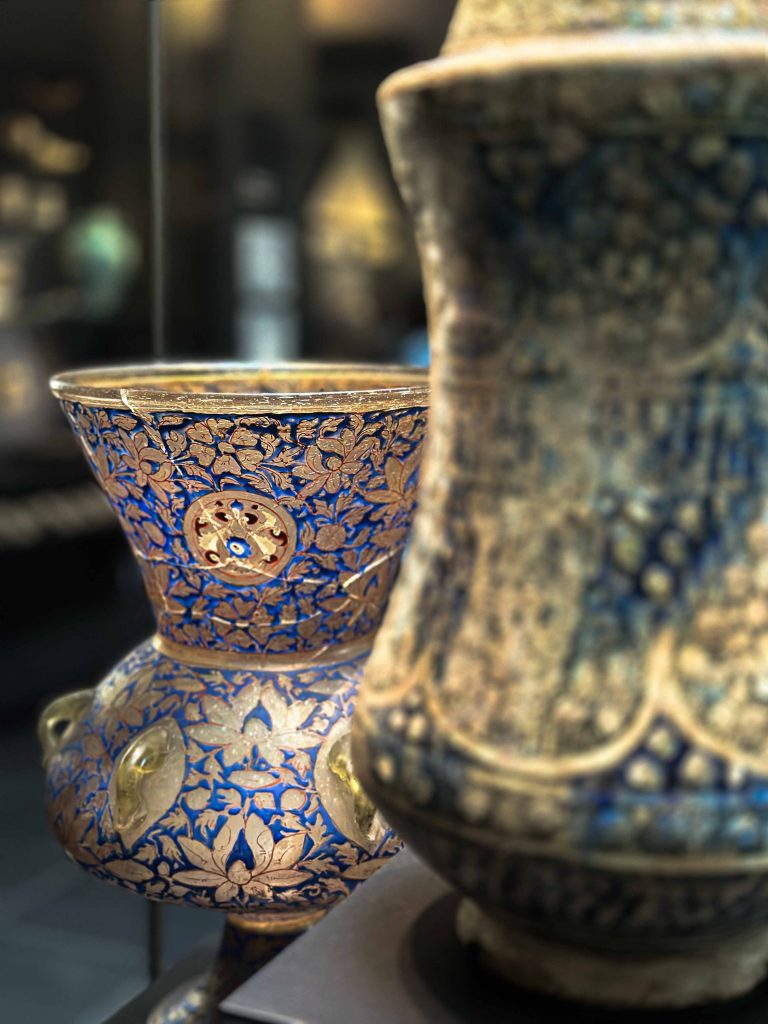
From the stonepaste albarello to the Mamluk mosque lamp, and finally to the more modern craft of Persian Minakari, we witness a fascinating narrative of artistic evolution and cultural exchange. These connections underscore the inherent fluidity of artistic styles, materials, and techniques within the rich tapestry of Islamic art, offering a more holistic understanding of the enchanting journey of Persian enamelling. As we continue to unravel these ties, we gain a deeper appreciation for the shared aesthetic language and mutual influences that shape the mesmerising world of Islamic artifacts.
The Significance of Blue in Persian Enamel Art
The colour blue holds a special significance in Persian enamel, as it is one of the most commonly used colours in this art form. Blue has been a favourite colour in Persian culture for centuries and is often associated with heaven, purity, and spirituality. In Persian enamel, the blue colour is achieved through the use of cobalt oxide, a mineral that was imported from China during the Safavid era. Cobalt oxide gives a deep and rich blue colour that has become synonymous with Persian enamel.
The colour blue is often used in Persian enamel to represent the sky, water, and the heavens. It is also used to symbolise purity, clarity, and tranquillity. Many Persian enamel pieces feature intricate blue designs, such as floral patterns, arabesques, and calligraphy.
Apart from blue, Persian enamel also features a range of other colours, including green, red, yellow, and black. Each colour has its symbolism and meaning and is often used in combination with other colours to create intricate and beautiful designs.
The use of colour in Persian enamel is not only for aesthetics but also has a deeper symbolic meaning. It is often used to convey emotions, ideas, and stories, making Persian enamel a highly expressive and meaningful art form.
From Wires to Engraving: Understanding the Methods of Persian Enamel Making
Enamel making is a highly intricate art form that involves several techniques to create stunning designs and patterns. Cloisonné, Champlevé, and Minakari are the three most popular types of enamels, each with its unique features and applications. Cloisonné enamel, for example, uses thin strips of metal to create partitions or cells, which are then filled with enamel. The technique allows the artisan to create intricate designs and patterns, making it perfect for jewellery and decorative items. In contrast, Champlevé enamel is created by engraving a metal surface and filling the cavities with enamel. This technique is widely used for the production of decorative metalwork, such as vases and candlesticks.
Persian enamel or Minakari, on the other hand, is known for its intricate designs and patterns, which are created by engraving a metal surface and filling the cavities with enamel. This technique is commonly used for creating decorative items, including plates, vases, and jewellery. The use of different techniques in Minakari allows artisans to create unique and stunning designs, making it one of the most sought-after art forms in Iran.

The Revival of Persian Enamel as Home Accents & Accessories
Persian enamel continues to be a popular choice for home decor today, with its vibrant colours and intricate designs adding a touch of elegance and sophistication to any interior space. From decorative plates and vases to earrings and necklaces. Persian enamel pieces can be found in a variety of forms and styles.
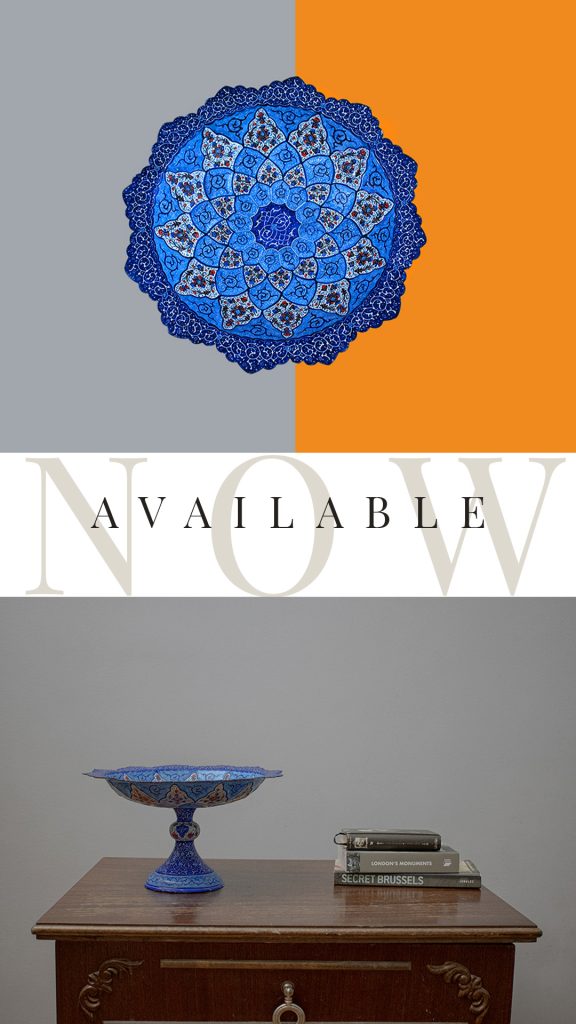

One of the most popular types of Persian enamel used in home décor is decorative plates. These plates feature intricate designs and patterns, often incorporating floral motifs or calligraphy. They can be hung on walls or displayed on shelves, adding a pop of colour and style to any room.

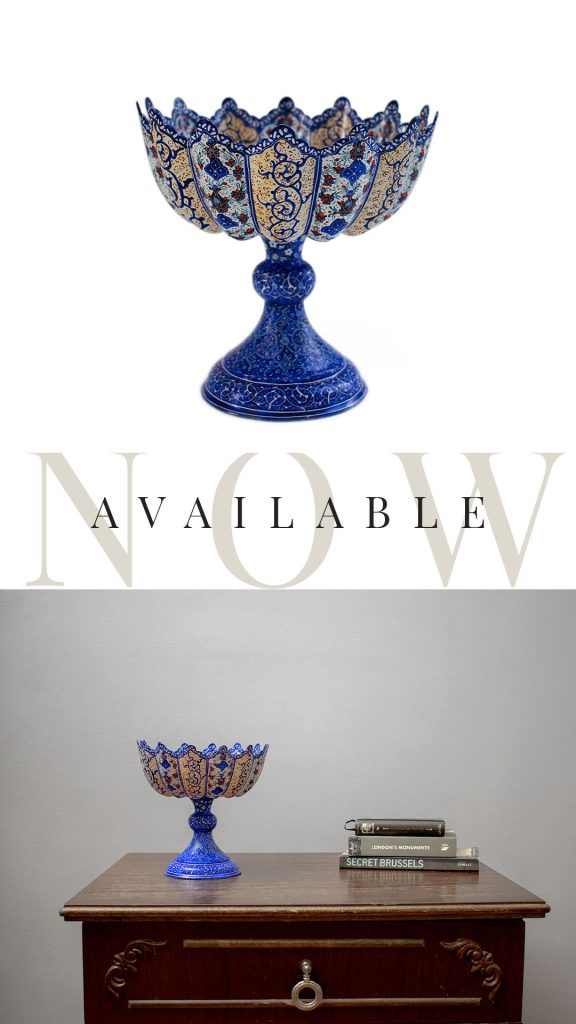
Decorative vases are another common form of Persian enamel used in home decor. These vases come in a range of sizes and shapes and are often adorned with intricate patterns and designs. They can be used to hold flowers or simply as decorative pieces on their own.
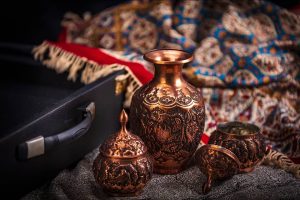
Persian enamelware also includes a range of decorative items such as rosewater sprinklers and table lamps. Rosewater sprinklers, also known as “golabdan,” are often made with intricate floral designs and patterns, reflecting the importance of flowers in Persian culture. They are used to sprinkle rosewater during special occasions such as weddings and religious ceremonies, and can also be used as decorative pieces in homes. Persian enamel rosewater sprinklers are a beautiful way to add a touch of elegance and tradition to any space.
Persian enamel table lamps, also known as “korsi lamps,” are another popular decorative item. These lamps are often made with geometric patterns and intricate designs and are perfect for creating a warm and inviting atmosphere in any room. They are typically used during the colder months when families gather around a “korsi” (a low table with a heater underneath) to stay warm and cosy. Persian enamel table lamps are a beautiful way to add a touch of traditional Persian style to any home.
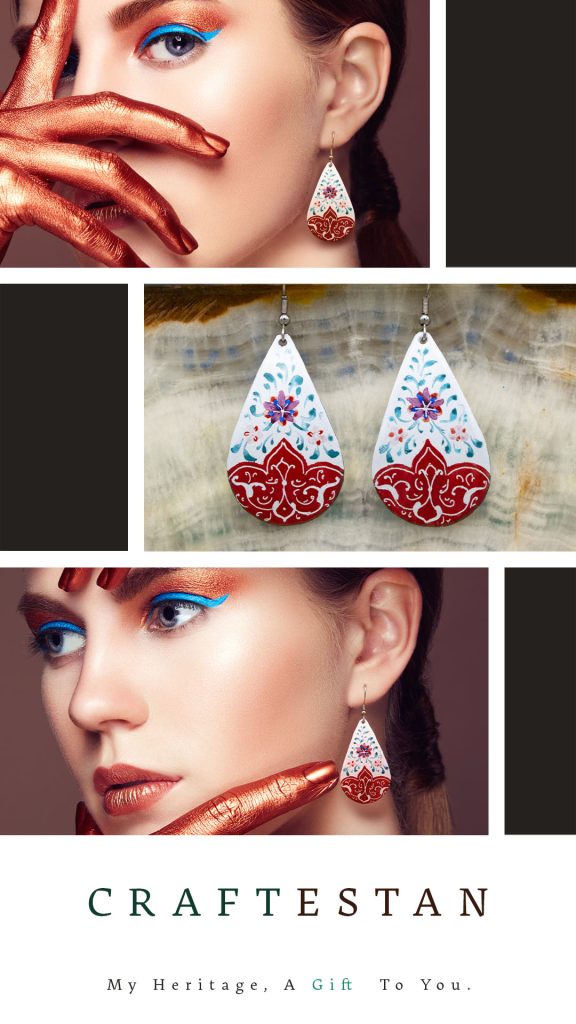
In addition to home décor, Persian enamelware also includes a variety of accessories such as earrings and necklaces. These pieces are often adorned with intricate designs and patterns, showcasing the artistry and craftsmanship of Persian enamel artisans.
Persian enamel earrings and necklaces are perfect for adding a touch of sophistication to any outfit. Whether you are dressing up for a special occasion or simply want to add a bit of elegance to your everyday look, these accessories are sure to impress. They come in a variety of shapes and sizes, ranging from delicate and dainty to bold and statement-making.
Like Persian enamel home accents, Persian enamel accessories are not only functional but also serve as works of art that can be admired for their intricate details and exquisite beauty. They make excellent gifts for loved ones or can be purchased as a special treat for yourself. No matter how you choose to use or display them, Persian enamel accessories are sure to add a touch of charm and elegance to any outfit.

Conclusion
In conclusion, Persian enamel art has a rich and fascinating history that spans several centuries, from the Sassanid dynasty to the Qajar era. The art form has evolved, reflecting the influences of various dynasties and artistic movements. Despite this evolution, however, the intricate designs and vibrant colours that characterise Persian enamel have remained constant, making this art form a timeless and enduring part of Iran’s cultural heritage.
The significance of blue in Persian enamel art is particularly noteworthy, as it holds a special place in Persian culture and is often associated with heaven, purity, and spirituality. The use of colours in Persian enamel is not only for aesthetics but also has a deeper symbolic meaning, conveying emotions, ideas, and stories.
Today, Persian enamel continues to inspire awe and admiration among art enthusiasts worldwide. With its intricate designs and vibrant colours, this art form is a testament to the artistic and cultural richness of Iran and serves as a reminder of the country’s rich and diverse cultural heritage.
FAQs
What is the historical significance of Persian enamel or Minakari?
Persian enamel, also known as Minakari, is an intricate art form that has been practiced in Iran since the Sassanid era, around 224 to 651 CE. Its history is rich, spanning from the Sassanid dynasty to the Qajar era, reflecting the influences of various dynasties and artistic movements. This art form has remained a timeless and enduring part of Iran’s cultural heritage, with its vibrant colours and detailed designs.
Why is blue a prominent colour in Persian enamel artwork?
Blue holds a special significance in Persian enamel art. Historically associated with heaven, purity, and spirituality in Persian culture, the blue color in enamel is achieved through the use of cobalt oxide. This mineral, imported from China during the Safavid era, produces a deep and rich blue hue that has become emblematic of Persian enamel.
How is Persian enamel used in modern home décor and accessories?
Today, Persian enamel remains popular in home décor, from decorative plates and vases to earrings and necklaces. Items like rosewater sprinklers, known as “golabdan,” and table lamps, or “korsi lamps,” showcase the traditional Persian style. Additionally, accessories like earrings and necklaces adorned with Persian enamel designs offer sophistication to various outfits, highlighting the versatile nature of this art form.
Which techniques are prominent in the creation of Persian enamel artworks?
Enamel making employs several techniques, with Cloisonné, Champlevé, and Minakari being the most popular. Persian enamel, or Minakari, is particularly known for its designs created by engraving a metal surface and filling the cavities with enamel, allowing artisans to produce stunning and unique patterns.
Related Blog Post


 Oil Painting
 Miniature Painting
 Wall Ornaments
 Enamel
 Filigree
 Turquoise
 Decorative Plate
 Home Accents
 Decorative Vase
 Pāteh
Pāteh Térméh
 Home Accents
 Mirror
 Tea ware & Tea
 Backgammon / Chess Board
 Home Accents
 Office
 Wall Clock
 Home Accents
 Vase
Vase Decorative Vase
 Wall Decor
 Home Accents
 Mirror
 Vase
Vase Embroidery
 Enamel
 Marquetry
 Watercolour Painting
 Under £20
 Under £50
 Under £100
 Under £200
 Under £300
 Mother’s Day
 Anniversary
 Her
Her Him
Him Ancient Persia
 Persian Artefacts
 Persian Clothing
 Persian Gift Ideas
 Oil Painting